


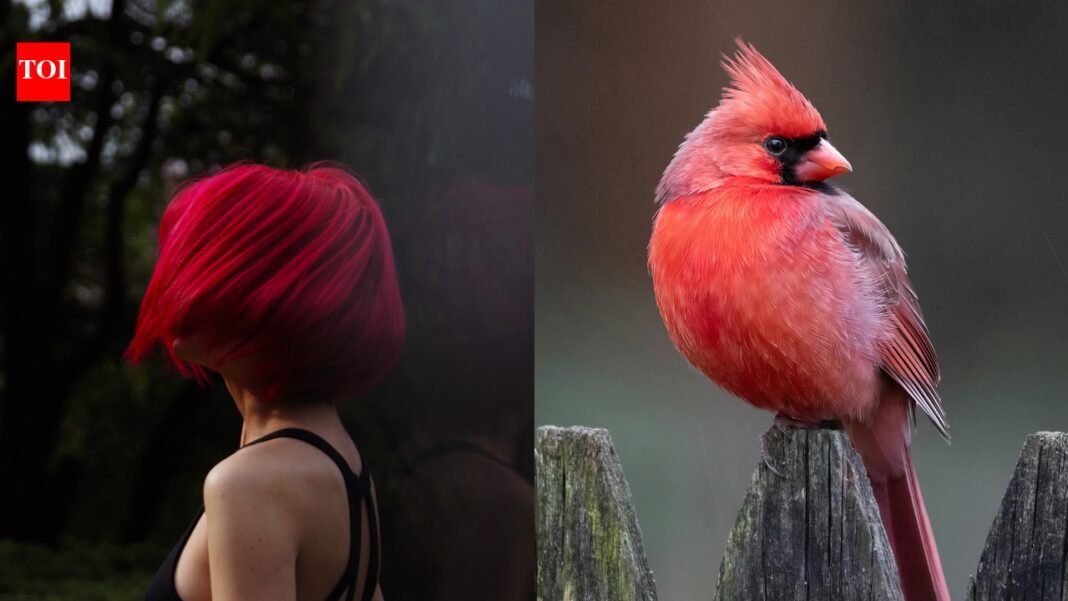
Red and orange hair has long been one of humans’ most unique features. Fiery reds only make up a small percentage of the global population and are often associated with genetics, fair skin and higher sensitivity to sunlight. However, scientists have now found evidence that the story of red hair is more complicated than previously thought. By studying zebra finches, a small Australian bird known for its bright orange plumage, researchers have discovered that the pigments responsible for red and orange coloration may have important biological purposes beyond appearance. The findings provide a new explanation for why genes associated with red hair have survived evolution despite being linked to certain health risks. In essence, birds may hold the key to understanding why some people are natural redheads.
Scientists discover pigment behind red hair protects cells from damage
The study, published by the Spanish National Research Council’s Evolutionary Ecology Unit, focused on pheomelanin, the pigment that gives human hair, fair skin and the feathers of many birds their red and orange hues. For decades, scientists have been puzzled by evolutionary paradoxes. Phaeomelanin is associated with increased risk of melanoma, but the genes that promote its production persist across generations.To investigate, researchers led by evolutionary biologist Ismael Galván studied 65 adult zebra finches. Male zebra finches naturally produce feathers rich in orange pheomelanin, while females do not, creating an ideal natural comparison.The team studied the role of cysteine, an amino acid that is essential for life but can be harmful in excess.According to research, Inhibition of MC1R depalmitoylation reveals physiological role of pheomelanin:“The results suggest that pheomelanin production may prevent cysteine excess by removing this amino acid from tissues.” Pheomelanin, an orange pigment composed of the amino acid cysteine, increases the risk of melanoma, hampering understanding of the maintenance of pheomelanin pigment variants. An inhibitor of melanocortin-1 receptor depalmitoylation (ML349) was recently discovered and its function can be tested by blocking pheomelanin synthesis.The researchers found that birds that were unable to convert excess cysteine into pheomelanin suffered significantly greater oxidative damage, suggesting that this pigment acts as a biological defense rather than just a colorant.
Birds shed light on evolutionary mystery of human red hair
Scientists have known for years that mutations in the MC1R gene affect whether the body produces dark-colored eumelanin or red-yellow pheomelanin. Red-haired individuals produce a higher proportion of pheomelanin and less eumelanin, resulting in the characteristic ginger appearance.New findings suggest this pigment may have survived natural selection because it provides hidden physiological benefits.Far from being a simple cosmetic feature, pheomelanin appears to be able to bind and safely store excess cysteine that might otherwise cause cellular stress.Authors Ismael Galván, Marina García-Guerra and Marta Araujo-Roque conclude:“Ppheomelanin production evolved as a mechanism to maintain cysteine homeostasis.”This theory helps explain why genes associated with red hair persist despite trade-offs such as increased sensitivity to UV radiation and increased risk of melanoma. Evolution often preserves traits that provide survival advantages, even if they come at a cost.The discovery also reinforces a broader principle in biology: seemingly decorative features often perform important internal functions.
Surprising connection between bird feathers, human hair and the future of pigmentation research
Birds have long fascinated scientists because many species convert yellow dietary pigments into bright red feathers. Research shows that special enzymes can convert yellow carotenoids into red pigments, a process that is closely related to cell metabolism and physiological conditions.As researchers continue to explore pigmentation pathways, scientists are beginning to view color not just as decoration but as a window into fundamental biological processes.Rebecca Koch, a professor at the University of Wisconsin-Stevens Point and colleagues, recently published a paper titled “Mechanisms of carotenoid metabolism: understanding the connection between red color, cellular respiration and individual qualities‘:“Most birds that exhibit red carotenoid coloration ingest yellow carotenoids and metabolize the yellow pigment into red. In the retina of birds, yellow carotenoids are converted into red carotenoids to enhance color vision; in the feathers and beaks of birds, they serve as decoration. “This link between pigmentation and cellular health may ultimately improve understanding of human skin cancer susceptibility, oxidative stress, and genetic adaptation.So the copper, russet or ginger color that appears in mirrors may represent an ancient biological strategy perfected over millions of years. Thanks to a tiny finch with bright orange feathers, researchers are now revealing why nature still favors one of the rarest human hair colors.