


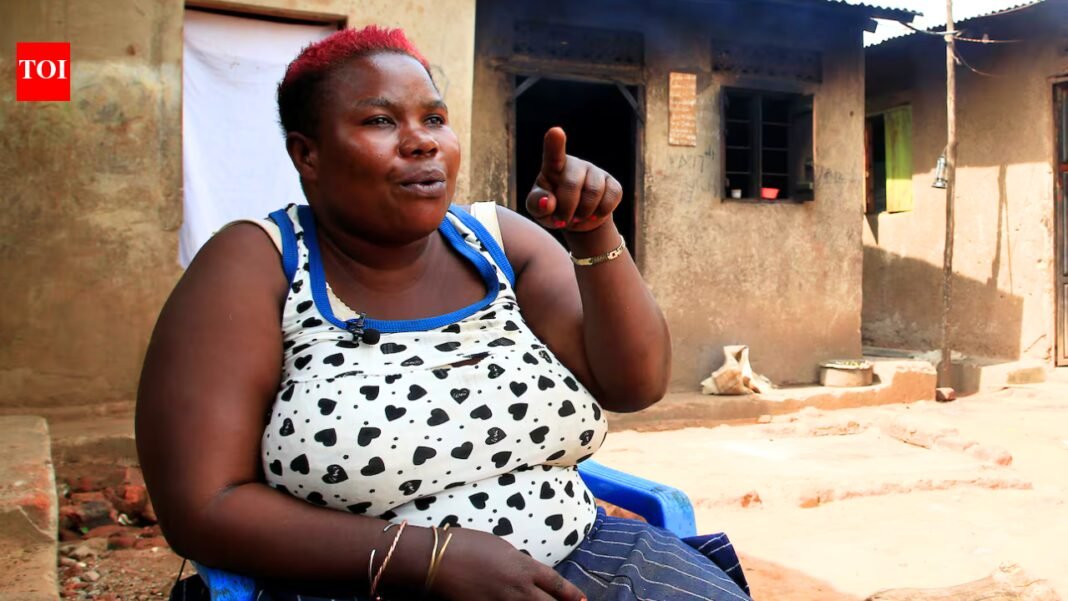
When Mariam Nabatanzi from Uganda gave birth to her first set of twins at just 13 years old, she had no idea that her life would become one of the most extraordinary stories in the history of modern medicine. Over the next two decades, she gave birth to 44 children in a remarkable series of multiple pregnancies, including six sets of twins, four sets of triplets, and three sets of quadruplets. Her story gained global attention, with many media outlets calling her the most fertile woman in the world. Yet behind these staggering numbers lies a deeply human story: child marriage, rare medical conditions, poverty and one mother’s determination to raise one of the largest documented families in the world.
How the world’s most fertile woman became the mother of 44 children
Mariam Nabatanzi was born in Uganda in 1980 and married at the age of 12 in what was widely reported as a child marriage. A year later, she gave birth to her first set of twins and became a mother. Instead of spending her teenage years in school, she took care of her children while she grew up.In an interview with Reuters, Mariam revealed that she had hoped to have only six children. She wanted to rebuild the family she lost after her mother abandoned her and, according to her, her five older siblings died after they were allegedly poisoned by their stepmother. Looking back on her early life, she said: “I started taking on adult responsibilities very early. I don’t think I’ve had fun since I was born.“Over a period of approximately 25 years, Mariam gave birth 38 times, resulting in 44 children. She was pregnant with six sets of twins, four sets of triplets, three sets of quadruplets and two sets of singletons. Unfortunately, 6 of her children later died, leaving her to raise 38 surviving children.The unusual frequency of multiple births makes her case one of the best documented in modern medicine. Unlike many historical accounts of extended families, Mariam’s pregnancy was widely reported and medically documented, making her story unique among contemporary cases.
The rare disease behind multiple births
Doctors later diagnosed Mariam with hyperovulation, a condition in which the ovaries release multiple eggs during a menstrual cycle instead of the usual number. When multiple eggs are fertilized, the chances of twins, triplets, or quadruplets are greatly increased.Dr Charles Kigundu, a gynecologist at Mulago National Specialist Hospital in Kampala, said Mariam’s abnormally large ovaries caused her to repeatedly release multiple eggs, making the likelihood of consecutive multiple pregnancies much higher than for the average woman. While hyperovulation itself is not unheard of, experts say it is extremely rare for high-sequence multiples to be repeated over the years.Medical experts also point out that heredity plays an important role in excessive ovulation, which is why fraternal twins often appear in families. However, repeat pregnancies resulting in triplets and quadruplets remain extremely rare.
Why didn’t doctors stop the pregnancy sooner?
After multiple pregnancies, Mariam sought medical help because she did not want to have any more children. However, doctors initially recommended against using certain birth control methods because of concerns about complications from her enlarged ovaries, according to interviews she later gave.As a result, her pregnancy continued until she finally gave birth. After giving birth to her last child, doctors performed a tubal ligation, a surgical procedure that permanently prevents pregnancy, ending one of the most dramatic reproductive histories of all time.
Raising dozens of children alone
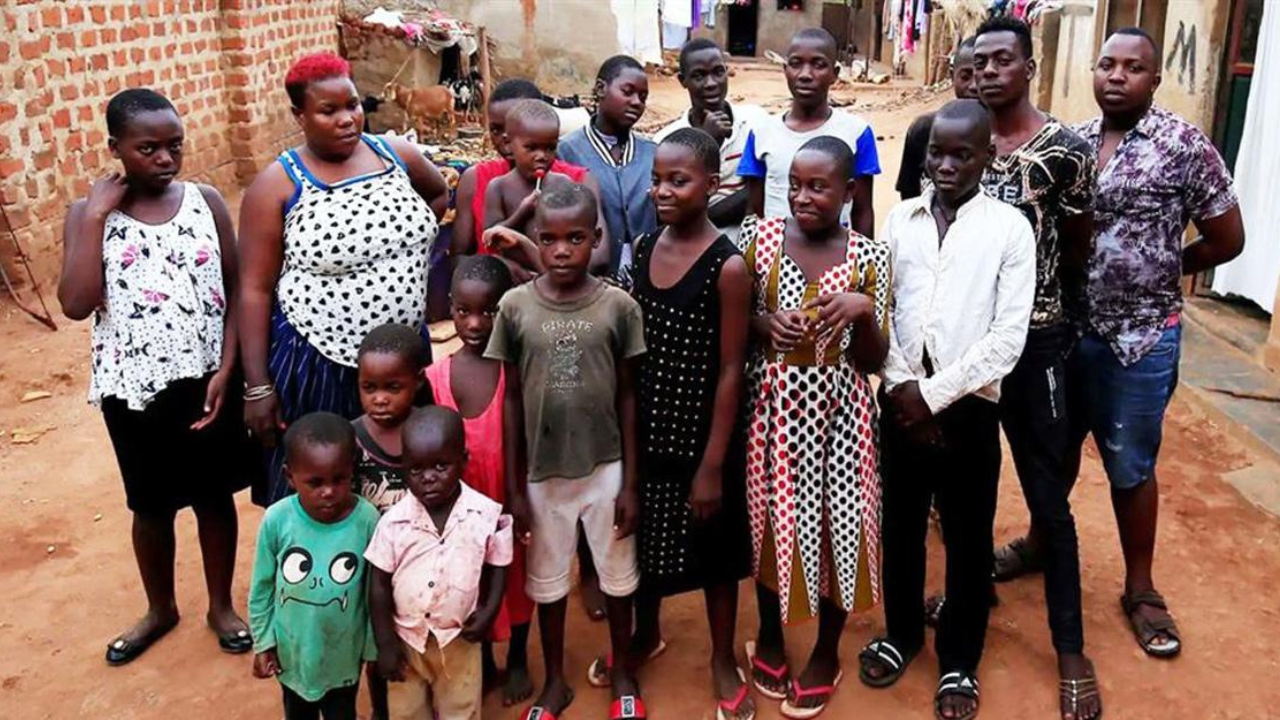
Mariam’s life became even more challenging when her husband reportedly abandoned the family in 2015. She took care of dozens of children on her own and took up any job she could find, including farming, tailoring, hairdressing, selling herbs and decorating.In an interview with Reuters, Mariam described the ongoing struggle to support such a large family, saying: “All my time was spent taking care of the children and working to make money. I grew up in tears and my man put me through a lot of pain.”Her eldest son Ivan Kibuka also described the daily reality of the family, saying: “Mum is overwhelmed and work overwhelms her. We try to help out as much as we can, such as cooking and doing laundry, but she still bears the entire burden of the family.”Reports show that the family sometimes needs about 25 kilograms of cornmeal per day to prepare enough food for everyone, and meat and fish are occasionally considered luxuries due to their high price.
The life of one of the largest families in the world
At various times, Mariam’s family consisted of more than 60 people, including children, grandchildren and daughters-in-law. The family lived in a few modest brick houses with corrugated iron roofs, and the older siblings helped with cooking, cleaning and caring for the younger children.Despite the enormous responsibility, Mariam repeatedly emphasized the importance of education. Whenever possible, she prioritizes sending her children to school because she believes education provides them with opportunities she never had.Mariam Nabatanzi’s life was more than just giving birth to 44 children. Her story highlights the lasting impact of child marriage, the importance of maternal health and the challenges of raising a large family in poverty. While the world may remember her for her extraordinary medical achievements, her greatest achievement was raising dozens of children despite financial and personal hardship.