



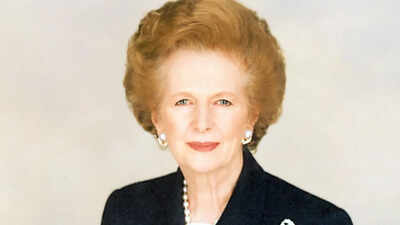
There are some quotes that immediately reveal the era they speak of. Others have no problem traveling through time because they are exposed to something familiar. Margaret Thatcher’s words about governing a family and governing a country fell somewhere in between. It grew out of political conversations, but its roots are in everyday life.For many people, this phrase conjures up images of shopping lists, household budgets, school schedules, unexpected bills, and the countless decisions that go into keeping family life running smoothly. These are rarely dramatic moments. No one applauded them. Newspapers don’t report on them. However, the ways they shape daily life are easily overlooked until something goes wrong.Thatcher understood the world very well. Long before she became Britain’s first female Prime Minister, she experienced the day-to-day tasks and responsibilities that millions of women deal with every day. Whether one agrees with her politics or not, this quote provides an interesting perspective on how practical experience can influence the way people think about greater responsibility.
Margaret Thatcher’s quote of the day
“Any woman who understands the problems of running a family will have an easier time understanding the problems of running a country.”
What does Margaret Thatcher mean?
This argument is often reduced to a simple comparison between households and government, but this misses the point.Thatcher was not saying that balancing a household budget was the same as managing a national economy. The scale alone makes this impossible. Her advice is that people who spend years making decisions within limited resources develop habits of mind that are useful elsewhere.Consider what happens in many families. Money is coming in. Fees compete for attention. Something unexpected happened. Plans change. A choice must be made.A family may want several things at once but lack the resources to do them all at once. Priorities become necessary. Trade-offs become inevitable.Political leaders face these challenges of their own, albeit on a larger stage. Thatcher believed that familiarity with these realities provided a useful basis for understanding public affairs.
Why does this sentence attract attention?
This quote endures today in part because it challenges assumptions about where important skills come from.For much of history, domestic work was viewed as irrelevant to leadership. Running a household is often seen as a personal responsibility rather than a source of valuable experience.However, the demands of home management are far greater than many people imagine.Someone has to organize finances, coordinate schedules, fix problems when plans fall apart, and keep everything running when things get tough.People who perform these tasks repeatedly develop judgment. Not a theoretical judgment, but a practical judgment.The kind that comes from dealing with real consequences rather than hypothetical scenarios.Mrs Thatcher’s comments drew attention to this reality.
Lessons Hidden in Everyday Life
It’s easy to underestimate familiar tasks.A person who has spent years managing a household may no longer think about how many decisions are involved because they have become routine.However, routines themselves often contain valuable lessons.Anyone who has ever tried to work with a limited budget during difficult times understands the importance of planning. Anyone who is responsible for a family knows that priorities sometimes conflict and perfect solutions rarely exist.Life has a habit of raising questions without warning.A car broke down. The device stops working. An unexpected expense arrives. A carefully planned schedule suddenly changes.These situations require flexibility and calm decision-making. These qualities are not unique to politics, but they are certainly useful in leadership.
How to apply this quote from Margaret Thatcher to your daily life
One of the more interesting aspects of Thatcher’s observation is that it encourages people to look at their own experiences differently.Many people believe that leadership begins when someone holds titles such as manager, director, CEO, and minister.In fact, leadership is often developed long before any title exists.Parents are using judgment when making difficult decisions for their families. It is stewardship for caregivers to support relatives in challenging situations. People who coordinate family finances are making choices that have long-term consequences.These experiences may not elicit public recognition, but the skills they teach can be transferred to many other aspects of life.This quote reminds us that valuable knowledge is not always gained in formal settings.
Why people still disagree about this
Like much of Thatcher’s legacy, this quote continues to spark debate.Some readers saw this as a nod to a work that is often underappreciated. They interpreted it as an acknowledgment that domestic responsibilities involve intelligence, organization and leadership.Others object to the comparison itself. They argue that the challenges of running a country have nothing to do with family life. International trade agreements, defense strategies and national infrastructure cannot be managed like household finances.This criticism is understandable. A country is obviously more complex than a family. However, this sentence was never really about the same task. It’s about transferable experience.This distinction explains why the statement continues to be discussed decades later.
The connection between responsibility and perspective
One thing that often changes when people are responsible for others is the way they view decisions.The choice becomes less personal. The consequences become more important. Long-term thinking becomes necessary.Those in charge of a household quickly discover that decisions affect more than one person. The same principles apply to businesses, community organizations and governments.Responsibility sharpens perspective. It forces people to think about outcomes rather than intentions. It encourages planning rather than impulse.These are lessons that emerge naturally through experience.
Why practical wisdom is important
Modern society places a high value on expertise, and for good reason. Complex problems often require specialized knowledge.At the same time, expertise alone is not always enough. Practical wisdom is also important.There is a difference between understanding an idea theoretically and dealing with it in reality. People who spend years solving everyday problems often develop instincts that cannot be easily taught through lectures or textbooks.This does not mean that practical experience replaces formal knowledge. This means the two can complement each other.Margaret Thatcher’s famous quotes reflect this belief.
Margaret Thatcher’s quotes reveal leadership and responsibility
Margaret Thatcher’s quote remains timeless because it highlights something that is often overlooked: Many important leadership skills are developed in ordinary circumstances.The experiences gained through running a home may not be the same in scale as government, but they often involve responsibility, compromise, planning, and accountability. These lessons remain in people’s minds long after a given situation has passed.Perhaps that’s why this quote continues to spark discussion. Beneath the political context lies a broader observation of human experience. Some of the most useful lessons in judgment and leadership are learned quietly by taking on responsibilities that rarely attract attention but shape the way people understand the world.Long before someone enters parliament, leads a company or manages an organization, they may have spent years making decisions that require patience, adaptability and common sense. Thatcher believed these experiences were important. Whether one agrees with her conclusion or not, the argument remains hard to dismiss entirely because it starts with something familiar: the day-to-day challenges of making things work when resources are limited and others depend on the outcome.