


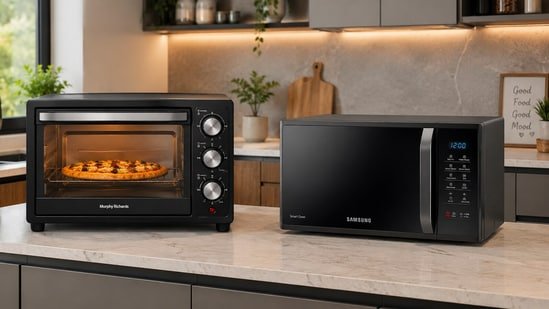
At the height of Indian Summer, cooking even a simple meal can feel exhausting. You turn on the stove, the temperature in the kitchen rises instantly, and the ceiling fan suddenly feels useless. While most people blame gas stoves for heat, countertop appliances like microwaves and OTGs can also quietly affect the heat and power consumption in your kitchen.


This difference becomes especially noticeable during long cooking times. One device can quickly reheat food without changing room temperature too much, while another can turn your kitchen into a mini stove in minutes.
That’s why choosing between a microwave and an OTG no longer just comes down to cooking style. It also touches on summer comfort, indoor heat management, cooking convenience and monthly electricity bills.
After years of testing and reviewing home appliances, one thing becomes abundantly clear over the summer: The two appliances generate heat in completely different ways, which changes everything from cooking speed to room temperature.
OTG vs Microwave: Which is better for summer?
| Comparative aspect | Micro-wave oven | OTG (Oven Toaster Grill) |
|---|---|---|
| Core heating technology | Using electromagnetic waves to heat food internally | Use electric heating rods to generate dry radiant heat |
| kitchen heat effects | Releases very little heat into the room | Significantly increases kitchen temperature during use |
| Preheating requirements | No preheating required | It takes 10-15 minutes to warm up |
| average cooking time | Cooks quickly, usually within 2-10 minutes | Slow cooking, usually 20-60 minutes |
| Energy usage patterns | Higher wattage but shorter run time | Moderate power but longer run time |
| Best used for | Reheat, steam, defrost, fast food | Bake, grill, roast, bake |
| food texture | Keep food soft and moist | Creates a crispy, brown texture |
| summer comfort | Better for hot weather cooking | Can make the kitchen feel noticeably hotter |
| outer surface temperature | The outside usually stays relatively cool | The body and glass door will become hot during operation |
| Applicable cookware | Microwave safe glass, ceramics, selected plastics | Metal trays, aluminum foil, oven safe cookware |
| Impact on AC cooling | Minimal impact on room cooling | Since the additional heat will increase the AC load |
| Ideal daily use amount | Quick everyday cooking and reheating | Occasional bakery and barbecue events |
Why using OTG will make your kitchen feel hotter
The biggest reason is how these devices generate heat.
Microwave ovens use electromagnetic waves to heat food. These waves directly target the water and fat molecules inside the food, causing them to vibrate rapidly and generate heat internally. Since the heat is generated within the food itself, the device does not need to heat the surrounding air as much.
This is why microwave ovens often remain relatively cool from the outside even after cooking. Your kitchen temperature will barely change during brief reheating or cooking sessions.
However, an OTG works more like a traditional oven. It uses an electric heating rod that gets very hot, filling the entire chamber with dry heat. For efficient cooking, the product maintains the temperature between 150 and 250 degrees Celsius for extended periods of time.
And the heat isn’t completely trapped inside.
The glass door, metal body and surrounding air gradually heat up, especially when baking or grilling. If you’ve ever baked cookies or grilled a sandwich on a summer afternoon, you’ve probably noticed how uncomfortable the kitchen can become in 20 minutes.
The Best OTGs to Consider This Year
The real problem in summer is cooking time
Many people only compare appliance wattage, but in practice, cooking time is just as important.
OTG usually requires:
- Preheat for 10 to 15 minutes
- Cook 20 to 45 minutes
- Continuous high temperature operation
This means your kitchen will be exposed to high temperatures for almost an hour.
The microwave skips preheating entirely. Most everyday tasks such as reheating curry, steaming vegetables, melting butter, or cooking a quick meal can be completed in 2 to 10 minutes.
Shorter running times can have a huge impact in the summer because less heat is entering your living space. It can even reduce the load on the air conditioner, especially in compact apartments where the kitchen and living room are connected.
Microwave oven vs. OTG: Which device consumes more power?
This is where things get interesting.
Many OTGs are actually rated lower than microwaves. But they run much longer.
Microwave ovens may consume 1200W to 1400W of power, but typically only run for a few minutes. OTG may use about 800W to 1200W of power, but it can still run for 30 to 60 minutes at high temperatures.
In actual use in summer:
- For everyday cooking tasks, microwave ovens are generally more energy efficient
- OTG consumes more total power during baking
- Longer OTG usage also indirectly increases air conditioner or cooler usage due to additional room heat.
Most people ignore indirect cooling costs when calculating equipment efficiency.
The best microwaves to consider this year
Why OTG is still important despite hot weather
Although microwaves are better suited for summer use, OTG still has one major advantage: texture.
Microwave ovens use the moisture inside the food to cook it, which is why reheated pizza often turns out soft and rubbery. OTG uses dry heat to help foods crisp up, brown, and bake properly.
This is why OTG remains critical for:
- Baking cakes and cookies
- grilled cheese or chicken
- Toasted Garlic Bread
- grilled vegetables
- Make crispy snacks
Therefore, a better approach in summer is not to replace one device with another. It is using them strategically.
Smart ways to use OTG in summer without overheating your kitchen
If you bake or grill regularly, a few simple changes can make a dramatic difference:
Using OTG at night: Cooking after sunset can reduce heat buildup in the house.
Turn on your exhaust fan as early as possible: Don’t wait until the kitchen gets hot. Start ventilation before preheating begins.
Avoid opening doors frequently: Each door opening releases trapped heat directly into the room and extends cooking time.
Bake in batches whenever possible: Instead of using OTG multiple times a day, cook larger batches together.
Use your microwave to complete everyday tasks: Only reserve OTG for recipes that really call for browning or crispy texture.
During the Indian Summer, microwave ovens were clearly a more comfortable and energy-efficient appliance for everyday cooking. It cooks faster, releases much less heat, and keeps your kitchen noticeably cooler.
OTG, on the other hand, remains unparalleled when it comes to baking and grilling, and can be a consistent source of heat during long cooking sessions.
The smartest kitchen setup isn’t choosing one or the other. It’s about knowing the best performance of each device and using them accordingly.
For quick weekday meals during the peak summer season, the microwave easily wins. But when crispy texture and proper roasting are important, OTG still has its place on the countertop.
Give you similar stories
research and expertise
I have been covering consumer technology and home appliances for several years and have closely followed the evolution of modern kitchen appliances like microwaves and OTGs in Indian homes. From basic heating appliances to convection microwave ovens and advanced OTGs designed for baking, grilling and energy-efficient cooking, these appliances are now playing an even greater role in daily convenience and kitchen comfort.
In this guide, I have looked at microwaves and OTGs across various budget, capacity and feature categories from brands like LG, Samsung, IFB, Panasonic, Morphy Richards, Bajaj, Borosil and more.
I compared cooking efficiency, heat production, energy consumption, cooking speed, usability, maintenance and actual performance during Indian Summer, while also analyzing day-to-day usefulness from buyer reviews and long-term user feedback.
Disclaimer: At Hindustan Times, we help you stay updated with the latest trends and products. Hindustan Times has affiliate partnerships, so we may get a share of the revenue when you make a purchase. We are not responsible for any claims relating to the products under applicable law (including but not limited to the Consumer Protection Act 2019). The products listed in this article are in no particular order of preference.


