



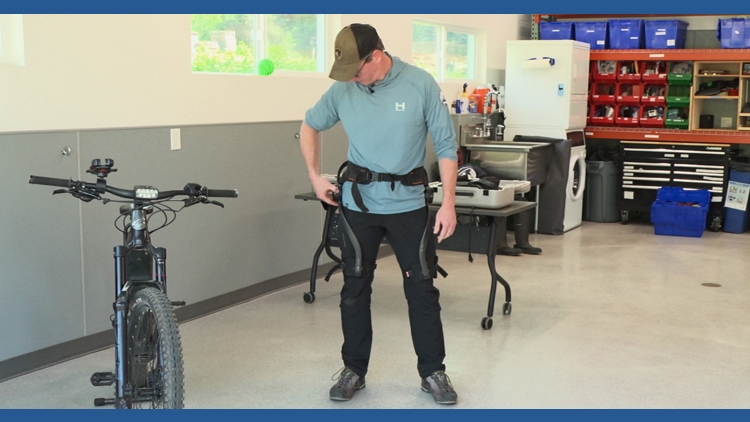
An all-volunteer search and rescue team is testing wearable devices that lift and propel rescuers’ legs with every step during real-life missions in the Cascades.
SEATTLE — When someone is lost or injured in the rugged terrain of Western Washington, every minute counts. Now, the Seattle Mountain Rescue Team is testing technology that could improve response times: wearable exoskeletons that power rescuers’ legs through the mountains.
The team is one of only two in the country using equipment made by HyperShell during actual missions. In the past month alone, the exoskeleton has been deployed three times in the field.
“If we can get to the subject half an hour or an hour earlier, it could mean the difference between a positive and a negative outcome,” said Wes Cooper, senior technical director for Seattle Mountain Rescue.
The device is strapped to the rescuer’s waist and legs. Once worn, it senses the wearer’s movements, predicts their next move, and adds mechanical power in sync with each step – reducing fatigue and helping small teams cover more ground, even on terrain that other tools like e-bikes can’t reach.
Cooper describes the feeling as different. “It feels like a puppet, like there are invisible strings pulling your legs up,” he said.
Seattle Mountain Rescue has served the Cascade region for more than 75 years as an all-volunteer organization based on technical rope rescue, medical care, terrain management and patient evacuation. Cooper said more people are getting outdoors, making the organization’s coverage area more active and more demanding.
The exoskeletons are the latest in an evolving technology toolkit that now includes e-bikes, drones, Starlink satellite communications for remote command posts, CalTopo real-time mapping software and artificial intelligence tools being explored for search planning and data analysis. Last year, electric bikes were added to the fleet to help the team reach crowds faster than walking.
Cooper said exoskeletons fill a gap that other tools can’t. “As you move, it actually lifts your leg and then pushes it down,” he said, explaining how the device assists with each step.
Currently, the team is in the testing phase to evaluate whether the technology is suitable for use in real mountain conditions. If it does, HyperShell’s exoskeleton will likely become a permanent part of the team’s equipment and their partnership with the company will continue. The only rescue team in the country currently using them operates out of Utah.
Cooper noted that the tasks performed by Seattle Mountain Rescue have become more complex over time. Our goal remains the same: to bring everyone home from remote locations.