

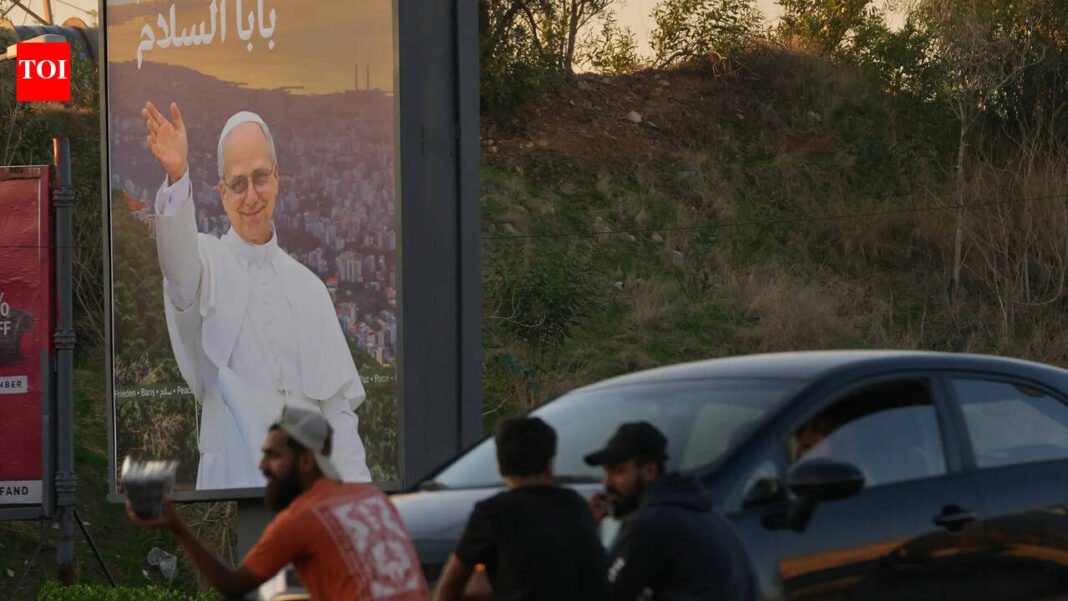
Becoming pope changes a lot of things. It gives a person a new name, a new home, a new wardrobe and spiritual leadership for 1.4 billion Catholics. Even becoming a moral voice in the world against his own president. Apparently, that didn’t give him the authority to change his phone number at a bank on Chicago’s South Side without being physically present. Pope Leo XIV (born Robert Prevost in Chicago) discovered this after his election in Rome, when he received an American version of a statement quite famous in Indian government banks: Lunch ke baad aao (Lunch will follow). According to Chicago Father Tom McCarthy, the new pope called Bank of America two months after he took office to update his contact information. This should be a routine administrative errand. Instead, it became a little parable about modern life that would humble even the Bishop of Rome with customer validation.Leo called himself Robert Prevost. Bank employees raised the necessary security questions, listened to him, and then issued a verdict familiar to anyone who had ever dealt with institutional proceedings: He had to intervene personally.For obvious reasons this is not possible. Prevost traveled to Rome for a conclave as a cardinal, and after being elected pope, he could no longer simply go home and do business. He told the employee he couldn’t get in. After some back and forth, he attempted one of the strangest roll calls in banking history.“Would you mind if I told you I was Pope Leo?”But that’s not the case. The employee hung up the phone.There is an endearing absurdity to this story. The cardinals have embraced him. The Vatican accepted him. The Catholic world has embraced him. However, the banking system does not. To the clerk on the phone, he was not the newly elected pope but a customer who had failed to follow the required procedures. To be fair, she probably had good reason to be skeptical, too. “I am the Pope” is exactly what a prankster might say if he has ambition but lacks imagination.The pope then called a priest he knew in Chicago, who managed to contact the bank president. Even there, McCarthy argued, the first response was not awe but policy. The bank president initially said, “That’s our policy,” before ultimately recognizing that losing the Pope’s account would be an unusual customer service failure.The details eventually changed, but the anecdote stuck because it captured the wonderful humanity of a character often wrapped in ritual. The pope blesses crowds, preaches and carries the burden of the global church. They also have phone numbers, bank accounts and the same old problem as everyone else: The system doesn’t care who you are until the right boxes are checked.It also recalled a similar moment in 2013, when Pope Francis called his newspaper supplier in Buenos Aires to cancel a delivery after his election in Rome. The seller first thought it was a prank. In both cases, the papacy begins not with thunder but with ordinary life suddenly left behind.That’s what makes Leo’s story so fascinating. This is not a scandal, not a crisis, not a theological controversy. That’s just what the Pope discovered In the modern world, divine ordination might get you the keys to the Vatican, but it might not get you past a bank’s compliance department.God said yes. Roman said yes. The conclave said yes. The clerk said you still have to come in person.