


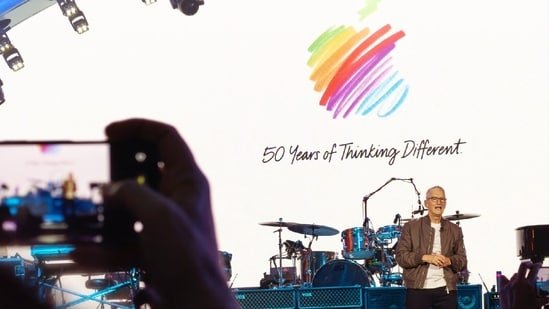
Apple made a major announcement today, one that will have ripple effects not only on the future of the company, but also on millions of Apple device owners around the world. The company announced today that Tim Cook is stepping down as CEO. His successor will be John Ternus, currently Senior Vice President of Hardware Engineering, and the change will take place on September 1, 2026, before Apple’s fall event.

Does this mean Tenas will launch the iPhone 18 series this year? Maybe, but we won’t know for sure until a launch event later this year. For now, the focus is on current CEO Cook, who has spent 15 years leading the company one product and one service at a time.
For those who spend little time worrying about issues outside of Apple’s products, Timothy Donald Cook, better known as Tim Cook, joined Apple in 1998 as Senior Vice President of Worldwide Operations. Before joining Apple, Cook briefly served as vice president of materials at Compaq Corporation and joined Intelligent Electronics after a brief stint as CEO of its reseller division. He began his career at IBM, where he worked in various roles for nearly 12 years.
While serving as Apple’s head of global operations, Cook orchestrated a shift from Apple-owned factories and in-house warehouses to contract manufacturing with the likes of Foxconn and Wistron. He also reduced the company’s existing inventory from months to days and secured long-term deals on key components, which ultimately fueled Apple’s growth in the early 2000s. On August 24, 2011, he took over as CEO of Apple after founder and then-CEO Steve Jobs resigned from the company due to health issues.
So why are we talking about all this? Because Cook’s experience as Apple’s head of global operations paved the way for him as CEO, his focus on increasing efficiency while launching new hardware and software products ultimately drove the company’s growth, turning a $350 billion company into a $4 trillion behemoth.
Tim Cook and Apple’s Hardware Journey
Cook is often called Apple’s “operations guru” because he built a ruthless supply chain ecosystem that helped the company save billions of dollars. Contrary to that claim, Apple has launched at least five new hardware product categories since Cook took over as CEO. We’ll talk about software and services later, so hang on for a moment.
first is apple watchdebuted as a fashion accessory on September 9, 2014 (launched in early 2015). At the time, it didn’t have built-in GPS or an array of sensors to continuously monitor your health parameters, from sleep to stress to heart activity. Instead, it syncs with your iPhone to track your location. But it does come with a built-in heart rate sensor, 8GB of storage, and controls for managing Apple Music on your iPhone. Today, the Apple Watch is one of the most popular smartwatches in the world.
then AirPodsThe company launched it with iPhone 7 on September 7, 2016. Equipped with a custom Apple W1 chip, these products started one of the biggest trends in the electronics industry, which is ditching the traditional 3.5mm jack for wireless headphones. Today, the market is flooded with AirPods clones, with companies offering a 3.5mm jack in their smartphones as a luxury. In case you were wondering, the iPhone 7 is the first jackless iPhone!
The following year, Apple announced family podcast At WWDC 2017, it entered the smart speaker market dominated by companies such as Google Home, Amazon Echo and Sonos. That said, the category didn’t really take off, and today Apple has two smart speakers in its portfolio – the classic HomePod, which sells for around $33K and HomePod Mini which sells for around 33K $11K.
Another key move Apple took during Cook’s tenure was the switch from Intel chips to self-developed chips Apple silicon in all its PCs and laptops. The news was announced at WWDC 2020, a process that began with the launch of the Apple M1 chip in November of the same year. Today, all Macs, MacBooks and even iPads are powered by Apple Silicon.
The list isn’t over yet. Apple launches aviation label April 21, 2021, marks the entry into the Bluetooth-based tracker category. At the time it was equipped with ultra-wideband technology that enabled precise lookup capabilities in these devices. Think of it as GPS for locating AirTags. The second-generation device, launched earlier this year, extends connectivity and improves findability.
Finally, Apple announced Apple Vision Pro Entering the mixed reality headset category at WWDC 2023. It blends digital content with the real world to provide users with an immersive mixed reality experience.
Apart from this, Cook is also known for launching the “Pro” iPhone models. You can read more about it here: From AirPods to ‘Pro’ iPhone: The Tim Cook era at Apple is coming to an end
Tim Cook and Apple’s software and services journey
While Cook introduced many new hardware-based products and product categories during his 15 years as Apple CEO, his real legacy lies in transforming a hardware-centric company into a services and software giant. Under his leadership, services grew from software supporting Apple hardware to a separate vertical that accounts for about a quarter of Apple’s revenue.
One of the earliest decisions he made in his own direction was to focus on iClouda service announced by Jobs in early 2011. At the time, iCloud was just a cloud-based service for storing content on your iPhone, iPad, iPod touch, and Mac or PC. However, Cook described it as a “long-term strategy.” Speaking at a conference in 2012, Cook said iCloud was not just a product but “the strategy for the next decade” of Apple’s business. Over time, iCloud has evolved into a service that not only stores user data but also provides a consistent cloud experience across Apple’s range of devices.
Under Cook, Apple has also moved into fintech. Apple Pay In 2014, it was the second contactless payment service launched by the electronics company, following the launch of Android Pay and Google Wallet in 2011. The service is currently available in more than 100 countries and is expected to arrive in India later this year.
Cook adds another major feather in his cap apple music 2015. Yes, you can use the service to listen to all your favorite tracks, including the latest Taylor Swift songs, and discover new music! The service currently has more than 95 million subscribers.
That said, Cook’s big push in the services industry came in 2019, when Apple launched Apple Arcade, Apple TV+, Apple News+ and Apple Card – Done in one go. Today, Apple TV+ is estimated to have more than 45 million subscribers, with popular shows including “Ted Lasso,” “The Morning Show” and “Severance.”
Cook also introduced apple one In 2020, this marks a clear change in priorities, rather than an expansion, from just hardware and devices to include software and services. If you’re in the Apple ecosystem but still don’t know what it is, here’s a quick synopsis: Apple One is a subscription service that bundles Apple services like Apple Music, Apple TV+, Apple Arcade, Apple News+, Apple Fitness+, and iCloud into one plan. It is similar to the Google One program and starts with $India $195 per month.
Ultimately, Cook will go down in Apple history as one of Apple’s great AI promoters. Apple information At WWDC 2024. However, the service has yet to achieve what Apple promised at the iPhone 16 launch event.
Apple and its major acquisitions under Cook
In addition to launching new products and services, Apple has also strategically acquired companies to enrich its hardware and software product portfolio. These acquisitions began after Apple completed its purchase of Arnobit Technology The price range is between $400 million and $500 million. The deal helped the company acquire flash memory components for iPhones. Likewise, it gets AuthenTec 2012 and PrimeSense 2013. These form the basis of the TouchID and FaceID features on iPhone and iPad.
On the audio side, Apple acquired under Cook Beat electronics and beat music A total of $3 billion. The deal laid the foundation for advanced audio devices like Apple Music (launched in 2015) and AirPods Max. Apple also sells Beats products such as headphones, earphones and charging cables separately. The company also acquired Shazam In 2017 it was approximately US$400 million. It’s now available as a feature on Apple devices, while its website and Android app continue to be available to users outside of the Apple ecosystem.
Likewise, it gets texture In 2018, it later became Apple News+. also got Pixel Master In 2024, an unknown amount of money will be spent to bring the platform’s entire creative suite to Apple Creator Studio. same year, Darwinian Artificial Intelligence and Xnor.ai Joining the company bolsters its AI arsenal.
In terms of chips, Apple acquired Intel Smartphone Modem Business In 2019, the company will spend $1 billion to reduce its reliance on Qualcomm modems and design its own 5G modems, much like Apple does with Apple Silicon and its A-series chips that power its iPhones. Apple’s first 5G modem chip, C1, appeared in the iPhone 16e, which launched last year. The latest modem C1X can be found in the latest iPhone iPhone Air.
It’s safe to say that when Cook took over as Apple’s CEO, succeeding Steve Jobs, there were concerns about his ability to fill the shoes of the company’s founder and chief innovator. Fifteen years later, Cook has not only fulfilled that duty, but created his own legacy.


