


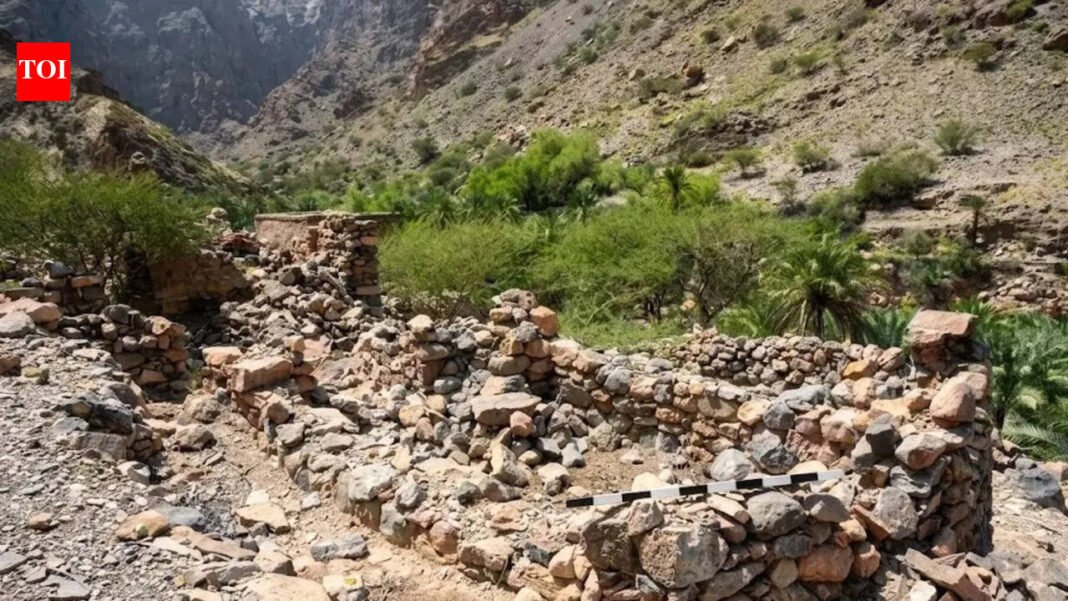
A remarkable archaeological discovery has been made in Oman when construction work along an important coastal road in the Batinai region led to the unearthing of tombs dating back nearly 3,000 years. Oman’s Ministry of Heritage and Tourism confirmed the discovery and immediately intervened to halt construction and ensure the site was excavated in detail.Officials say the tombs belong to the Iron Age, a period crucial to understanding early human settlement in the Arabian Peninsula. The cemetery appears to be a structured cemetery with multiple graves clustered together, suggesting that the Omani coastline was once inhabited by an organized community.
Ancient tomb discovered in Oman
Archaeologists examining the tomb found human skeletal remains along with carefully placed items, providing a rare opportunity to understand burial traditions of the time. Pottery was placed near the deceased, along with personal decorations such as beads and ornaments, and stone tools believed to have ritual value.Experts from Oman’s Ministry of Heritage and Tourism explained that the arrangement of the objects reflects a belief system in which the objects in which the dead are buried are considered important for the afterlife. Differences in burial styles across graves also indicate differences in status, evolving customs, or different family traditions within the same community.This level of detail is particularly important because well-preserved burial environments from this period remain relatively rare in the area.
Oman’s role in ancient trade
Authorities stressed that it was no coincidence that the graves were located on the coast of Batinay. The region historically served as a strategic link between major ancient trading networks linking the Arabian Peninsula with Mesopotamia, the Indus Valley and parts of East Africa.According to officials, the discovery provides important evidence of early human habitation and helps archaeologists better understand how Omani communities lived, traded and interacted. The findings are expected to contribute to wider research into cultural exchange and economic activity during the Iron Age.A spokesman for the ministry noted that the discoveries continue to reinforce Oman’s historical importance as a crossroads of civilizations, with maritime trade and settlement patterns shaping early societies.
Looking to the future
Excavations at the site are still ongoing; experts are carefully documenting every detail to maintain the integrity of the findings. Construction work in the area remains suspended, reflecting the government’s priority of protecting archaeological heritage over rapid development.Researchers believe the site may hold more secrets beneath the surface, including additional burial chambers, traces of nearby settlements and biological evidence that could shed light on ancient humans’ diet, health and daily life.Oman’s Ministry of Heritage and Tourism said the site may eventually be designated a heritage protected area, ensuring long-term preservation while opening the door to academic research and potential cultural tourism.