


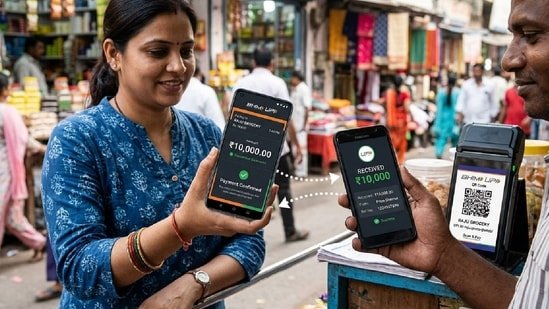
Fast digital payments are one of the pillars of the Indian financial ecosystem. According to RBI data, digital payments have grown 38 times in the past 10 years, with transaction values more than tripling. The rapid growth of instant digital payments has also led to an increase in digital scams or authorized push payment scams. To address this issue and prevent scammers from bilking unsuspecting users of their hard-earned money, the Reserve Bank of India (RBI) has proposed introducing a one-hour delay for instant digital transfers.

For those unfamiliar, authorized push payment (APP) scams are scams in which fraudsters impersonate trusted entities such as bank officials or vendors to trick individuals into voluntarily transferring money directly to them. Because individuals authorize these payments in real time, these transactions are difficult to recover and often result in significant financial losses.
How does RBI hope to curb digital payment scams?
The central bank has released a discussion paper titled “Exploring digital payment safeguards to curb fraud”. This discussion paper proposes a short delay of one hour for peer-to-peer payments of the above transfers $10,000. This short delay window is expected to curb app scams by giving users a chance to reconsider their transactions. The measure is not only being considered for UPI payments but also for other digital payment modes including Instant Payment Service (IMPS), National Electronic Funds Transfer (NEFT), Real Time Gross Settlement (RTGS), mobile wallets and net banking.
As part of this process, the payor’s bank will temporarily debit the customer’s account, while the payor will retain the option to cancel the transaction. “During this period, if the payor’s bank considers that the transaction is unusual or atypical, it may seek re-confirmation from the payor while sharing appropriate information about the suspicious nature and warning the payor. If the payor still chooses to proceed after reviewing the information provided, the transaction will be executed by the payor bank,” the RBI wrote in a release.
The RBI also plans to provide an overlay mechanism to bypass this lag. This may be achieved through a whitelisting mechanism for specific payees. This means that whitelisted payees will not be affected by any time lag.
Reserve Bank of India’s plan to protect senior citizens from digital payment scams
Apart from this, the Reserve Bank of India has also proposed new measures to protect senior citizens and people with disabilities from app scams. To this end, the central bank recommends that these individuals designate a “trusted person” as another layer of identity verification for the above transactions. $50,000.
While users can change who they trust, there will be a 24-hour cool-down period on this process to ensure these decisions are made with full knowledge and to prevent further scams.
That said, the Reserve Bank of India (RBI) has excluded commercial transactions (including UPI, card-based payments and net banking payments), recurring payments and check-based transactions from the ambit of these requirements.
Finally, the RBI proposes to provide customers with special digital payment controls, including a “switch” for setting limits for different transaction types and any digital payment at the account level. This will sit on top of the card-based controls already available to the user. The idea is to allow customers to control “account-level debit transactions across any or all digital payment channels.”
The RBI also plans to provide customers with a one-click kill switch to disable all digital payment transactions in their accounts. This control will override all existing controls and configurations set up by the account holder and will allow it to be disabled after proper authentication or in-person visit to the nearest bank branch.
When will these measures be implemented?
As of now, there is no date for implementation of these safety measures.