



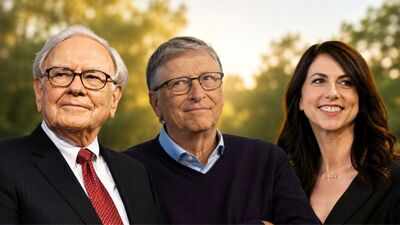
In the coming decades, private wealth will be transferred from generation to generation like never before. According to Fortune, it is estimated that approximately $124 trillion in assets will be inherited by 2048, creating one of the largest financial transformations in recent history. While much of the discussion has focused on family wealth and succession planning, attention is increasingly turning to what this change might mean for philanthropy. Wealth inequality has become a more pronounced issue than it was a generation ago, and expectations for charitable giving have changed accordingly. Young heirs are entering conversations that were once almost exclusively the domain of their parents and grandparents, bringing with them different priorities and a greater willingness to question established practices. In many wealthy families, philanthropy is no longer just about preserving a legacy. Many do not see themselves primarily as donors but as participants in broader efforts to support lasting social change.This shift isn’t limited to the time of charitable giving. Young philanthropists also approach their roles differently than previous generations.
How young heirs are redefining philanthropy
Milken Institute It is believed that philanthropy is approaching a period of significant change as younger family members become more involved in decisions about inherited wealth. Rather than accepting existing structures, many are questioning whether traditional models can still keep up with the pace and scale of today’s social and economic challenges.Melissa Stevens, executive vice president of the Milken Institute for Strategic Philanthropy and co-author of the report, said growing public attention to inequality has changed expectations for wealthy families.“Wealth inequality has never been greater, and we have a sharper eye on the rich. It raises the stakes. “Reports indicate pressure is coming from multiple directions. Public scrutiny of billionaire wealth has increased in recent years, and younger generations are scrutinizing whether family foundations and philanthropic commitments can solve pressing problems quickly enough.
Why young heirs are urged to speed up charitable giving
For years, many of the world’s wealthiest families have viewed philanthropy as a long-term responsibility, often planning charitable distributions over decades. Initiatives such as the Giving Pledge encourage billionaires to devote much of their wealth to philanthropy, although these commitments rarely have a set timeline.In some of these families, however, younger heirs are encouraging a different approach. Katherine Lorenz, director of the Giving Pledge Next Generation group, said she has seen younger relatives encourage older family members to start distributing more wealth rather than delaying major gifts.“I’m seeing more and more of the younger generation urging their parents to give more,” Lorenz reported, according to Fortune. “[They’re saying]”You’ve made enough money, Mom and Dad, it’s time to give it away, and give it away faster.”“Many of them are ready to deploy capital faster. Sometimes the barrier is the older generation.”
Why trust-based philanthropy is booming
Lorenz believes many young philanthropists ask different questions before deciding where to invest their money. While immediate support remains important, there is growing interest in understanding the conditions that create social problems in the first place. Using housing as an example, she explained that helping people in urgent need is only part of the challenge.“Why do we have so many homeless people? What’s going on? How can we reduce the numbers in this situation?” Another area where attitudes are changing involves the relationship between donors and the organizations that receive funding. Instead of attaching detailed restrictions to grants, some philanthropists are beginning to provide unrestricted financial support, allowing recipient organizations to decide how to spend the funds based on local priorities and experiences.MacKenzie Scott has become one of the most prominent examples of this practice, having donated approximately $26 billion in unrestricted gifts over the past six years to a variety of organizations, including historically black colleges and universities, diversity initiatives and disaster relief groups.Stevens believes Scott’s approach influenced the broader discussion about philanthropy. “She’s just a great example of trust-based philanthropy,” Stevens said. “[It’s] There’s a real leaning toward partnership with the community, learning from the community, listening to the community and creating with the community rather than coming up with some predetermined solution. “
Women poised to influence the future of giving
The transfer of wealth will also change who holds the decision-making power in many of the world’s richest families. According to projections cited in the Milken Institute report, women are expected to inherit approximately $47 trillion by 2048, accounting for approximately 56% of all inherited wealth worldwide.Stevens believes the transformation could strengthen an approach that’s already gaining momentum, with more philanthropists working alongside communities rather than directing projects remotely. She suggested that the emphasis is increasingly on listening first and developing solutions with local organizations, rather than assuming that donors already know the best course of action. Lorenz’s perspective on philanthropy is rooted in her own family’s history. She is the granddaughter of oil and real estate entrepreneur George Mitchell, whose company, Mitchell Energy & Development Corp., was reportedly on the Fortune 1000 before being acquired by Devon Energy Corp. in 2001 for $3.1 billion.After graduating from Davidson College in North Carolina, Lorenz spent time in Nicaragua and then lived in Oaxaca, Mexico, for about six years. During this time, she established a non-profit organization serving rural indigenous communities.These years have changed her perspective on charity work.