


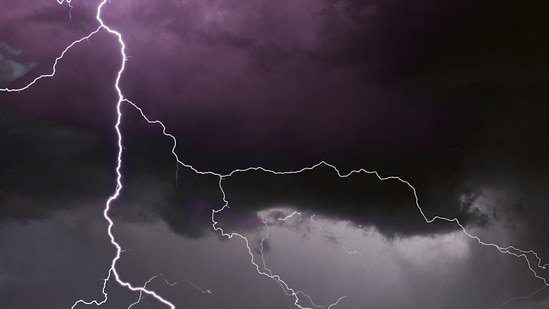
residents of the northern region south carolina They were urged to seek shelter on Saturday after the National Weather Service (NWS) issued a dire warning thunderstorm A warning is in effect for parts of Greenville, Anderson, Pickens and Spartanburg counties.

The National Weather Service has not issued a tornado warning at this time.
Forecasters warned that severe thunderstorms could produce damaging winds, hail and heavy rain as they move across the region. The warning remains in effect until 4:15 p.m. local time.
Officials warned of hail up to 0.75 inches in size and winds reaching 60 mph.
“For your safety, move to an indoor room on the lowest floor of a building. Call the National Weather Service toll-free to report damaging winds, hail, or flooding,” the National Weather Service warned.
Storm brings threat of damaging winds, hail
The National Weather Service defines a severe thunderstorm warning as one issued when a storm is producing or expected to produce winds of at least 58 mph, hail of one inch or larger, or both.
The NWS issued a statement at 2:32 p.m., which read: “Northeastern Anderson County in upstate South Carolina, central Pickens County in upstate South Carolina, and east-central upstate Oconee County in upstate South Carolina until 3:30 p.m. ET. At 2:32 p.m. ET, a severe thunderstorm occurred 6 miles north of Clemson (near Six Mile), moving east at 30 mph.”
Meteorologists warned that the strongest units could produce brief but intense bursts of rain, reducing visibility. Localized flooding may also occur in low-lying areas with poor drainage and repeated heavy rains over a short period of time. Drivers are urged to slow down on wet roads.
The National Weather Service has issued warnings to expect damage to power lines and trees. Easley, Birdsville, Piedmont, Central, Liberty, West Pelzer, Norris, Six Mile, Williamston and Lake Keowee are among the affected areas.
Also read: New attacks and warnings: Tensions rise in Strait of Hormuz, US-Iran ceasefire under threat
Residents advised to monitor weather radar and take shelter
The NWS advises residents to move into a sturdy building at the first sound of thunder and to stay indoors for at least 30 minutes after the last sound of thunder.
Emergency officials encourage residents to monitor local weather radar and trusted sources for the latest alerts, watches and forecast changes. Conditions can change quickly as thunderstorms intensify or weaken.
Residents should avoid using pipes or electrical equipment and stay away from windows, according to tips from the Independent Mail.