


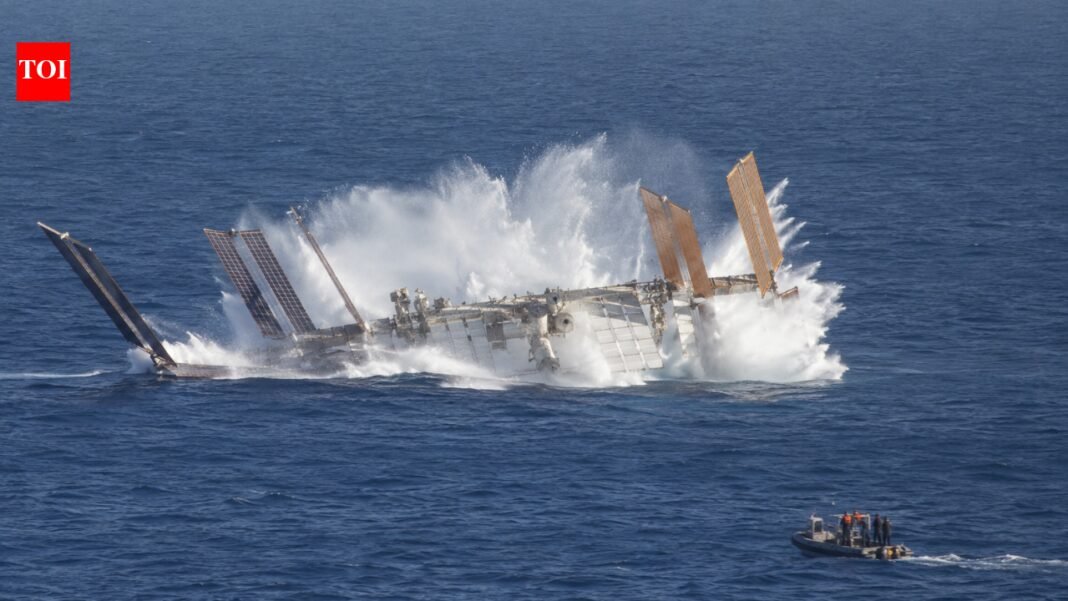
As the International Space Station (ISS) nears its end of life, NASA Preparations are underway for one of the most ambitious and controversial space engineering projects ever undertaken. The agency plans to guide the 420-ton orbiting laboratory through a controlled reentry and then guide the surviving debris to a remote area of the Pacific Ocean often referred to as the world’s “spacecraft graveyard.” While NASA insists the operation is the safest and most responsible option, a growing number of environmental experts believe the plan raises important questions about ocean health, pollution and the long-term ecological consequences of using the ocean as a disposal site for space infrastructure. The debate highlights a new challenge in the modern space age: how to responsibly decommission ever-larger objects from orbit without creating new environmental risks for Earth.
Why NASA plans to crash the International Space Station into the Pacific Ocean
NASA It has been confirmed that the International Space Station will intentionally deorbit at the end of its mission, rather than remaining in orbit or moving to a higher altitude. According to the agency, the main goal is to “responsibly return space station structures to uninhabited ocean areas.” The strategy combines natural orbital decay with controlled maneuvers to guide the space station to remote oceanic areas away from populated areas.The agency has repeatedly said controlled reentry is necessary because aging infrastructure, structural fatigue and rising maintenance costs make indefinite operations impossible. NASA also considers planning for safe deorbiting a key challenge as the space station approaches retirement.NASA noted in official documents that the controlled re-entry orbit was specifically designed to ensure surviving debris avoids populated land and minimizes risk to human life.As NASA mentioned in the International Space Station Transition Plan:“The primary goal of the space station deorbit operation is to responsibly re-enter the space station structure into an uninhabited area of the ocean.”
Will International Space Station debris affect marine ecosystems? Scientists proposed environmental issues
While most of the International Space Station’s components are expected to burn up upon reentry, experts say some parts made of heat-resistant materials may survive and reach the ocean surface. Environmental researchers believe that little is known about the cumulative impact of repeated disposal of spacecraft on deep-sea ecosystems.As titled “NASA Risk Management for Maintaining Operations of the International Space StationThe planned impact zone is located in a remote area of the South Pacific commonly known as Point Nemo, a site often used to dispose of retired spacecraft due to its distance from human settlements. While this approach reduces risks to humans, marine scientists are increasingly calling for more research into how metal fragments, composite materials and reentry remnants interact with the deep-sea environment over the long term.The rapid growth of the global space industry has heightened concerns. As more satellites, rocket stages and orbital platforms eventually require disposal, researchers believe environmental assessments should be developed alongside space activities to better understand potential impacts on marine ecosystems.
As NASA prepares for its final landing on the International Space Station, what happens next?
NASA selected a specialized deorbiting vehicle to help guide the space station safely through its final stages. The operation is expected to take place after the International Space Station completes its mission, currently expected around 2030, with a controlled re-entry likely to take place in 2031.The agency continues to emphasize that controlled disposal remains the safest option. Yet the debate over the ISS’s final destination reflects a broader question facing the space sector: How should humans manage the environmental footprint of an increasingly crowded orbital economy?As governments and private companies launch larger structures into space, the decision about what happens when those structures reach the end of their useful lives may become as important as the missions themselves. The ISS deorbit plan is therefore more than just the retirement of a historic spacecraft; it could become a decisive test of how space exploration balances technological advancement with environmental responsibility.As mentioned in NASA’s International Space Station Transition Plan, “Once all crew members safely return to Earth…station operators will direct a massive re-entry burn to provide the final push to ensure safe entry into the target footprint.”


 approaches the end of its operational life, NASA is preparing for one of the most ambitious and controversial.)