


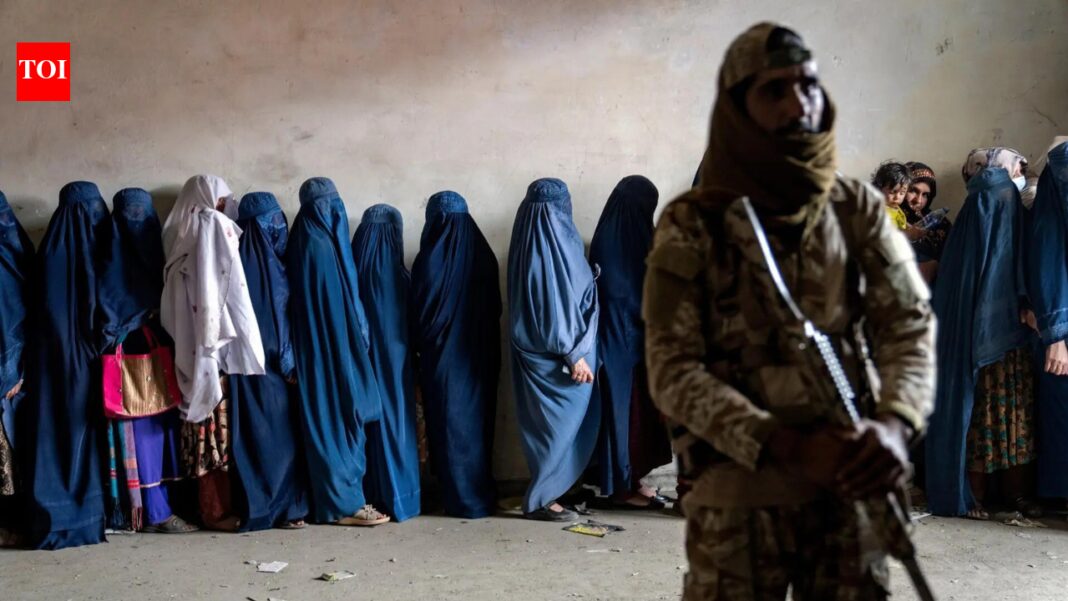
A delegation from the Afghan Taliban government will hold rare closed-door talks with EU officials in Brussels on Tuesday. The discussions are expected to focus on the return of Afghan nationals from Europe, marking an unusual engagement between the EU and a regime that none of the 27 member states formally recognizes.The meeting comes as several EU governments seek to expedite the deportations of asylum seekers whose applications have been rejected, as well as individuals who are considered security risks or have been convicted of serious crimes. EU officials said the talks were organized in response to calls from member states for greater cooperation on migrant returns.A five-member Taliban delegation, including Foreign Ministry Spokesperson Abdul Kahar Barshi, is taking part in the discussions. The visit is a rare diplomatic opportunity for the Taliban, which has been largely isolated internationally since U.S.-led forces withdrew from Afghanistan in 2021 and returned to power.European Commission spokesman Marcus Lammert said the talks stemmed from requests from most EU countries for technical engagement on returns.“They have asked the Commission to coordinate technical contacts regarding returns,” Lammert said. “Member states are looking at how to deport people who have committed serious crimes and may pose a security threat.”The meeting follows a January visit by EU officials to Kabul, where the EU maintains a limited presence despite not recognizing the Taliban government.Belgian Foreign Minister Maxime Prevot stressed that facilitating the visit does not mean recognizing the Taliban government.“Belgium cannot confer legitimacy on a regime accused of serious crimes. human rights violations,” he said in a statement. “Convening a meeting within the framework of the policies of our host country does not amount to recognition, does not amount to legitimacy, and does not constitute an invitation from the Belgian government. “Members of the Taliban delegation were issued visas with limited territorial validity, allowing them to stay in Belgium for 24 hours without entering other countries in the Schengen travel area.The talks come amid growing political pressure across Europe to tighten immigration policies. Last October, twenty EU member states signed a letter calling for stronger measures to increase deportations and tighten border controls.One of the supporters of the initiative, Belgian Immigration Minister Anneleen Van Bossuyt, argued at the time that Europe needed to take a firmer approach to immigration management. EU data shows that only about 2% of the 22,870 Afghans ordered to leave the EU actually returned.However, human rights groups have strongly criticized the meeting, warning it risks legitimizing a government accused of widespread abuses of power while potentially putting Afghans at risk.“Any engagement with the Taliban needs to prioritize protecting human rights and accountability over the danger of deporting people there,” said Fereshta Abbasi, a researcher at Human Rights Watch. “European Union countries undermine their credibility by condemning and holding the Taliban accountable for atrocities, while collaborating with the Taliban to forcibly repatriate Afghans.”Amnesty International also condemned the discussions. Eve Geddie, director of Amnesty International’s European office, said it would be inappropriate to consider deportations given the deteriorating situation in Afghanistan.“Despair scenes of people fleeing Afghanistan, including EU staff, have become a memory. It is unconscionable that the EU is now trying to deport people to Afghanistan, at a time when Afghanistan is only becoming more dangerous,” she said.Since taking power, the Taliban have imposed sweeping restrictions on women and girls, including bans on secondary and higher education, restrictions on employment opportunities, and strict regulation of public behavior. These policies have led most Western governments to refuse to formally recognize the administration.At the same time, Afghanistan is dealing with a severe humanitarian crisis. The country has absorbed millions of people returning from neighboring Pakistan and Iran over the past year while facing economic hardship, food shortages and international sanctions.