


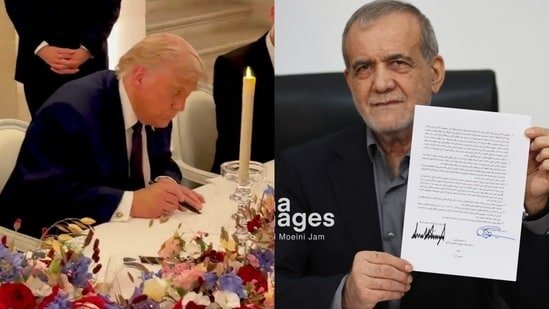
previous trump card US Defense Secretary Mark Esper expressed strong concerns about the newly signed agreement memorandum of understanding (Memorandum of Understanding) USA and Iran, saying he had “serious questions about several parts of the deal” NBC News program “Meet the Press”.

Esper raises red flags about Iran deal and Strait of Hormuz
Esper said in an interview with the media, “I like the fact that we are extending the ceasefire. I like the fact that the strait is opening up… I like the fact that we are having nuclear negotiations.” He added, “When I looked at the memorandum of understanding, I have serious questions and concerns about a lot of points… I think in many ways, this is a wait and see.”
Explaining his biggest concern, Esper said, “My main concern is that it seems to me that too many incentives are being given up early in the deal rather than later in the deal because we’ve seen more progress on the nuclear front with whatever potential deal comes out of it.”
Asked whether the Trump administration was too trusting of Iran, Esper retorted, “I don’t think they trust the Iranians. No one trusts the Iranians. I think they put the deal on the table.” He added, “There’s a lot to do in this football game. We’re probably only into the second or third quarter,” noting that Lebanon “will continue to be a spoiler and a threat to any negotiations.”
One of the main questions Esper raised was Strait of Hormuz. He said he was “concerned about the language in the memorandum of understanding, which suggests that maybe after 60 days, Iran will retain some ability to charge shippers.”
Asked if that would make the deal “worthless,” Esper said, “I think it’s obviously going to be a strategic setback. We can’t allow the Iranians to control the Strait of Hormuz, just like we can’t allow others to control the Malak Strait or the South China Sea…”
He was also asked about the deputy speaker of Iran’s parliament calling the Strait of Hormuz “Iran’s atomic bomb.” Esper responded, “I don’t want to say it’s a nuclear weapon, because we can’t allow them to obtain a nuclear weapon. But it provides a nuclear tool… they can threaten to use it, and it’s a reusable tool, and unlike nuclear weapons, they can shut down the global economy, they can coerce the Arab Gulf states… and even threaten the United States with respect to our military operations.”
He further warned, “The Iranians already know that they can survive U.S. and Israeli military attacks. Despite their overwhelming success, the regime’s ability to survive and defend against them will embolden them to keep going.”
Esper also addressed Israel’s absence from the memorandum of understanding negotiations and the continued attacks on Lebanon despite the signing of the ceasefire. He said it was unclear how much Israel had actually been consulted, but stressed that Israel had the right to defend itself because Iran and Hezbollah posed existential threats to it that were different from those faced by the United States. He also noted that while 60-70% of Americans oppose the conflict, more than 70% of Israelis support continued action against Hezbollah, especially as both Trump and Netanyahu face fall elections.
Also read: Why was Carlos Mencia arrested? Comedian faces 12 felony tax charges in $8.7 million tax fraud case
What the Memorandum of Understanding actually says
In short, the MoU calls for a permanent end to fighting on all fronts, including in Lebanon, and gives both sides 60 days to reach a final agreement. The United States agreed to lift its naval blockade on Iran and withdraw its troops from the region, while Iran agreed to allow ships to pass safely through the Strait of Hormuz for 60 days.
The agreement also promised to lift sanctions on Iran, obtain frozen funds and a $300 billion reconstruction plan, while Iran agreed not to build nuclear weapons and maintain its nuclear program at current levels until a final agreement is reached.

. )