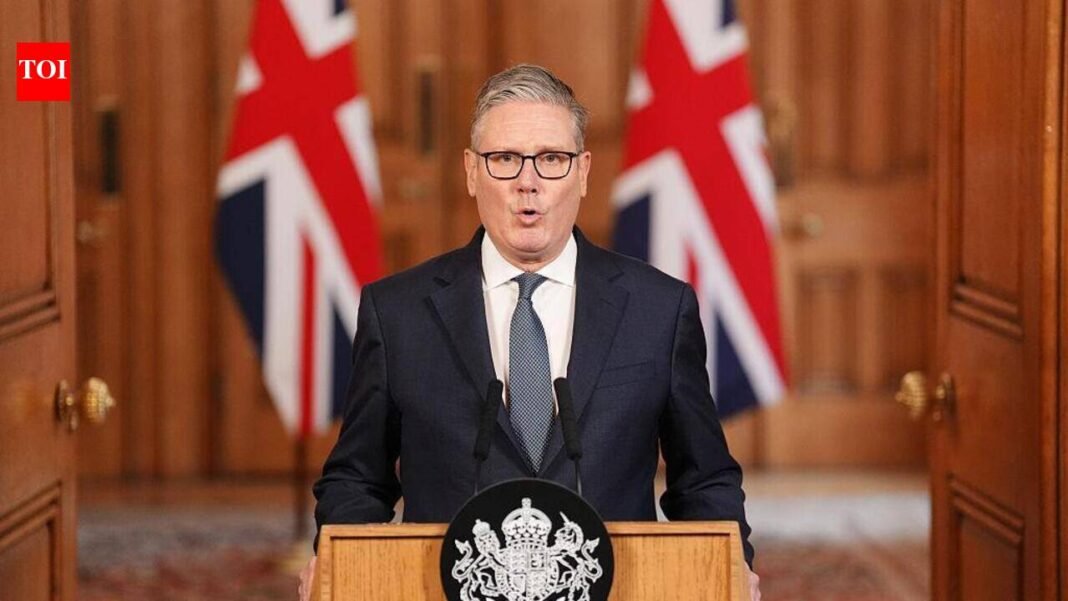


Keir Starmer decides to resign british prime minister The Labor leader immediately turned his attention from his departure to the question now dominating Westminster: who will be Britain’s next prime minister? As Labor prepares to launch a leadership contest in the coming weeks, senior party figures are bracing for what could become one of the most important political battles in recent years. While no candidates have officially announced their candidacy, some have emerged as the most likely contenders to take over the party and the country. From experienced cabinet ministers to high-profile regional leaders, Starmer’s succession battle is expected to shape Labour’s future and determine the direction of the British government at a crucial moment.
Andy Burnham Appeared as an early favorite
Of all the names being discussed, Andy Burnham seems to have the most momentum. The former health secretary and mayor of Greater Manchester has long been regarded as one of Labour’s most high-profile figures. His recent return to Westminster following his victory in the Makefield by-election has fueled speculation that he is preparing for a greater role in national politics. Burnham’s supporters believe he combines government experience with a strong electoral record and the ability to connect with voters outside London’s political establishment. His popularity among Labor members and trade unions could also be decisive if the competition spills over into the party’s grassroots. For many observers, Burnham is currently the candidate to beat.
Angela Rayner can unite Labour’s grassroots
Deputy Prime Minister Angela Rayner is another name expected to feature prominently in any leadership race. Rayner has become one of Labour’s most influential figures over the past decade and is widely respected among different factions within the party. Her rise from working-class origins to one of the most powerful positions in government made her particularly popular among Labor activists. Supporters believe she can provide continuity while also presenting a new leadership style. Her strong profile among party members means she is likely to start any campaign with an already significant support base. However, some analysts believe she may face challenges attracting the support of centrist Labor MPs.
Wes Streeting seen as Labour’s modernizing agent
Health Minister Wes Streeting is often tipped as one of Labour’s future leaders and could emerge as a serious contender if he decides to run. Streeting is known as one of Labour’s most effective communicators and is often seen as the leading voice of Labour’s reform wing. His supporters believe he represents a younger generation of leadership that could help Labor appeal to voters disillusioned with traditional politics. While Streatling has less national profile than Burnham or Rayner, he is considered one of the top performers in Starmer’s government and is likely to attract significant support from Labor MPs.
Shabana Mahmood’s income continues to rise
Justice Minister Shabana Mahmoud is increasingly seen as a potential future leader, although her profile among the wider public remains low. At Westminster, Mahmoud earned a reputation as a capable minister and a skilled political operator. Her supporters believe she could be a compromise candidate able to bridge the divide between Labour’s different factions. While she will enter the race as an outsider compared to some rivals, leadership races often reward candidates who can steadily build support behind the scenes rather than dominate early headlines. Many Labor insiders believe she has greater influence within the party than many voters realize.
Can outsiders bring surprises?
Every leadership race produces unexpected candidates, and this one is no different. Defense Secretary Al Carns is a name attracting increasing attention, with his military background and relatively fresh political profile leading some MPs to view him as a potential alternative to Labour’s established figures. Others may emerge as the competition develops. Senior cabinet ministers, rising stars in parliament and regional leaders are all likely to assess their chances before nominations officially open. History shows leadership competition can change quickly once a campaign begins, so ruling anyone out or out prematurely is risky.
What to do next?
Labour’s national executive committee is expected to outline a timetable for the leadership contest in the coming weeks. Starmer is expected to remain in Downing Street in a caretaker capacity until a successor is chosen. The outcome of the election will determine not only who leads the Labor Party but also who governs the UK. The next leader will inherit a government that will face economic challenges, pressure on public services and growing political competition from opposition parties. Andy Burnham may be the early favorite at the moment, but attention in Westminster is firmly focused on a contest that could reshape British politics for years to come.