

“Man is born free, but everywhere he is in chains. A man thinks he is the master of others, but is still a slave greater than them.”Few openings in political philosophy are as famous as this statement. Written in 1762 by Jean-Jacques Rousseau as social contract theoryThis quote has survived for over 260 years because it speaks to a problem that every generation must face: How can human beings who live under the rules of government, law and society achieve freedom?This statement is more than a philosophical observation. It was a challenge to the political order of Rousseau’s time and remains one of the most influential statements about liberty and power ever made.
Who is Jean-Jacques Rousseau?
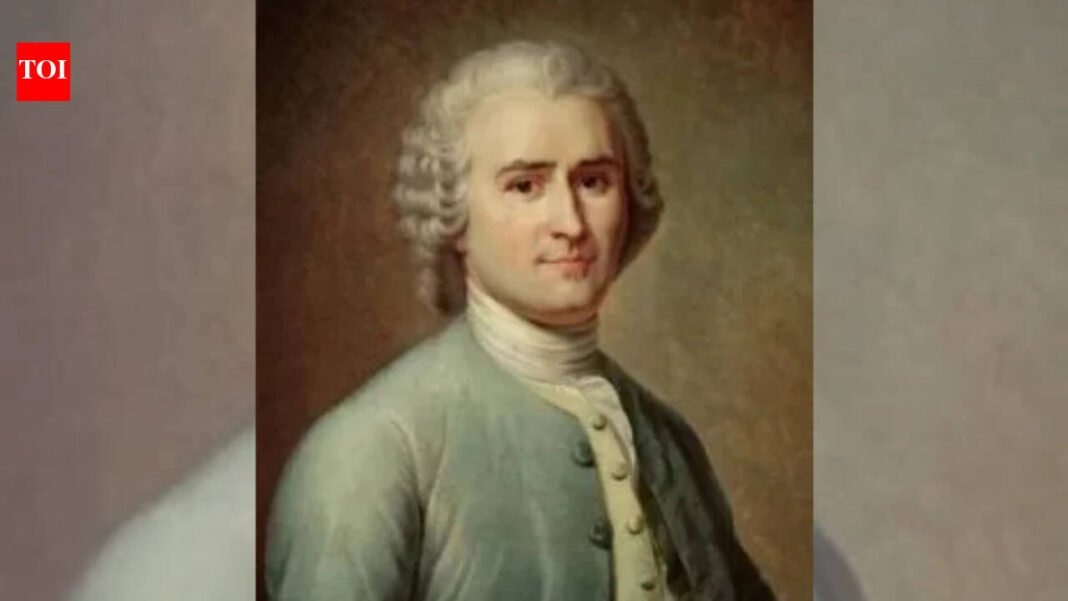
Jean-Jacques Rousseau (1712-1778) was a Genevan philosopher, writer, and composer who became one of the most important thinkers of the European Enlightenment. Born in Geneva, then an independent republic, Rousseau spent most of his life in France and was known for questioning established authority, social inequality and political power.His major works include On the origins of inequality, emir and social contract theory. Through these writings, Rousseau influenced political theory, education, democratic thought, and modern citizenship. His work would later inspire many of the intellectual currents behind the French Revolution.
What does Rousseau mean by “chains”?
At first glance, this statement seems simple. Everyone is born free, but society restricts people.Rousseau’s argument, however, is more complex.He is not advocating a return to a lawless state of nature. Instead, he asked why people obey the government and whether political authority is legitimate. He observed that most societies of his time were ruled by monarchs, aristocrats, or hereditary privileges. People obey because of force, tradition or social class rather than genuine consent.Therefore, “chains” represent more than just physical restraint. They refer to political domination, unjust institutions and social arrangements that prevent people from exercising true freedom.The second half of the quote is often overlooked:“A man thinks himself the master of others, but is still a slave to a greater than they are.”Rousseau believed that rulers were not necessarily free. Those who seek power often become trapped by the systems they control. Maintaining authority makes them dependent on status, wealth, and political control.
social contract and “general will ‘
The core issue is social contract theory It’s simple: if man is born free, how can government be justified?Rousseau’s answer was the idea of the social contract. Political authority should not come from kings, conquest, or inheritance. Rather, it should come from an agreement between citizens who together create the laws by which they live.This led to his famous concept “General Will”. Rousseau believed that legitimate laws should reflect the common good, not the interests of rulers or a privileged few. In theory, when citizens participate in making laws that serve the public interest, they obey themselves rather than their masters. For Rousseau, this was true political freedom.
Why does this sentence cause so much controversy?
In eighteenth-century Europe, most countries were monarchies. The idea that political power should come from citizens rather than kings was radical.social contract theory It was banned in several places shortly after publication. The authorities viewed Rousseau’s arguments as a threat because they challenged traditional ideas about authority and obedience. Rousseau faced persecution and was forced to leave certain areas due to the controversy surrounding his writings.His ideas later influenced revolutionary movements, especially in France, where concepts such as popular sovereignty and citizenship became core political demands.
Why is this quote still relevant today?
The world of 2026 is very different from the Europe of 1762, but Rousseau’s question remains relevant.People today enjoy political rights that were not available in Rousseau’s day, including the right to vote, constitutional protections, and representative institutions. Yet debates over surveillance, censorship, economic inequality, corporate influence and individual autonomy continue.Much modern discussion echoes Rousseau’s concern about whether people are truly free or simply living under a system they did not fully choose.The quote resonated beyond politics as well. Social media algorithms, workplace expectations, consumer culture, and public opinion may shape behavior in ways that limit an individual’s independence. While these effects were different from those of eighteenth-century monarchy, they raised similar questions about freedom and obedience.
Rousseau’s legacy
Rousseau’s importance lies not in providing final answers but in forcing society to ask difficult questions.Who should hold power?Why should citizens obey the government?What legitimizes authority?Can freedom exist in an organized society?more than two centuries later social contract theory After publication, these questions remained at the heart of democratic politics.Rousseau’s quote endures because it captures the tensions that every society faces. Human beings need laws, institutions, and governments to coexist peacefully. Yet they also seek freedom and self-determination.The challenge, as Rousseau saw it, was to ensure that the rules that governed society were not chains imposed by others but laws made by the citizens themselves.