


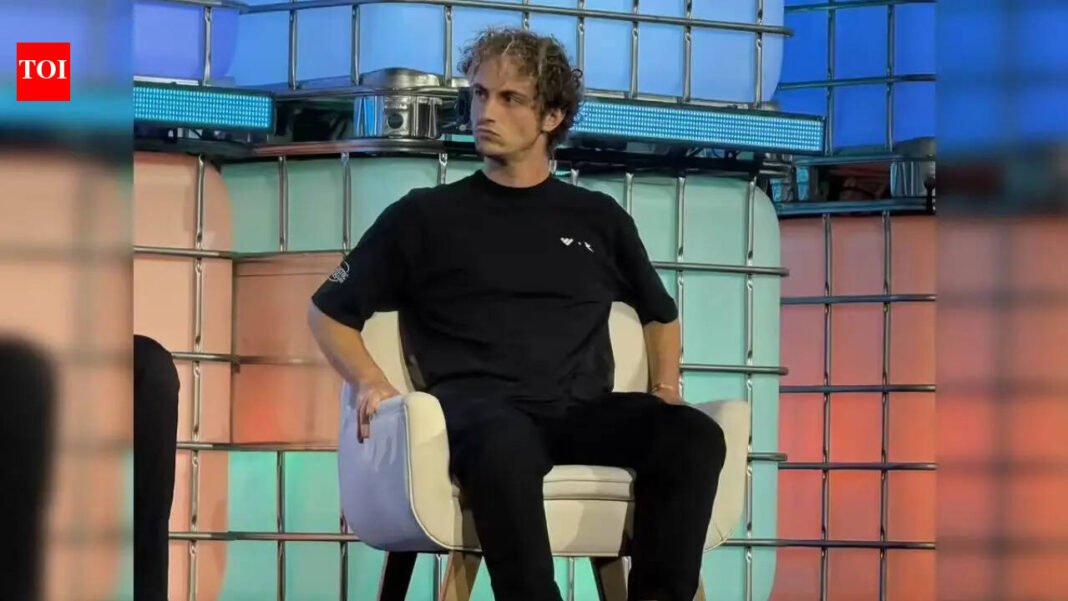

Whop has become a rapidly growing tiered digital marketplace that is reshaping the way creators monetize their online audiences through courses, communities, tools, and niche digital products. Unlike traditional platforms, it enables individuals to build multiple revenue streams by serving strictly defined micro-niches that scale through volume rather than celebrity influence. Founder Steven Schwartz’s non-traditional growth experience spanned countries such as China, the United States and Singapore. After graduating from New York University’s Stern School of Business, he brought early entrepreneurial experience before founding Whop. His early work included selling street goods, developing iOS apps, and experimenting with digital tools that revealed how fragmented online demand could be quickly monetized. Today, Whop operates globally with the support of major investors and continues to expand into a high-volume ecosystem for digital entrepreneurship at scale.
Steven Schwartz’s unconventional early life across countries and industries
Schwartz’s background doesn’t look like the usual Silicon Valley route. Growing up in a military family with a medical background, he moved frequently between countries and cities, spending part of his early life in China, Honolulu, Chicago, and Springfield, Illinois. He was known to try to make money in any environment. He sold bottled water on the streets of China and later worked as a hockey referee in the United States. As he approached adulthood, he had moved into more formal financial settings, including a time associated with a New York hedge fund.The technical side of things started early. By the time he was about 13 years old, he was already building and selling iOS apps from home with Cameron Zoub, who later became a key partner in Whop development. One of their early projects focused on software to help users purchase limited-edition sneakers online, an already competitive and rapidly growing space.
The journey from Accenture internship to founding Whop after graduation
Later, while studying at NYU’s Stern School of Business, Schwartz bounced between academic work and industry exposure. He spent time working at Accenture, including an internship in Singapore, working on projects for large organizations in Southeast Asia.Part of this work involves building systems such as chatbots for logistics-focused companies. It’s not so much a consumer-facing product, but a look at how large enterprises handle automation and scale. The contrast between corporate infrastructure and the disjointed world of side hustles seemed to haunt him.According to Fortune magazine, in 2021, Schwartz officially launched Whop shortly after graduating. The idea isn’t entirely new on paper: a place where people can sell digital goods, access a community and manage payments all in one environment. But the point is to make it easy for individuals, not companies.Early traction emerged gradually, driven by creators who were already selling on fragmented platforms but wanted something more integrated. The company’s network of co-founders, including Zoub, helped shape its early direction. Rather than focusing on one category of products, Whop is spread across multiple digital micro-markets.
The rise of Whop as a multi-tiered online monetization platform
Whop actually didn’t behave like the traditional platforms that dominated early Internet commerce. It’s closer to a tiered marketplace, where people build paid communities or sell digital products to strictly defined audiences. Courses, fitness plans, trading groups, software tools, and even niche coaching setups, all placed side by side.Some users have reportedly expanded these experiments into significant revenue streams. Some even reach huge numbers, at least according to the companies. The platform often highlights the stories of creators who went from occasional sales to six- or seven-figure incomes, though its basic model is less about celebrity sellers and more about a large number of small digital niches that accrue over time.
Funding, investors and rapid acceleration
Early support includes a $17 million Series A round led by Insight Partners, which counts names like Peter Thiel and The Chainsmokers among its backers, Fortune reports.Later, Bain Capital Ventures led the Series B round, further boosting the valuation and momentum. The most significant jump occurred in February this year, when Tether reportedly invested $200 million, valuing Whop at approximately $1.6 billion.Total funding is said to be around $272 million. These numbers circulate alongside larger platform claims: approximately 22 million users, tens of thousands of people joining every day, and billions of dollars in annual transaction volume.
Whop’s Growth Story: Global Reach, High Sales, and Creator Success
Whop says its ecosystem now covers about 145 countries, with about $4 billion in commerce flowing through it every year. Monthly sales are described as approximately $300 million.As part of this process, the company highlights individual success stories. According to internal data, some sellers have scaled from their first sale to making $20,000 in a short period of time, with 10 to 15 users reaching this milestone every day.Fortune magazine reports that more than 650 users have become millionaires through the platform. Whether seen as outliers or signals of a broader shift, they accompany a growing narrative about a digital workforce becoming more distributed, more self-directed, and increasingly tied to niche online audiences rather than traditional employment structures.