

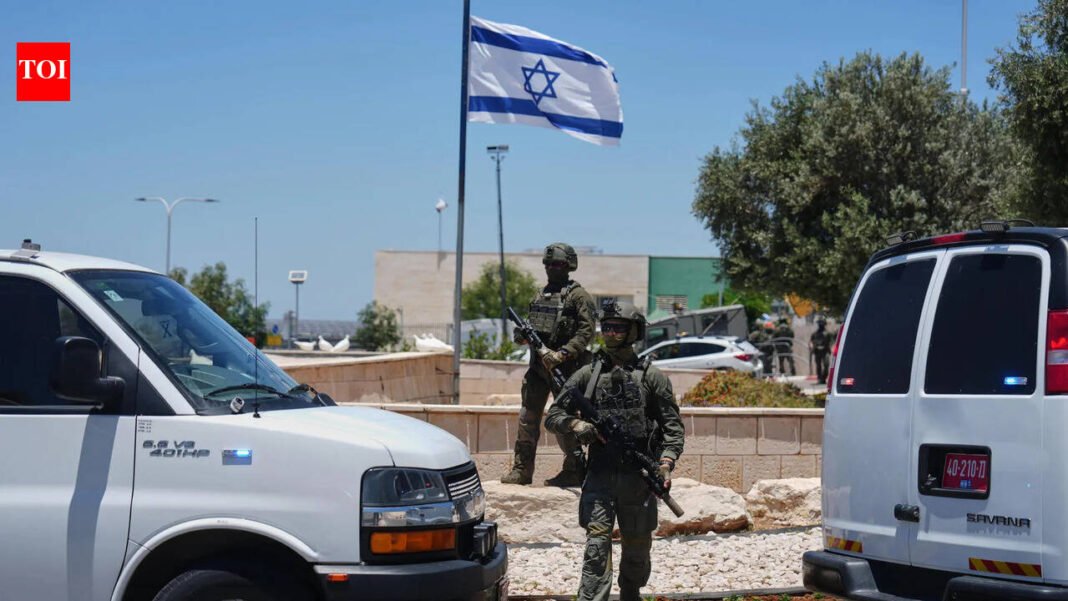
In the two and a half years since war with Hamas broke out in October 2023, Israel has controlled large swaths of Gaza, Lebanon and Syria in its largest expansion of military-controlled territory in decades.The total area is approximately 1,000 square kilometers (386 square miles), making it larger than many major cities. Israel says it plans to stay there “indefinitely.”The land grab began after Hamas’ 2023 cross-border attacks sparked fighting on multiple fronts. The Israeli military responded by taking control of parts of Gaza and later expanded its power into Lebanon and Syria.In Gaza and Lebanon, Israeli land seizures and evacuation warnings have displaced more than 3 million people.Israel describes the areas as “buffer zones,” saying they are necessary to prevent future attacks by armed groups.The “buffer zones” – which cover about 5% of Israel’s land mass – are not considered new borders, but concerns remain that they could become permanent.Since its founding in 1948, Israel has never had clear borders, which have changed with wars, annexations, ceasefires and peace agreements.Here’s a closer look at Israel’s expansion:lebanonIsrael and Hezbollah have fought numerous wars since the Iranian-backed Lebanese militant group was founded in 1982.Between 1982 and 2000, Israel controlled much of southern Lebanon to “protect” northern Israeli communities. After withdrawing in 2000, the United Nations established a border between the two countries.The year-long fighting between Israel and Hezbollah ended in a ceasefire in October 2024. However, the truce collapsed last March. Israel then launched a ground invasion of Lebanon.After fighting ceased in April, Israel said its forces would take control of an area 10 kilometers (6 miles) deep into Lebanese territory.According to the Carnegie Middle East Center, Israel currently controls approximately 608 square kilometers (234 square miles) of land in Lebanon.Evacuation warnings have displaced around 1.2 million people, with Israel warning civilians not to return.GazaIsrael seized control of the Gaza Strip from Egypt in the 1967 Mideast War and withdrew its troops and settlers in 2005.Hamas took control of the territory in 2007, and an attack on Israel on October 7, 2023 sparked the ongoing war.When the ceasefire came into effect in October 2025, Israel withdrew from the area marked by the so-called “yellow line”, giving it control of more than half of the strip.Nearly the entire population – more than two million (two million) people – has been pushed into overcrowded tent areas and dependent on aid. Much of the area, including much of the farmland, has been bulldozed or inaccessible.With ceasefire talks stalled over the disarmament of Hamas, Israel has shifted its battle lines westward and expanded its control to more than 60 percent of Gaza, or about 194 square kilometers (75 square miles), Gisha said. Prime Minister Benjamin Netanyahu said control could rise to 70%.SyriaIsrael seized the Golan Heights from Syria in the 1967 Mideast War and later annexed the area, a move that was not widely recognized by the international community.After the war ended in 1973, the United Nations established a buffer zone in southern Syria adjacent to the Israeli-controlled Golan Heights, monitored by about 1,100 peacekeepers.After the fall of Syrian President Bashar Assad’s regime in December 2024, Israel moved its troops into the buffer zone, citing security concerns about armed groups and Iran’s supply routes to Hezbollah in Lebanon.The United Nations and other observers said the move violated a 1974 ceasefire agreement. Civilians have largely stayed put but face checkpoints and occasional clashes.Syria’s interim president Ahmed Sala has called for a withdrawal of troops from the area, which the United Nations estimates covers about 235 square kilometers (91 square miles).west bankSince taking control of the West Bank in 1967, Israel has established more than 100 settlements in the area.According to Peace Now, since 2022, the Israeli government has approved 47 new settlements and formalized or expanded 55 existing settlements.After the Gaza War broke out, Israel expanded its military operations in the West Bank, resulting in the displacement of tens of thousands of Palestinians.Some approvals involve the retroactive legalization of outposts, while others expand existing settlements.The growth of settlements has been driven by political support within Israel and support from the pro-settlement U.S. government. The international community considers the settlements illegal and the Palestinians see them as a major obstacle to a future peace deal.(with AP input)