


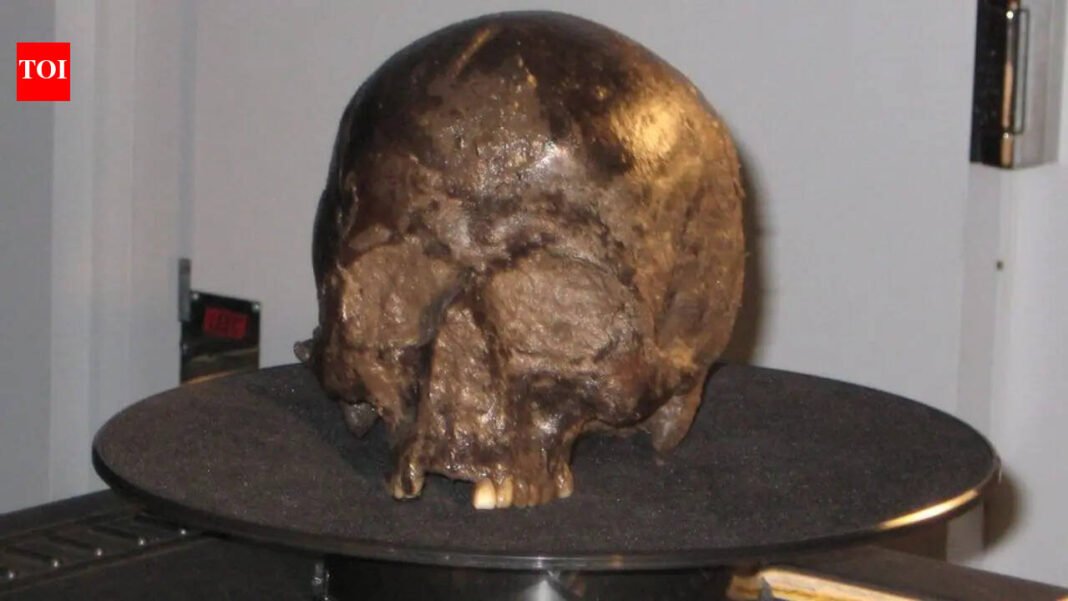
A human brain dating back more than two thousand years has been found in a skull unearthed near York, providing Iron Age archeology with an unusual case of soft tissue survival. The remains were first exhumed from a stagnant pit in Heslington in 2008, where conditions appeared to have slowed the normal process of decay. What’s remarkable about this find is not only its age (estimated to be around 2,600 years old) but also the fact that identifiable brain material was still present inside the skull when it was cleaned under laboratory conditions. Archaeologists say the find is extremely rare, and discussions continue about how burial conditions in the wet clay helped preserve the tissue over such a long period of time.
Hidden brain tissue found inside Iron Age skull during excavation in 2008
The skull was discovered during archaeological work near the York suburb of Heslington, an area long known for its layered prehistoric and Roman-era remains, the BBC reported. It was initially classified as part of a wider Iron Age assemblage before experts from the York Archaeological Trust discovered something unexpected during post-excavation cleanup.Buried face down in a clay-rich pit, the skull appears unremarkable at first glance. It was only later, when the base was examined more closely, that the internal material was visible through a small opening in the underside of the skull. Inside the skull, researchers found a dense yellow material with an unusual texture that was later interpreted to be well-preserved brain tissue. Survival of soft tissue from this period is extremely rare, as organic material typically decomposes rapidly after burial.The environment around Heslington is thought to have played a key role. The surrounding moist, oxygen-starved clay may slow bacterial activity, effectively limiting decay once the head is sealed underground.
Skull examination shows signs of sharp force trauma
Forensic examination of the bones revealed that the man, aged between 26 and 45 years old, had suffered severe trauma to his neck when he died. Additionally, marks on the skull itself suggested that someone had attempted decapitation with a sharp instrument after a traumatic event.No other parts of the body were found in the grave, meaning the only surviving part of the tomb was the skull. Researchers are still trying to figure out what allowed this specific brain material to remain intact while everything else during that period had deteriorated.