

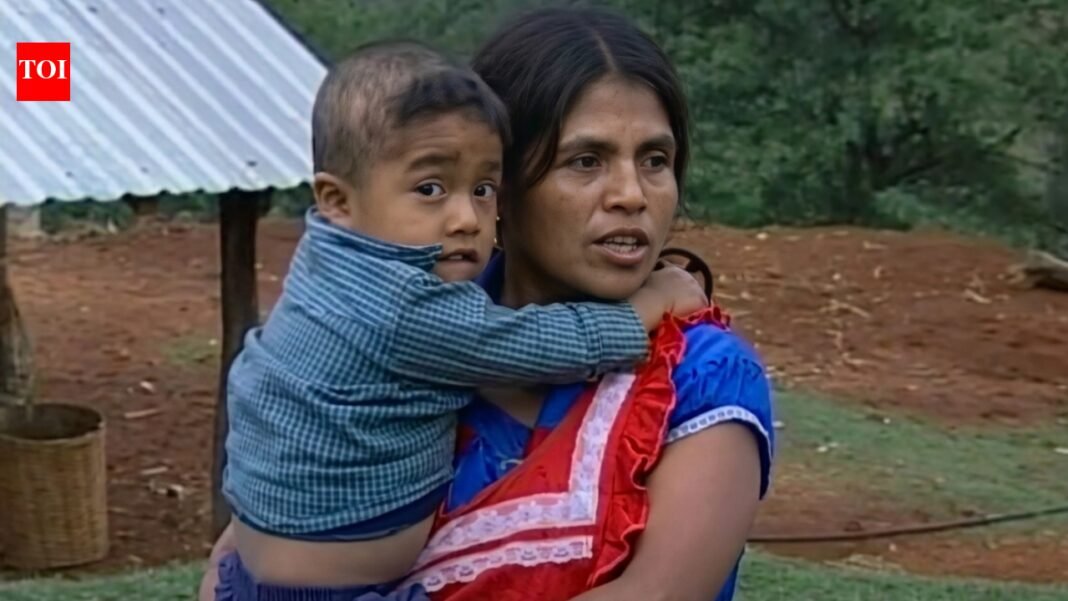
Ines Ramirez Perez was living alone in a remote village in Mexico. After more than 12 hours of labor, she began to believe she had no choice. With no doctor nearby and no feasible way to get to a hospital, she feared both herself and her unborn baby would die. The pain was getting worse and labor was not progressing. Faced with a situation few could have imagined, Perez made a decision that has since been studied by doctors around the world. She picked up a kitchen knife and performed a caesarean section on herself. Remarkably, both she and her children survived.
How one mother gave herself a C-section 12 hours after giving birth
On March 5, 2000, Ines Ramirez Perez lived in a small indigenous community with limited access to medical care and unreliable emergency transportation. At the time, in rural southern Mexico, hospitals could be miles away, and specialized obstetric care was even harder to reach.According to medical reports, her husband went to get help and left her alone with the children during the delivery. She later said she believed she and the baby might die if she didn’t take any action.This fear is not abstract. Perez had previously lost a child during childbirth, and the memory weighed heavily on her as the labor made no progress.She reportedly drank alcohol to relieve the pain before starting the surgery. She used a 15cm kitchen knife to cut open her abdomen and uterus. Medical experts later noted that the incision was on the right side of her abdomen rather than in the center, a detail that may have helped her avoid injury to major organs. The surgery reportedly lasted about an hour.After the operation, she gave birth to a healthy baby boy weighing about 2.9 kilograms. Perez later lost consciousness from exhaustion and blood loss.What happens next is as important as the surgery itself. A caesarean section is a major surgery that usually requires anesthesia, sterile instruments, trained staff, and careful postoperative monitoring. Perez had none of that.One of her children asked for help and was eventually contacted by a local health worker. Perez was taken to a clinic and later transferred to a hospital where surgeons treated her wounds and repaired the damage. Remarkably, both mother and baby recovered without serious long-term complications.
A unique case in the history of medicine
The case attracted attention because it was so unusual. In 2004, doctors documented Perez’s experience in a peer-reviewed paper published in the International Journal of Obstetrics and Gynecology. The report has since been widely cited in discussions of emergency obstetric care and maternal health in remote communities.There have been other reports of women attempting self-administered C-sections, but most ended in tragedy. Perez’s case is widely believed to be the only medically documented case in which a woman successfully performed a C-section on herself and both mother and baby survived with no major lasting harm. The case, published in a leading medical journal, brought international attention to one of the most extraordinary survival stories in modern obstetric history.
Why are the chances of survival so small?
From a medical perspective, the risks are enormous. Abdominal surgery without medical support can cause severe bleeding, shock, infection, and organ damage. C-sections can be dangerous even in well-equipped hospitals.Doctors who reviewed Perez’s case believe several factors may have helped. The location of the incision may have reduced the risk of fatal injury. The position of the baby in the uterus may also make delivery possible after the abdomen is opened. Most importantly, Perez received medical attention within hours, which improved her chances of survival.Even so, the results were extraordinary.
More than a story of courage
Twenty years later, Perez’s story is still discussed in medical journals and public health classes. It’s often told as a brave story, and that’s exactly what it is. But it’s also a reminder of how dangerous childbirth can be when emergency care isn’t available.No woman should have to make this decision alone. Perez survived, and so did her children, but the deeper lesson was the cost of not having access to health care. Her case remains one of the most shocking childbirth stories of all time, not because it’s dramatic but because it should never have happened.