



A report released earlier Wednesday listed several countries facing tariffs for allegedly failing to enforce a ban on forced labor imports.
WASHINGTON — The Trump administration is proposing tariffs of 10% or higher on products from dozens of major trading partners following an investigation into imports suspected of forced labor.
A U.S. Trade Representative report released earlier Wednesday said Canada, Mexico, Taiwan and the United Kingdom, among other countries, would face additional 10% tariffs for allegedly failing to enforce a ban on forced labor imports.
An additional 12.5% tariff will be imposed on dozens of countries including China, Japan, India, South Korea, Brazil and Switzerland.
“The failure of our most important trading partners to address imports of goods made with forced labor is unacceptable. This creates a dynamic in which American workers are forced to compete globally on an uneven playing field,” USTR Ambassador Jamison Greer said in a statement.
He added, “Each of our trading partners must do more to ensure trade does not perversely encourage and entrench forced labor around the world.”
The latest set of tariffs is likely to unsettle major trading partners, which have been hit by a wave of tariffs since President Donald Trump returned to office early last year.
Just two weeks ago, European Union Approved a tariff agreement with the United States that limits tariffs on most EU exports to 15%. It follows a heated debate among the 27 EU countries, with European lawmakers threatening to block the deal.
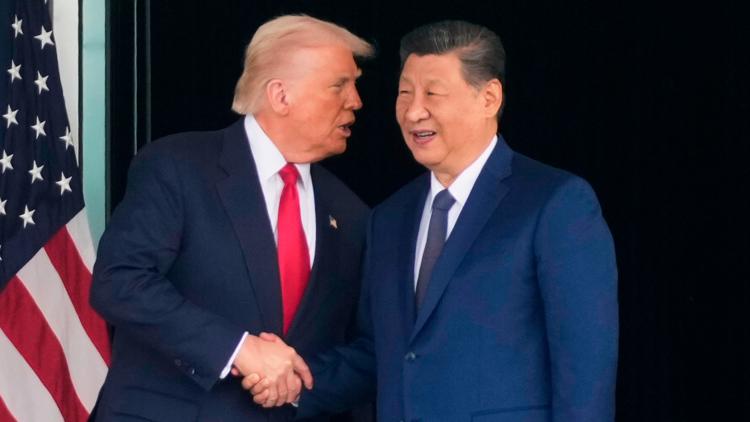
Trump recently Visit China, He and Chinese leader Xi Jinping discussed expanding market access for U.S. companies in China and increasing Chinese investment in U.S. industry. The two leaders agreed to set up separate trade and investment committees but did not provide any details.
The new tariffs will not take effect immediately. They are subject to public comment and review.
The investigation into the alleged failure to prevent the import of forced labor goods was conducted under Section 301 of the Trade Act 1974. This strategy would allow Trump to bypass Supreme Court restrictions on the tariffs he imposes.
The report defines forced labor as “work or services in which a worker is forced to perform work or services that are not voluntarily performed under the threat of any penalty for failure to fulfill his obligations.”
Supreme Court ruled in February that Trump beyond his authority Comprehensive tariffs were imposed on U.S. trading partners through the use of a different law, the International Emergency Economic Powers Act of 1977 (IEEPA).
The Trump administration said it would appeal a federal judge’s order that made all companies that paid previous tariffs eligible for refunds.
Earlier this week, the U.S. government separately proposed imposing 25% tariffs on Brazilian imports, accusing the world’s tenth largest economy of “unreasonable” trade practices and “creating burdens or restrictions on U.S. commerce.”
The U.S. Trade Representative’s Office said its investigation revealed Brazil’s lax anti-corruption enforcement and unfair tariffs.
Copyright 2025 The Associated Press. all rights reserved. This material may not be published, broadcast, rewritten or redistributed.