


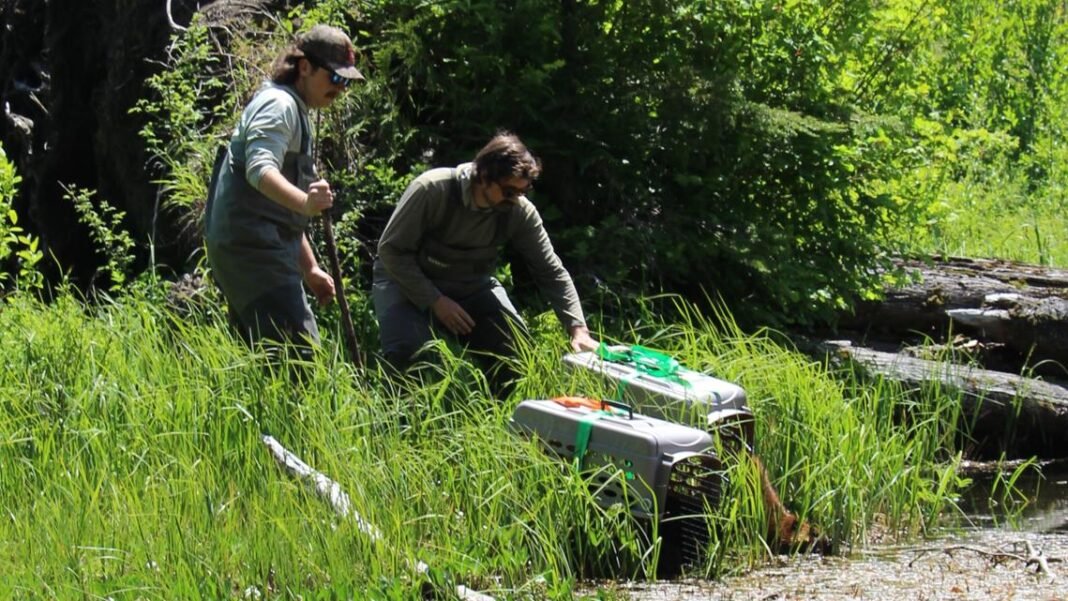
The program is part of the tribe’s efforts to improve Washington’s beaver populations and ecosystems.
Cowlitz County, Wash. – On May 28, Cowlitz Tribe natural resource officers released a family of five beavers into a suitable wild habitat near the Gifford Pinchot National Forest in southwestern Washington.
The four cubs, who first met the world through the tribe’s “Kit Cam” livestream, were born on April 26 and will continue to live with their mother for about two years.

“We carefully selected this relocation site to provide adequate food and cover for these beavers to reintegrate into the wild and continue to grow,” said Jesse Burgher, Wildlife Program Manager for the Cowlitz Tribe.
Going forward, tribal wildlife scientists will examine the beaver family’s progress twice a year to assess their occupancy and behavior in the area. Berg added that the team also placed a number of additional wildlife cameras around the site to provide up-to-date information on the individuals.
These data will help inform tribal scientists about the success of their beaver relocation programs, while also providing more context for the impacts of beavers on habitat resilience and diversity.
The project is part of the tribe’s ongoing efforts to restore beaver populations and improve habitat throughout Washington state.
Beavers were once hunted for their fur and eliminated as a nuisance, but they play a vital role in many of Washington’s ecosystems: Their dams improve water quality, create habitat for juvenile fish and other wildlife, restore wetlands, and reduce flooding by impeding and redirecting rivers.
Beavers that decide to live near humans, however, may encounter conflicts, so Cowlitz Tribe wildlife scientists have begun relocating the beavers to more suitable habitat and then studying how the beavers change their new landscape.
According to Cowlitz Tribe, the program is the largest of its kind in Washington state, relocating approximately 70 beavers each year from 20-30 family groups. Tribe communications manager Madison Hitchcock explained that captured beavers are held in the tribe’s beaver holding facilities for about seven to 10 days and are typically released in family groups, which has been shown to increase relocation success rates.