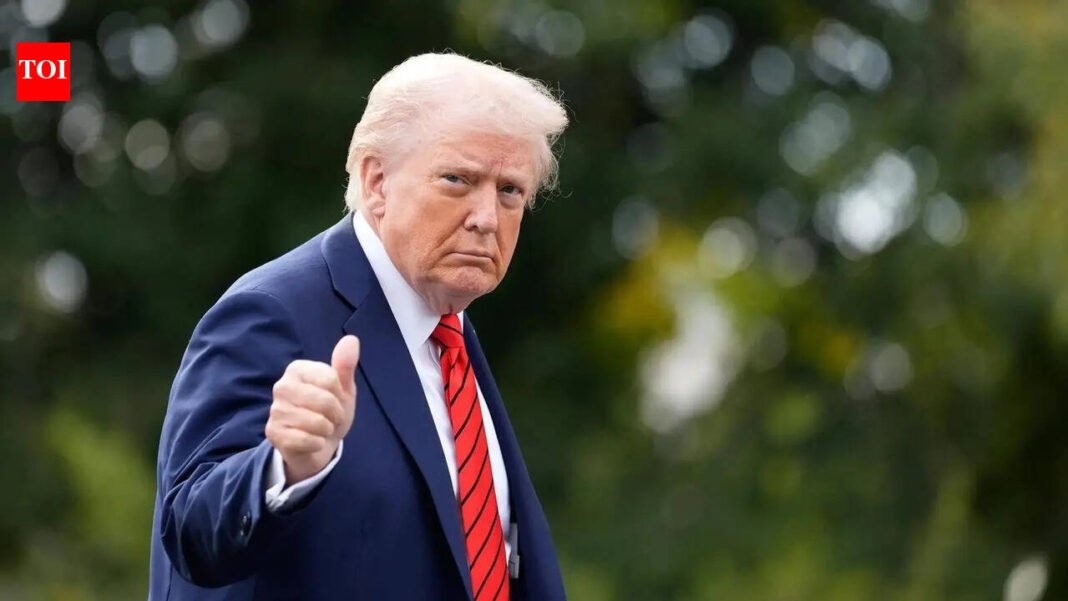



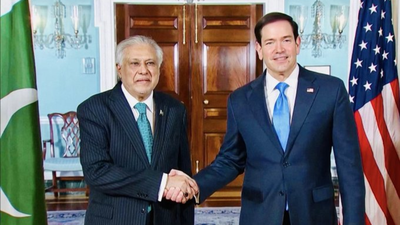
A video starring Pakistan’s Deputy Prime Minister and Foreign Minister Ishaq Dar and the US Secretary of State has gone viral Marco Rubio Rekindling the debate over whether Islamabad can ultimately recognize Israel. In the video, a reporter can be heard asking Dahl: “Dar Sabo, will Pakistan recognize Israel?” (Will Pakistan recognize Israel?). Both Dahl and Rubio seemed to ignore the question as they left the meeting.However, Pakistan’s official position has not changed. Speaking at the Pakistani embassy in Washington after meeting Rubio, Dar reiterated that Islamabad would not change its position unless there was meaningful progress towards the establishment of an independent Palestinian state.“There are a lot of rumors related to the Abraham Accords. Let me clarify that Pakistan’s position in this regard is very clear and consistent. Unless Palestine is recognized as per the pre-1967 model, with Quds Sharif (occupied East Jerusalem) as its capital, there will not be any flexibility,” Dawn newspaper reported. He stressed that Pakistan remained committed to the Palestinian cause and said relations with Israel would not change until a Palestinian state was established. “Pakistan’s position on Palestine and Gaza remains firm. Before Islamabad can consider any policy shift, Israel must move towards the establishment of a Palestinian state,” he said. Days ago, US President Donald Trump publicly stated that he encouraged several Muslim-majority countries, including Pakistan, Saudi Arabia, Qatar, Turkey, Egypt and Jordan, to join the Abraham Accords as part of a broader diplomatic effort to end the conflict with Iran.The Abraham Accords, first signed in 2020, normalized relations between Israel and several Arab countries, including the United Arab Emirates and Bahrain.However, Pakistan was quick to reject any suggestion that it would consider joining the initiative. Defense Minister Khawaja Asif recently called recognition of Israel “unacceptable,” arguing that the move would go against Pakistan’s founding principles and long-standing support for Palestinian statehood.“No one from the US State Department has contacted us and no one has officially communicated such an offer,” Asif said, reiterating Pakistan’s position and pointing out that even Pakistani passports do not recognize Israel. “We don’t even have the name Israel on our passports,” he said.Asif also pointed to the ongoing conflict in Gaza as a major obstacle to any normalization efforts. “The Gaza agreement continues to be violated. How can we sit with people who are not reliable even for a single day? ” he said.Analysts say public opinion in Pakistan remains overwhelmingly supportive of the Palestinian cause, making recognizing Israel politically difficult under the current circumstances. Pakistan has never officially recognized Israel and has always linked any potential policy changes to the establishment of an independent Palestinian state based on pre-1967 borders and with East Jerusalem as its capital, Dawn reported. Pakistan’s Israel policy is once again in the spotlight as Islamabad plays an increasingly important diplomatic role in efforts to ease tensions between the United States and Iran. In his meeting with Rubio, Dar discussed regional security, bilateral cooperation and Pakistan’s mediation efforts to maintain a fragile ceasefire between Washington and Tehran.Rubio thanked Pakistan for its continued “constructive role” in promoting peace in the Middle East and acknowledged its mediation efforts with Iran, according to the U.S. State Department. Pakistan’s Ministry of Foreign Affairs stated that the two sides agreed to strengthen cooperation in areas such as trade, investment, counter-terrorism and regional security.Dar said Pakistan was committed to maintaining confidentiality as a mediator and expressed hope that ongoing diplomatic efforts would eventually lead to a comprehensive settlement between the United States and Iran. He added that several countries expressed interest in hosting the talks but Pakistan was chosen because of its close ties with all parties involved.