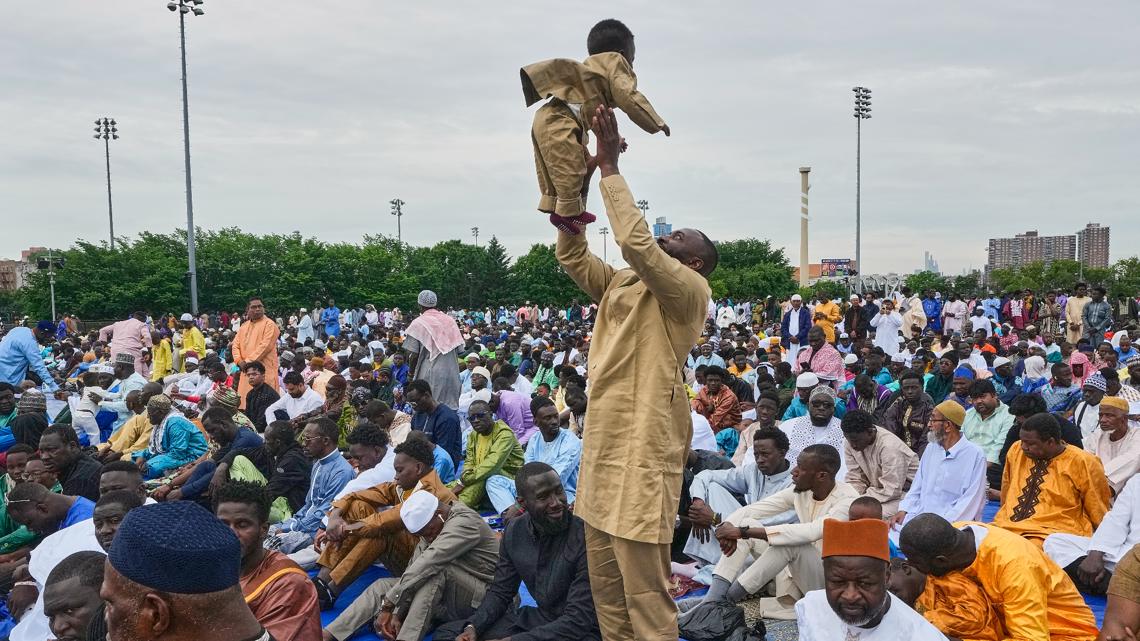



Eid al-Adha, also known as Eid al-Adha, is the second of two major festivals celebrated by Muslims every year.
WASHINGTON — Millions of Muslims around the world on Wednesday celebrated Eid al-Adha, one of the holiest days in the Islamic faith.
Eid al-Adha, known as the “Feast of Sacrifice,” is the second of two major festivals celebrated by Muslims each year. The other is Eid al-Fitr in March this year, marking the end of Ramadan.
When is Eid al-Adha in 2026?
This year Eid al-Adha falls on Wednesday, May 27.
The dates change every year because the Islamic calendar follows the lunar cycle, which means holidays are determined by the phases of the moon. Many Muslims look to official moon-viewing committees in countries such as Saudi Arabia and the United Arab Emirates for guidance on starting religious rituals.
In some countries, Eid celebrations last for several days.
What is celebrated during Eid al-Adha?
The word Eid al-Fitr means “festival” or “feast” in Arabic. It is traditionally used for celebrations or joyful moments.
Eid al-Adha commemorates the story of the prophet Abraham, who was willing to sacrifice his son Ishmael after receiving God’s command in a dream. Muslims believe God eventually intervened and provided a ram instead.
The holiday also coincides with the last month of the Islamic calendar, during which Muslims who are physically and financially able complete the Hajj to Mecca.
Why do Muslims say Eid?
During Eid celebrations, Muslims often greet each other with the phrase “Eid Mubarak,” which translates to “Blessed Eid Mubarak” or “Happy Eid Mubarak.”
Traditionally, during Eid al-Fitr and Eid al-Adha, families and communities greet each other as they gather for prayers, meals and charitable donations.