



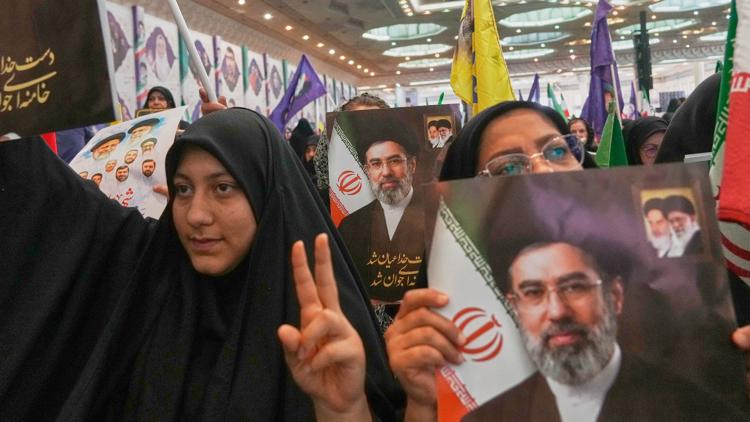
It’s unclear when or how the deal was finalized or when its various parts will take effect.
CAIRO, Egypt — A deal appears imminent between the United States and Iran war and open Strait of HormuzU.S. President Donald Trump said over the weekend that this had been “pretty much negotiated.”
It’s unclear when or how the deal was finalized or when its various parts will take effect. Trump made the remarks after a call with allies in the Middle East, which also included a separate call with Israel. Two regional officials and a U.S. official provided the details, speaking on condition of anonymity discussing the sensitive negotiations.
Here’s what we do and don’t know about the deal:
the war will end
Since the United States and Israel launched a war against Iran that left senior officials dead, including Supreme Leader Ayatollah Ali Khamenei, Tehran has insisted that the focus of any deal is to end fighting on all fronts. These include Lebanon, Iran-backed Lebanon Hezbollah The armed group has been fighting Israel since the war broke out two days ago.
A fragile ceasefire has been in place since April 7. An end to the war would ease concerns across the region, where Gulf sanctuaries and tourist hubs such as the United Arab Emirates have been hit by Iranian missiles and drones. It would allow global shipping, including an estimated 20% of the world’s oil and gas, to begin flowing through the Strait of Hormuz again. It will also allow the region’s energy and other infrastructure to be rebuilt.
Both regional officials said the draft agreement included an end to the war between Israel and Hezbollah and a commitment not to interfere in the internal affairs of regional countries, including Iran. It’s a key reference to Iran’s support for proxies, which also include Houthi rebels in Yemen, Hamas militants in Gaza and Shia armed groups in Iraq.
The United States wants Israel to be free to respond to what it sees as Lebanese threats, but Iran has rejected the request, a regional official said. The U.S. official said the agreement would safeguard Israel’s right to act in self-defense against imminent threats.
The Strait of Hormuz will gradually reopen
Iran’s nuclear program, missile program and support for armed proxies are the stated reasons for the United States and Israel to attack Iran. But Tehran’s retaliatory control of the Strait of Hormuz soon became the focus of global attention, stranding hundreds of ships carrying oil, gas, fertilizer and other supplies.
Under the impending deal, the strait will gradually reopen as the United States ends its blockade. Blockade of Iranian ports The project started on April 17, district officials said. The blockade limits Iran’s ability to transport oil and bring much-needed cash to its long-troubled economy.
An official familiar with the negotiations said the United States would allow Iran to sell oil through sanctions waivers. Negotiations to lift sanctions and release billions of dollars in frozen Iranian funds will take place within 60 days, the official said.
Iran to give up its stockpile of highly enriched uranium
Iran’s nuclear program and international concerns that it may pursue nuclear weapons are at the root of all tensions, and the United States and Israel have considered highly sophisticated military operations to access and remove its highly enriched uranium.
Regional officials said that under the potential deal, Tehran would agree to give up its stockpile of highly enriched uranium. How Iran abandons the deal will depend on further negotiations during the 60-day period, an official with direct knowledge of the negotiations said. Some of it may be diluted and the rest transferred to a third country, possibly Russia, the official said. Russia has offered to accept it.
A U.S. official confirmed the 60-day deadline and said sanctions would not be eased if Iran did not give up its stockpiles.
According to the International Atomic Energy Agency, Iran has 972 pounds of enriched uranium with a purity of up to 60%, just steps away from the 90% weapons-grade level.
Iran says it has “inalienable” rights to nuclear technology while insisting its program is for peaceful purposes. On Sunday, President Masoud Pezeshkian told state television they were ready to “assure the world that we are not pursuing nuclear weapons.”
Trump said on social media on Sunday, “Our relationship with Iran is becoming more professional and productive. However, they must understand that they cannot develop or procure nuclear weapons or bombs.”
seems to be missing something
Other issues, including the status of Iran’s uranium enrichment, were not mentioned in the description of the impending deal.
Another is Iran’s missile program, which Israel in particular seeks to destroy.
While the United States and Israel entered the war claiming they wanted to see Iranians rise up against their government following nationwide protests earlier this year, any talk of a leadership change in Tehran appears to have ended.
As for the goals Iran has stated in past negotiations, there appears to be no mention of the withdrawal of U.S. troops from the region or compensation for damage caused by the war.
Superville reported from Washington, and Anna reported from Lowville, New York.
Copyright 2025 The Associated Press. all rights reserved. This material may not be published, broadcast, rewritten or redistributed.


