



The deal aims to prevent Iran from developing nuclear weapons and includes the lifting of sanctions.
CAIRO, Egypt — U.S. President Donald Trump says deal with Iran war Middle East issues, including opening the Strait of Hormuz, have been “largely agreed upon” after weekend calls with Israel and other allies in the region.
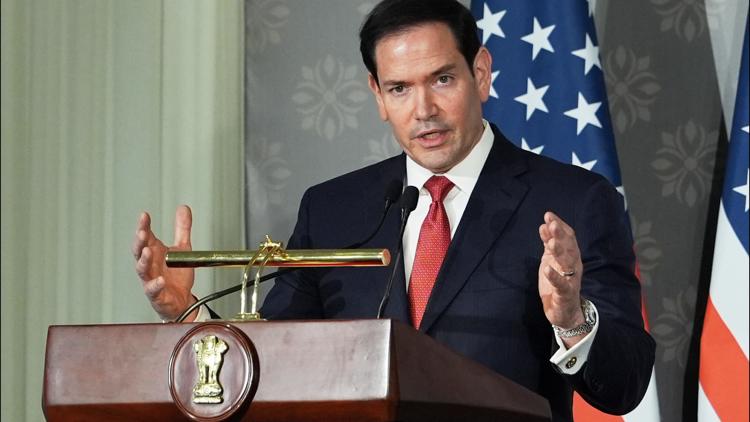
But other officials on Sunday advised caution, with Secretary of State Marco Rubio noting that talks “have not yet made final progress, but have made significant progress.”
Rubio, who is on a four-day visit to India to meet with Indian, Australian and Japanese officials, expressed hope for good news in the coming hours.
Rubio said the negotiations succeeded in achieving one of Trump’s main goals, “which is to stop the world from fearing or worrying about Iran’s nuclear weapons.”
Trump said on Saturday he had spoken with the leaders of Saudi Arabia, the United Arab Emirates, Qatar, Pakistan, Turkey, Egypt, Jordan and Bahrain, and separately with Israel.
Trump said on social media that “final aspects and details of the agreement are currently being discussed and will be announced soon,” without disclosing details.
The announcement capped a week in which the United States weighed a new round of sanctions. attacks on the islamic republic This would break the fragile ceasefire.
Details of the deal are starting to emerge
A potential deal would include an Iranian pledge not to develop nuclear weapons and Tehran agreeing to give up its stockpile of highly enriched uranium, according to two regional officials.
How Iran gives up its highly enriched uranium is the subject of further talks within 60 days, an official with direct knowledge of the negotiations said.
He said it was likely that part of the amount would be diluted and the remainder transferred to a third country, possibly Russia.
According to the International Atomic Energy Agency, Iran has 440.9 kilograms (972 pounds) of enriched uranium with a purity of up to 60 percent, just shy of 90 percent weapons-grade levels.
The official said the Strait of Hormuz would gradually open as the United States ends its blockade of Iranian ports.
Another official briefed on the negotiations said the United States would also allow Iran to sell oil through sanctions waivers. He said sanctions relief and the release of Iran’s frozen funds would be negotiated within 60 days.
The draft agreement includes an end to the war between Israel and Hezbollah and a commitment not to interfere in the internal affairs of countries in the region, two officials said. The officials spoke on condition of anonymity to discuss the closed-door deliberations.
It has been 12 weeks since the United States and Israel attacked Iran on February 28 and killed senior Iranian officials including its supreme leader Nuclear talks between the United States and Iran have been interrupted for the second time in less than a year. Iran has opened fire on Israel and neighboring countries where U.S. troops are stationed, shaking up Gulf states that consider themselves safe havens in the region.
The ceasefire has been in place since April 7. But Iran’s decision to effectively close the Strait of Hormuz to ships carrying oil, gas and other vital supplies from the region has been the focus of global attention and economic pain.
Israel expresses concern over Hezbollah
Israeli officials worry that the Iran-aligned Lebanese militant group Hezbollah still poses a serious threat to Israel and that Lebanon does not have the ability to disarm it.
Israeli Prime Minister Benjamin Netanyahu warned Trump that Israel “retains freedom of action against threats in all areas, including in Lebanon,” according to an official familiar with the matter. The official spoke on condition of anonymity because they were not authorized to speak to the media.
The official said Trump made it clear to Netanyahu that he would not sign any final deal if Iran did not dismantle its entire nuclear program and remove all enriched uranium from the country.
Gila Gamliel, Israel’s science and technology minister, a member of Netanyahu’s Likud party and a member of the national security cabinet, told Israel’s Army Radio on Sunday morning that Israel was taking a “wait and see” approach.
There is a kind of vulnerability, U.S.-brokered ceasefire Israel and Hezbollah have been at war in Lebanon since April 17, a conflict that began two days after the war with Iran broke out.
Despite the ceasefire, the two sides continued to exchange fire. Hezbollah fires drones and artillery shells at Israeli soldiers and northern Israel on a daily basis, and Israel attacks targets in Lebanon while its forces remain in large swaths of southern Lebanon.
more than 3000 people According to the Lebanese Health Ministry, people have been killed in the latest round of fighting. Additionally, 22 Israeli soldiers and a defense contractor were killed in or near southern Lebanon and two civilians were killed in northern Israel, mostly by Hezbollah drones, according to Netanyahu’s office.
Lidman reported from Tel Aviv, Israel. Associated Press writers Sheikh Salik in New Delhi and Munir Ahmed in Islamabad contributed to this report.
Copyright 2025 The Associated Press. all rights reserved. This material may not be published, broadcast, rewritten or redistributed.


