


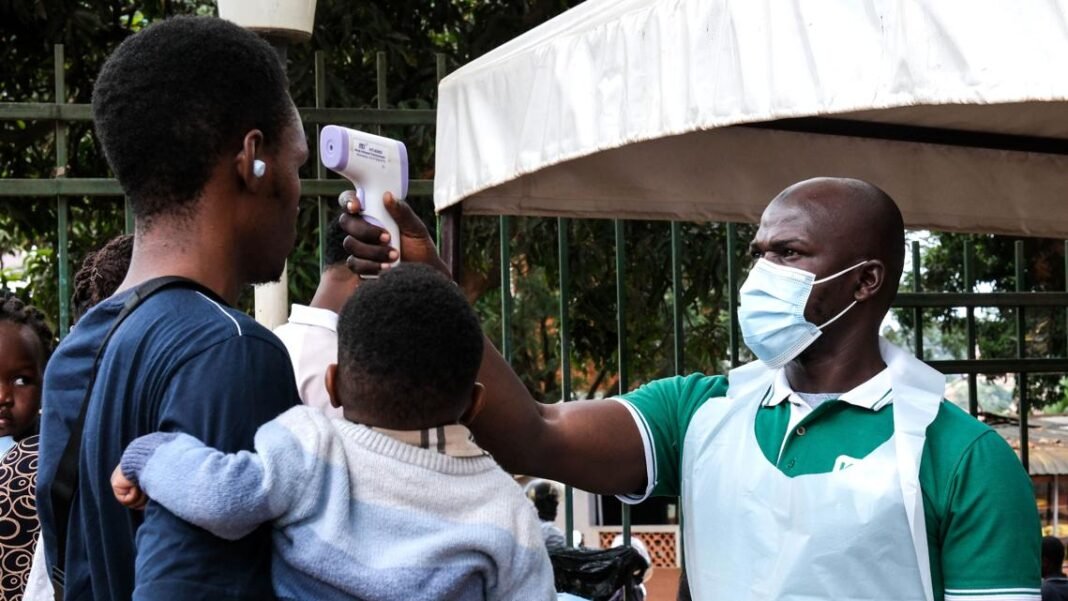
More than 130 people have been reported dead as a rare Ebola virus spreads in central Africa.
Bunia, Democratic Republic of the Congo – a rare Ebola virus originated in Democratic Republic of Congo is attracting attention World Health Organization On the “panic and speed” of the outbreak.
More than 130 people have died and there are at least 500 suspected cases. The virus spread undetected for weeks after the first known death. During that time, authorities tested negative for a more common form of Ebola, health experts and aid workers said.
WHO Director-General Tedros Adhanom Ghebreyesus said he was “deeply concerned by the scale and speed of the outbreak,” adding that the U.N. health agency would convene an emergency committee meeting later on Tuesday. He noted that urban areas have seen cases, deaths of health care workers and large movements of people.
How does Ebola virus spread?
Ebola virus is highly contagious And can be infected through body fluids such as vomit, blood or semen. The illness it causes is rare but serious and often fatal. An outbreak more than a decade ago killed more than 11,000 people, with many becoming infected while washing bodies during community funerals.
“Ebola is very much a disease of compassion because it affects those who are more likely to care for the sick,” said Dr. Craig Spencer, an associate professor at the Brown University School of Public Health who survived an Ebola infection in Guinea more than a decade ago.
What are the symptoms of Ebola virus?
Ebola virus can cause fever, headache, muscle pain, weakness, diarrhea, vomiting, stomach pain, and unexplained bleeding or bruising.
The severity of symptoms and the increase in the number of cases have added to the growing panic among the Bunia community.
Resident Noëla Lumo previously lived in Beni, an area that has suffered from outbreaks. When she heard about the latest news, she started making protective masks by hand.
“I know the consequences of Ebola — I know what it’s like,” she said.
Is there a treatment for Ebola?
There are currently no drugs approved to treat Bundibugyo virus or a vaccine to prevent it.
Judging from several outbreaks observed by health experts, Bundibugyo virus may be slightly less lethal than the most common Zaire virus.
“I think a mortality rate of over 30% is still pretty scary, but it’s hard to say exactly because we don’t have a lot of experience,” Gund said.
In two other Bendibugyo outbreaks, Ksiazek said, the initial cases were detected early, allowing for a rapid public health response: providing health care workers with appropriate protective equipment, finding and isolating exposed people, and providing supportive medical care to patients.
Proper medical care “can significantly reduce mortality,” he said.
Copyright 2025 The Associated Press. all rights reserved. This material may not be published, broadcast, rewritten or redistributed.