


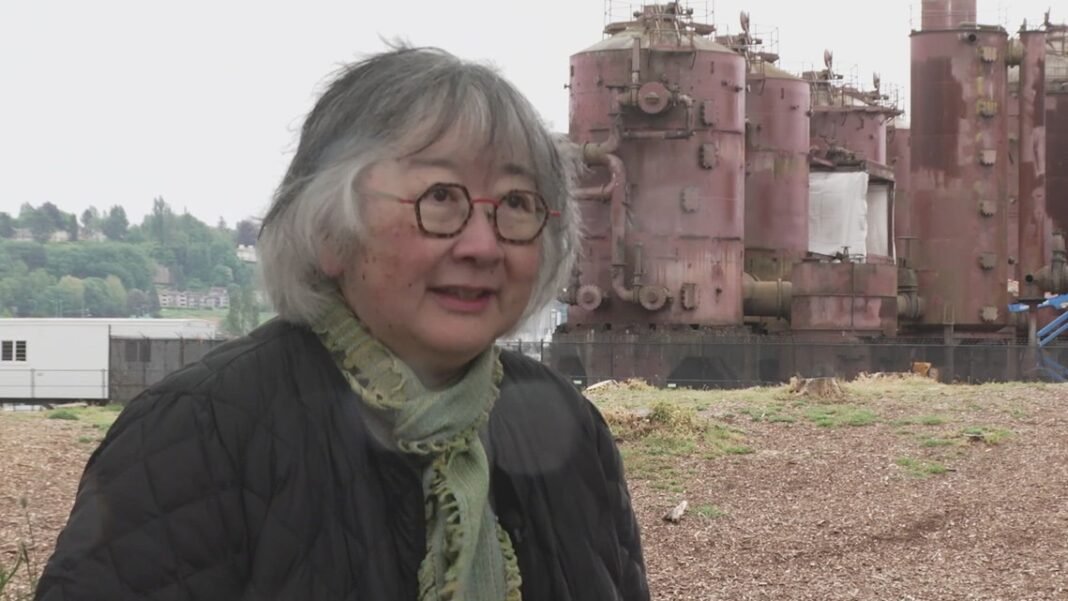
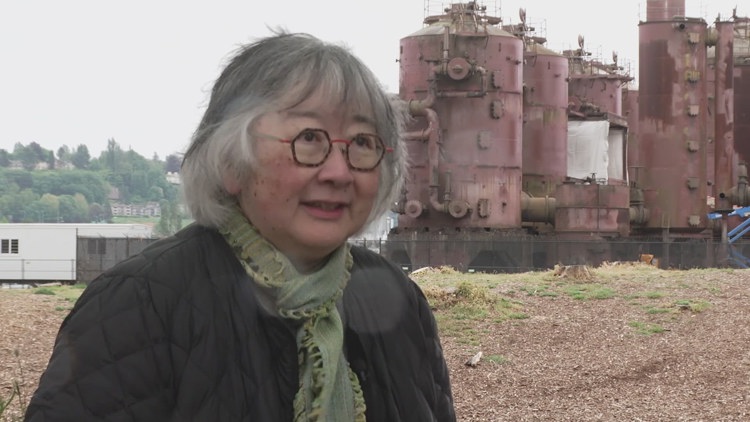
Gasworks Park faces a deadline to remove dangerous features from its iconic tower following the death of a teenager.
SEATTLE — The clock is ticking on Seattle Parks and Recreation.
Friday is deadline to eliminate safety hazards Gas Works Park — or face a $500-a-day fine from the Seattle Department of Building and Inspection. The initiative comes after a 15-year-old boy fell to his death last summer from one of the park’s iconic industrial buildings.
For years, the building at the center of the debate has been surrounded by a razor wire fence on top. Visitors say the landmark still draws people for its unparalleled views of the Seattle skyline, but the experience is changing.
“This is an iconic attraction in Seattle. You can’t see these views anywhere else,” said Rick Barlow, who was visiting the park.
For more than 50 years, the towering remains of the former gasification plant have defined Gas Works Park – a blend of history, art and public space. But these buildings have also been linked to a number of serious incidents.
Court records show that since 2008, at least three people have died and 11 others were seriously injured after falling from the tower.
In July, 15-year-old Mattheis Johnson fell to his death from one of the structures. His family has since filed a lawsuit claiming the city knew of the danger but failed to take action.
“It’s a tragedy. You can’t deny that,” Barlow said. “That family will always feel that way.”
In response, the city has spent the past few weeks removing access points, including stairs, walkways and ladders, to prevent people from entering the building.
Some visitors say the changes have altered the character of the park.
“Without that, it’s stripped of those character-defining features,” Barlow said.
Preservation advocates say the city has gone too far.
Eugenia Woo of the Seattle History Museum said the issue should not be framed as a choice between safety and conservation.
“The narrative is very binary. It’s either safety or protection. For us, it’s both,” Wu said.
She also criticized the city for years of neglect.
“Instead of being maintained, repaired and fixed, these structures were allowed to deteriorate,” Wu said. “This is damage caused by neglect.”
Currently, the twin towers still stand, but there are far fewer ways to climb them.
“That’s the defining factor of Gasworks Park. It always has been that way and I think it always will be,” Barlow said.
Seattle Parks and Recreation had not responded to a request for comment on the latest piece as of Friday evening.