


OLYMPIA, Wash. — A Washington State Department of Natural Resources program is providing free forestry assistance to residents west of the Cascades, but officials say too few eligible landowners on that side of the mountain know the assistance exists.
The state’s service forestry program has proven so popular in the eastern Cascades that a waiting list has formed, while the program has struggled to find participants in the western region.
However, one Thurston County family is proof of what help can accomplish.
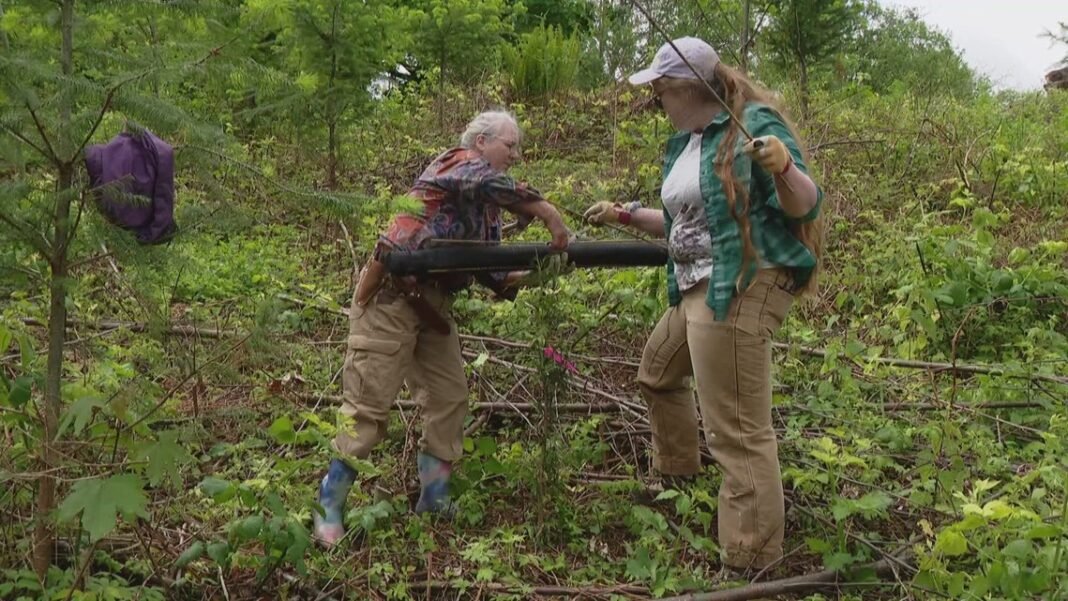
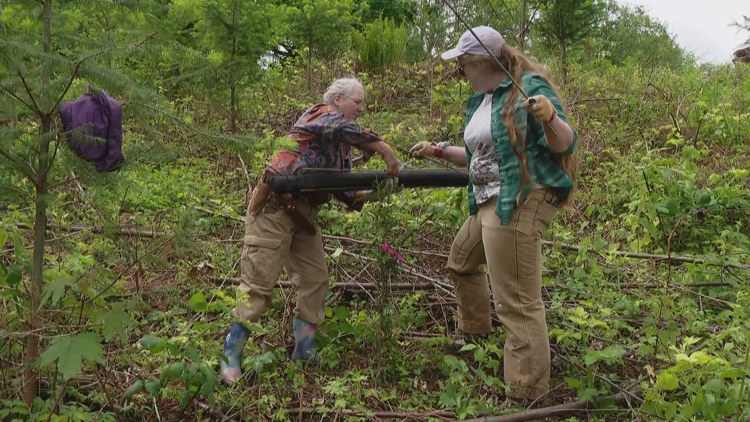
Sue Sweet and her daughter Haley purchased a 20-acre property near Black Lake south of Olympia in 2022 with dreams of building a home and enjoying the lush forest.
Instead, what they found was an overgrown landscape filled with invasive plants such as knotweed and blackberries, left behind by previous owners who had cut down and planted trees but failed to maintain the land.
“We didn’t realize this project was really beyond our capacity,” Sue Sweet said, “and we just thought, well, you just keep cutting it, but then we came out and it was so huge this spring.”
The Sweets contacted the Department of Natural Resources for help.
The state has paid about $8,000 for labor, materials and expertise to make the area more manageable and less vulnerable to wildfires, said Forest Service staffer Matt Smetana, who oversees assistance programs in the South Bay region.
“Those blackberries completely outnumbered the trees,” Smetana noted, describing the situation before the intervention.
“Returning this area to woodland will not only benefit the neighbors and the candy store, but the entire surrounding community,” Smetana said.
The results were transformative for the Sweet family.
“As a little girl, I wanted to be a ranger,” Sue Sweet said, “and my brother told me girls couldn’t be rangers, so here I am – we’re building a forest here.”
The state plans to return to the area this winter to plant more trees.
The Sweets hope the state can help them maintain the forest.
However, continued funding from the state Legislature is needed to keep the program running beyond next June.


