

As hot summer approaches, officials warn that urban forests are no longer just for aesthetics. They are becoming important cooling spaces for communities across Washington.
SEATTLE — On the hottest days, many people flock to Seattle’s Seward Park to escape the heat.
Some people come for the trails. Others are used for shade. But for many Seattle residents without air conditioning, old-growth forests provide something increasingly important during extremely hot weather: cool air.
Officials say temperatures in parts of the park can be 10 to 15 degrees cooler than surrounding communities — a difference that state leaders now believe may become more important as Washington faces hotter, drier summers.
Public Lands Commissioner Dave Upthegrove spent time with the Audubon Society at Seward Park on Tuesday morning. The organization receives funding from the Department of Natural Resources for projects to plant trees, restore forests and expand shade in communities across Washington. It also includes restoration work.
“Planting trees in urban areas can literally save lives during hot weather,” Uptgrove said.
Seattle has already seen significant tree loss.
Seattle lost about 255 acres of tree cover, about the size of Green Lake, between 2016 and 2021, according to city data.
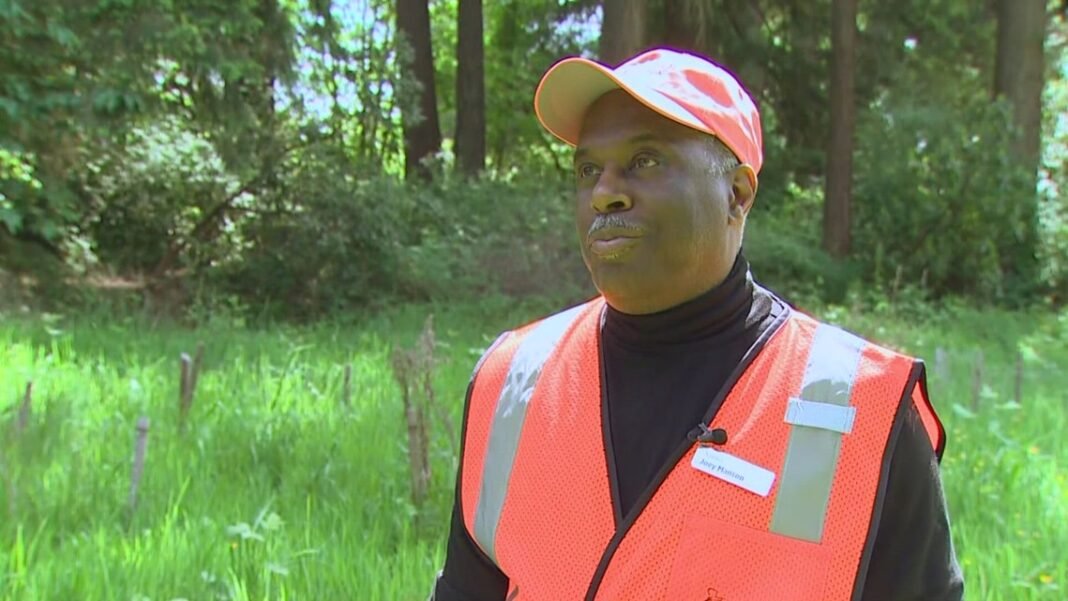
“On a day like today, there’s going to be a lot of people here because a lot of people in Seattle don’t have air conditioning,” said Joy Manson, director of the Seward Park Audubon Center.
Tree Equity Score data shows that nearly one in five Seattle residents live in neighborhoods without enough trees.
To close this gap, Seattle will need to plant more than 473,000 additional trees, expanding the city’s tree cover by more than 10 square miles.
Officials say the disparity tends to be most pronounced in low-income neighborhoods, where fewer trees means hotter streets and fewer places to escape dangerous heat.
“We often see a lack of trees in low-income and diverse neighborhoods,” Uptgrove said.
In Seward Park, the Audubon Society said support from the Department of Natural Resources has helped transform the entire forest area over the past decade.
“One of the trees here is at least 50 feet tall — all the treeline here is new,” Manson said. “This has all happened over the past 10 years and with the support of the DNR.”
Manson said the story will eventually come back to people’s minds.
On summer evenings, families gather under the trees for picnics, escaping the heat under the canopy.
“It’s great to see them here,” Manson said, “but it’s sad that they don’t have the resources in their homes or communities to make them feel comfortable where they live.”
Upthegrove said there’s no guarantee the funding fight is over and believes community members stepping forward helped secure the funding this time.
“I think the community voice, the organizations that provide tree cover, the parks, the city that sees the return every day help ensure that the funding continues,” he said.