


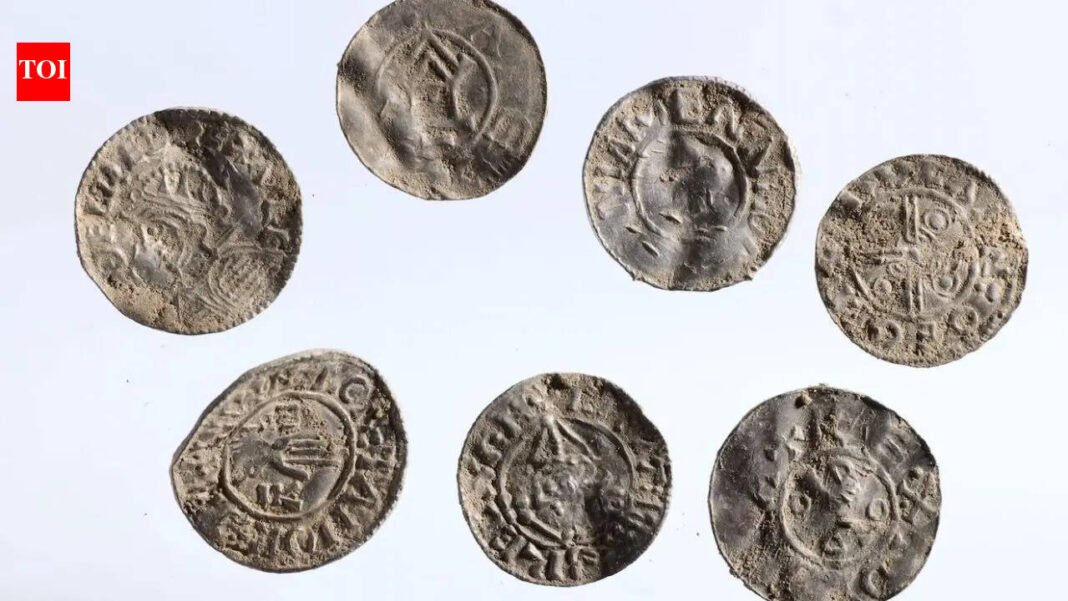
Norwegian archaeologists have made a remarkable discovery, now described as one of the most important Viking Age discoveries ever made. A large silver coin hoard has been discovered in a field in eastern Norway and is believed to contain around 3,000 coins so far. Experts say that as excavations continue, more coins may still be buried underground, waiting to be discovered. The discovery has attracted international attention because of its size, historical value and insights into Viking trade and economics, Scientific American reported. Known as the Spectacular Viking Coin Hoard, it may be the largest hoard of its kind in history. Even more interesting is that the coins come from different parts of Europe, spanning key periods in Viking history.
Viking coin hoard discovered near Reina reveals thousands of silver coins
A treasure trove of Viking coins has been discovered for the first time in a field near Reina in the Østerdalen region of eastern Norway. Two metal detectorists reportedly made the initial discovery when they found 19 silver coins buried in the soil. Realizing the potential importance of the discovery, they immediately notified local authorities. Archaeologists were soon sent to investigate the site further.As excavations continued, the number of coins increased rapidly. What started as a small discovery soon turned into a major archaeological dig. The site has since produced thousands of coins, and researchers believe there may be more to come. The grounds appear to have preserved these treasures for nearly a thousand years.
Late Viking Age silver coins reveal extensive trade links across Europe
Coins discovered during excavations date back to the late 10th and early 11th centuries, marking the height of the Viking Age. Based on the finds, experts believe the treasure may have been buried between AD 980 and 1040, a time when many political and economic events were taking place in Scandinavia.What’s interesting about this discovery is that many of the coins found in the hoard came from foreign countries such as Britain and Germany. Additionally, some coins feature elements from earlier Danish and Norwegian coinage systems. This discovery proves that the Vikings had extensive trading relationships throughout Europe. Experts believe that the Vikings were not only warriors, but also great traders.
Researchers explore iron production and discovery of Viking silver vaults
Researchers studying the site believe the cache of coins may be related to the area’s steel industry. According to historical records, the Østerdalen area was an iron mining center from the 10th century to the late 13th century. Iron was obtained from local bogs and processed there. The industry helps explain the hoarding of silver coins in the area, as the hoarding of money may have been related to the business of the industry.Still, scientists say the purpose of the buried money remains unclear. It is believed the people hid the property somewhere, but it is unclear what prompted them to do so.
Rare hoard of Viking coins offers new insights into ancient economy and trade
These archaeologists even said that such a discovery is quite rare and very important from a historical perspective. Coin hoards of this size are rarely found in Norway. It is worth noting that the previous major numismatic hoard found in Norway dates back to 1950.The investigation is still ongoing, but hopefully it will help shed more light on the Viking economy, the paths money traveled at the time, and other interesting information. For example, these coins may help to understand more about the relationship between the Vikings and the rest of Europe. Additionally, experts say the discovery shows how many secrets of Viking settlements remain to be discovered.