


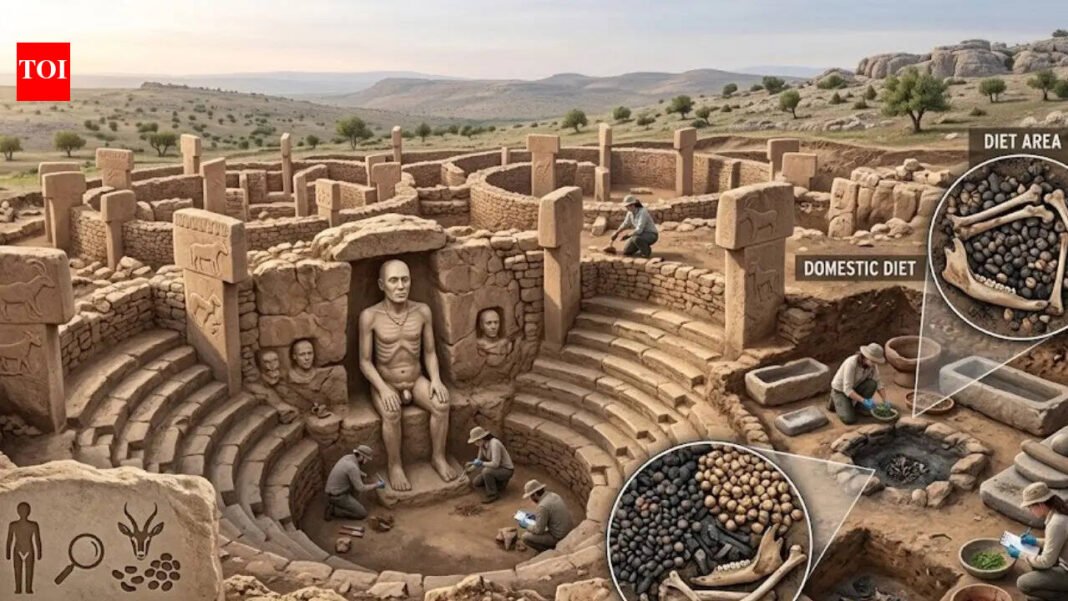
Recent excavations at Karahantepe, a key site in the Taş Tepeler project in southeastern Türkiye, have uncovered stunning evidence of Neolithic complexity. Dating back some 12,000 years, this site has produced oversized human statues and detailed animal carvings that have changed the way we think about prehistoric art. The most surprising finds, however, involved plant remains. Although they were still hunters and gatherers, their livelihood was semi-managed. The findings suggest they also had a diverse diet that included wild legumes. The transition from wandering in search of food to a more settled lifestyle indicates that Kalahantepe was not just a simple settlement, but an advanced society practicing “pre-domestication” farming. These revelations challenge our understanding of when organized agriculture began and how early societies developed social structures.
Statues and surprising prehistoric diet discovered in Callahantepe
The Tas Tepele project demonstrates that Karahan Tepe is more than just a ceremonial site; It is the center of complex social activity. Professor Necmi Karul led the excavations, which uncovered numerous T-shaped pillars and highly detailed human figures. One striking find is a statue of a seated male, holding his penis in both hands, emphasizing the focus on human symbolism. Meanwhile, bioarchaeological studies show that people consumed gazelles, wild sheep, and various legumes such as bitter peas and lentils, suggesting early stages of plant management before domestication began.
Why hunter-gatherers stopped migrating 12,000 years ago
Published research in the academic field suggests that Karahan Tepe and Göbekli Tepe reveal much about the lifestyle of sedentary hunter-gatherers, challenging the traditional view known as the “agriculture first” theory. At Callahantepe, permanent structures and monumental stone sculptures indicate that hunter-gatherers formed stable communities long before wheat was domesticated. The discovery of rock pits, cisterns and grinding devices also suggests that wild grains and legumes were regularly consumed.
The important role of wild legumes in ancient architecture
As noted in the Journal of Archaeological Science , archaeobotanical studies in the Şanlıurfa region show that people 12,000 years ago had a very diverse diet. There is evidence that meat from wild animals such as gazelle and bison formed an important part of their diet. However, they also collected and processed large quantities of wild beans. The beans provided much-needed protein to the legions of workers at Callahandepe who carved and moved the giant statues.
Why Karahan Tepe cares about the human form
Callaghan Tepe’s emphasis on the human figure marks a significant departure from the earlier focus on animal motifs. The German Archaeological Institute, which is involved in research on the area, noted that the statues unearthed in Karahan Tepe reveal a complex symbol system and social order. The exquisite carvings of foxes, snakes and leopards reflect the unique characters of a community sustained by high protein surplus and communal feasting.