


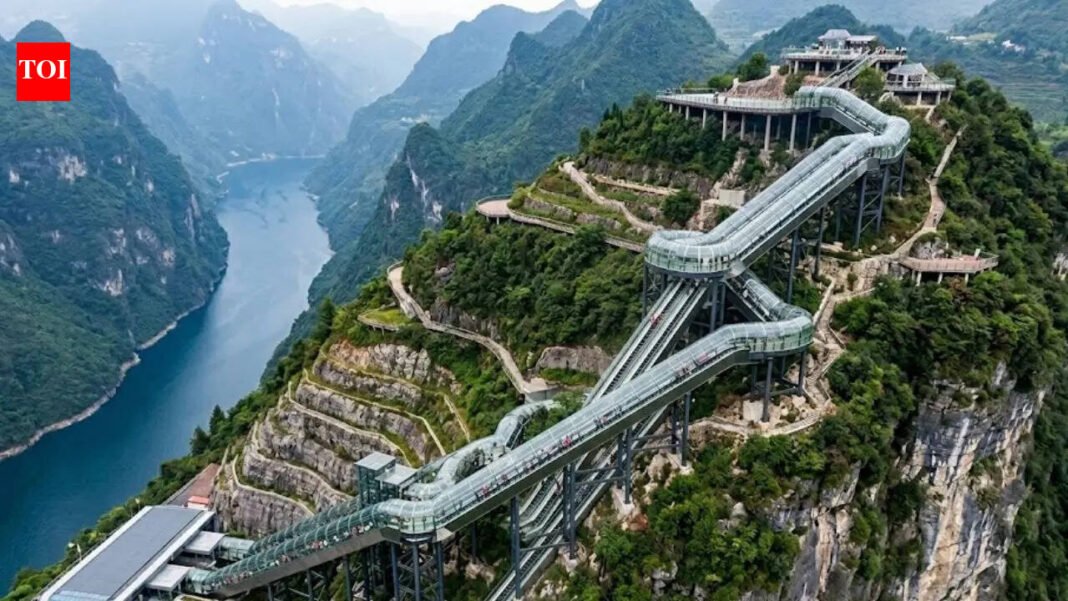
China transforms vertical transportation with the launch of the world’s longest outdoor escalator. Located in Wushan County, Chongqing City, this engineering marvel is an impressive 905 meters long. Shaped like a dragon, it helps visitors climb 80 floors in just 20 minutes. This innovation replaces the grueling one-hour mountain hike of the past. The project can transport up to 7,300 people per hour. Engineers used environmentally friendly materials such as reinforced concrete and structural steel to ensure the building blends seamlessly into the surrounding limestone karst landscape. It offers visitors a sustainable way to explore one of China’s most challenging high-altitude regions.
Climbing 80 floors in 20 minutes: the mechanics of the 905-meter ladder
Wushan Sky Ladder can accommodate a large number of passengers. It uses a complex transportation system with 21 outdoor escalators and 2 high-capacity elevators. As mentioned in ChongqingThis setup was completed before the Spring Festival, easing the holiday travel pressure in the Three Gorges area. It uses direct vertical access and skips winding roads, providing an environmentally friendly way to reduce the impact on Wushan’s steep landscape.
ecological integrity South China Karst
UNESCO said that building a high-capacity transportation system in the Wushan region requires strict compliance with ecological protection standards. The area is part of the South China Karst region, known for its soluble limestone and unique biodiversity. The Ladder project respects this fragile environment. It uses modular construction methods to minimize soil disturbance on the steep 242.14-meter (794-foot) slope. Unlike traditional road extensions, this vertical landmark offers an environmentally friendly solution. It preserves the natural drainage pattern of the Yangtze River Basin and still allows for high-density pedestrian activity.
A strategic booster for regional economic growth
The Sky Ladder project perfectly fits China’s national policy of improving the accessibility of top scenic spots and promoting “smart tourism”. Instead of making the challenging climb, visitors can now use automated vertical transport, making the high-altitude views more accessible to the elderly and those with limited mobility. The project is part of a larger plan to increase the tourist area’s capacity. The aim is to ensure the infrastructure supports growing domestic tourism demand while keeping everything safe and efficient.