




As the 2026 World Cup approaches, FIFA has moved closer to resolving one of the most significant financial issues facing participating nations, reaching an understanding with the U.S. Treasury Department that would allow all 48 teams to apply for exemption from federal taxes on World Cup revenue. There have been concerns for months that an expanded tournament in the United States, Canada and Mexico would place an uneven financial burden on national associations, particularly those without existing tax treaties with the United States. While the latest breakthrough resolves federal tax concerns, discussions continue and many teams still face state and city taxes depending on where they play.
Negotiation timeline and how issues arose
The problem became apparent earlier in April 2026, when reports emerged that FIFA fails to get full tax exemption This is despite the fact that the United States itself has enjoyed tax-free status since the 1994 World Cup, for participating countries. Under U.S. law, income earned domestically is taxable, meaning national associations are responsible for federal, state and local taxes on prize money and business income generated during tournaments. At that time, only 18 of the 48 eligible countries were protected through double taxation agreements (DTAs) with the United States. Signed primarily by European countries as well as Canada, Mexico, Australia, Egypt, Morocco and South Africa, these agreements reduce or eliminate certain tax burdens. The remaining 30 countries, many of them from smaller or emerging football economies, do not have such protection and are expected to face higher costs. Countries such as Curacao and Cape Verde, making their World Cup debuts, are cited as examples of how the system can make a difference, with smaller associations potentially facing a higher effective tax burden than wealthy European football federations purely due to their tax status.
Federal tax exemption breakouts and how they work
The day before the FIFA Council meeting in Vancouver on April 30, The British “Guardian” reports Discussions between the U.S. Treasury Department and Donald Trump’s World Cup Task Force are expected to result in a commitment from FIFA that national associations will be able to apply for federal tax exemptions under Section 501(c)(3) of the U.S. Internal Revenue Code. According to the report, FIFA has been reassured that the application may be successful if the organization meets the required conditions, including Operates as a nonprofit, does not distribute profits to private shareholders and avoids political activity. National football associations should meet these standards.
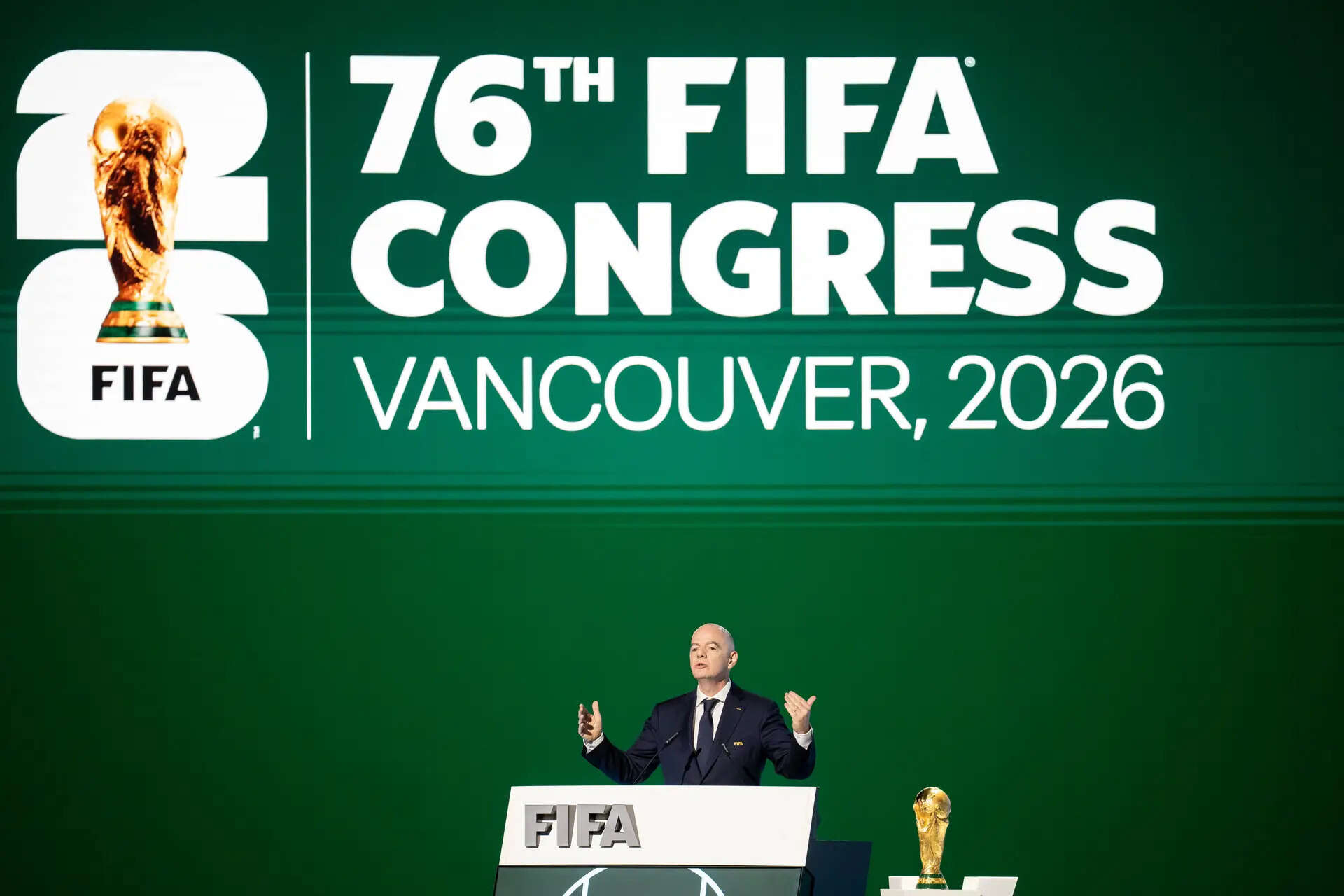
FIFA President Gianni Infantino speaks during the 76th FIFA Congress on Thursday, April 30, 2026, in Vancouver, British Columbia. (Ethan Cairns/Canadian Press via AP)
If implemented as expected, the exemption would eliminate much of the tax burden, with the U.S. federal income tax rate of approximately 37% for individuals and approximately 21% for corporate entities.
State and city taxes still create uneven financial results
Even with the federal exemption, the financial situation is still uneven because state and local taxes still apply in many cases. Tax rates vary by location. Florida, where the game is held in Miami, has no state income tax, while New Jersey, where the final is held at MetLife Stadium, can hit 10.75%, and California, where the games are held in Los Angeles and San Francisco, is as high as 13.3%. Since the United States will host 78 of the tournament’s 104 games, including all games beginning in the quarterfinals, it is inevitable that most teams will play in U.S. jurisdictions where these taxes apply. Canada and Mexico, which will host 13 games each, have offered full tax exemptions to participating associations, a stark contrast at the same event.
2026 FIFA World Cup (via Getty Images)
The result is that a team’s final tax liability depends not only on how far the team progresses but also on where games are scheduled, introducing what officials have previously described as a “postcode lottery.”FIFA has declined to comment publicly on the negotiations, while The Guardian cited sources as saying the situation was ongoing. Still, the shift represents a significant change from previous expectations that teams could lose much of their tournament revenue to federal taxes, while issues about potential city and state taxes were also considered part of broader negotiations but have not yet been fully resolved.
Why this issue matters for small and non-European countries
The financial implications of the initial situation are particularly significant for countries without double taxation treaties, many of which rely heavily on World Cup revenue to fund domestic football development. Previously, FIFA increased the total prize money and participation funds by 15% to $871 million (£645 million), with each of the 48 teams guaranteed at least $12.5 million. However, without the tax deduction, a significant portion of this income would remain within the United States through taxes.

The FIFA World Cup trophy is displayed during the 76th FIFA Congress on Thursday, April 30, 2026, in Vancouver, British Columbia. (Ethan Cairns/Canadian Press via AP)
Concerns raised earlier this year suggested that some federations could face losses of more than 20% of their income, a figure that would disproportionately impact smaller associations compared with their wealthier European counterparts.
How is this different from previous World Cups?
In previous editions of the tournament, host governments have typically provided full tax exemptions to all participating teams to ensure a level financial playing field. The 2022 World Cup in Qatar is the latest example, with all 32 national football federations exempt from local taxes on their income. This approach ensures that participation income flows back into the national football system without any deduction for fees. The three-nation hosting model for the 2026 World Cup, coupled with the US tax framework and treaty system, creates a more complex environment, which FIFA has been trying to resolve through negotiations rather than automatic exemptions. The tournament is scheduled to begin on June 11, with Mexico hosting South Africa in the opener, and as preparations enter the final stages, resolving these outstanding details remains a priority for FIFA and participating associations.