



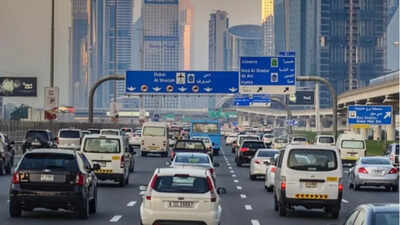
The UAE Federal Decree No. 14 of 2024 on Traffic Control, implemented by the Ministry of Interior and local transport authorities, sets out clear legal rules for the suspension, cancellation or refusal to renew driving licenses. The law focuses not only on offenses but also on driver health, repeat offenses and public safety risks, giving authorities broad powers to take action before and after serious incidents.
UAE traffic law stipulates suspension of driving license
A key rule is that a driver’s license can be revoked if they are found to be unfit or no longer qualified to drive the type of vehicle they are driving. This makes suspension a preventive measure rather than just a punishment.The law also gives traffic control agencies the power to coordinate with licensing authorities to suspend licenses when necessary to ensure traffic safety. This means that if a driver poses a danger on the road, authorities can intervene even before a serious offense escalates.In addition, serious offenses such as reckless driving, drunk driving, or failure to cooperate with police may result in suspension or even arrest under the law.
Cancellation of driving license requirements
The law further defines the conditions under which a license may be permanently canceled or not renewed.Cancellation may occur if a driver repeatedly violates traffic laws or is deemed to be persistently unsafe. In this case, the authorities do not need to proceed with issuing a temporary injunction, they can revoke driving privileges entirely.The courts also play a central role. In serious cases, such as death or serious injury caused by negligent driving, the judicial authority may order the driver’s license to be revoked and impose fines and imprisonment.The law further allows authorities to deny renewal applications, effectively preventing drivers from returning to the road if they do not meet safety or legal standards.
Criminal offenses under UAE law
UAE traffic laws clearly separate administrative offenses from criminal offences, with penalties that go well beyond fines or demerit points. Crimes such as driving under the influence of alcohol or drugs, a hit-and-run incident, or causing a fatal accident will be treated as criminal cases. Depending on the severity and repeat offenses, these actions can result in jail time, substantial fines, and license suspension or revocation. For example, repeat DUI offenses may escalate from a license suspension to a full license revocation, especially if public safety is seriously compromised. The law also empowers authorities to arrest drivers on the spot in cases of serious injury, uncooperative or dangerous behavior on the road.
How does the system manage drivers?
In addition to penalties, the law also introduces a structured driver re-evaluation and rehabilitation system.Administrative regulations govern how suspended drivers are re-evaluated before regaining their license. This may include testing, training or demonstrating improved behaviour.At the same time, law enforcement has been stepped up. Authorities use AI-powered cameras and a nationwide surveillance system to detect violations such as mobile phone use, unsafe driving and speeding in real time.Officials stressed that the goal is not just to punish, but to prevent repeat offending and improve long-term road safety across the UAE.


