


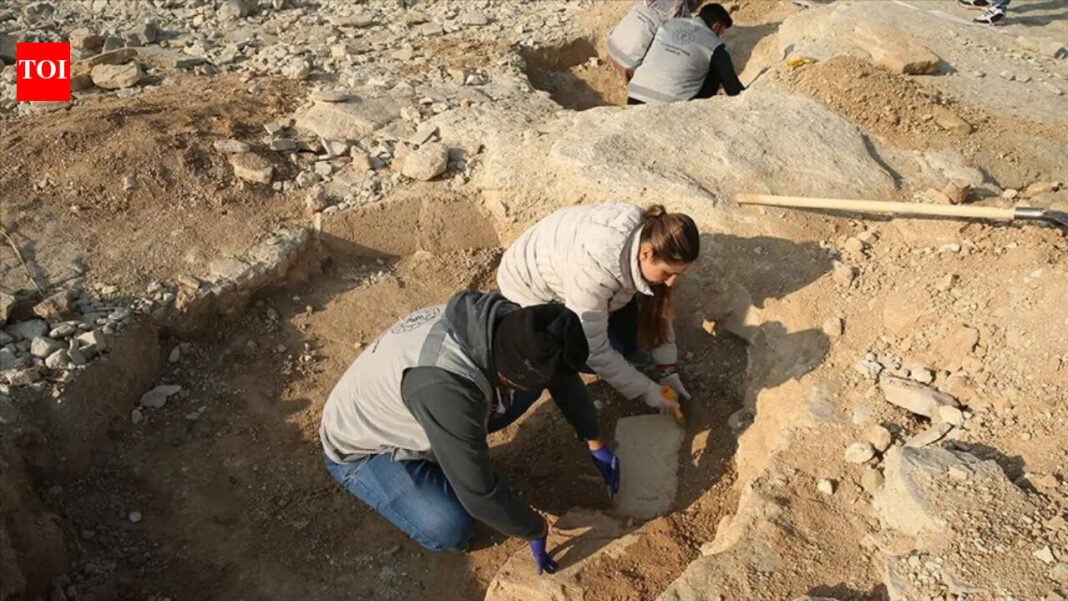
Due to low water levels in the Adiyaman Atatürk Dam reservoir, a monumental Pre-Pottery Neolithic (PPN) archaeological site emerged in the area, providing important new evidence related to the cultural phenomenon of “Taş Tepeler” (Stone Mountain). The site has been exposed due to a significant drop in water levels within the reservoir basin, and contains important finds, including ceremonial buildings and T-shaped stone pillars, which were built before the emergence of permanent urban civilization. Archaeologists from Adiyaman University and staff from local museums have begun an immediate rescue operation for the artifacts to document the material before they are submerged again. According to research published in The Archaeologist, the discovery provides evidence that these complex symbolism and architectural traditions, previously thought to exist only at Göbekli Tepe, actually extend throughout the Euphrates Basin and thus represent a much larger geographical area than previously thought to harbor potential Neolithic activity. The information provided by this site is therefore crucial for expanding knowledge of the Neolithic and has significantly changed the view of the region as one of the original sites of human ritual and social complexity.
Neolithic structures discovered turkey
Archaeologists from the Adityaman Museum Authority discovered T-shaped stone pillars near the village of Kyzyliz in Samsat district after experiencing a significant drop in water levels in the reservoir. Mustafa Çelik, deputy director of the Adityaman Museum, said: “There is evidence that these monuments were originally buried two to three meters underground and are now exposed due to erosion from the dam water.” According to experts, the columns and associated courtyard are typical of the pre-Pottery Neolithic period and are estimated to be around 11,000 years old.
its architectural features Shishan Culture
Professor Dr. Sabahattin Ezer of Adiyaman University said that these buildings represent evidence of the “Taş Tepeler” culture, which is characterized by the presence of a large number of huge, human-shaped, vertically oriented stone pillars in the area. The same type of shallow hole-like structure, surrounded by large, flat, rectangular stones with a T-shaped pillar in the middle, has been described as the “ceremonial center” of Şanlıurfa. The findings suggest that Stone Mountain’s cultural influence extended farther northwest into the Euphrates corridor than other previously documented archaeological sites.
Rescue operations and conservation efforts at the Ataturk Dam site
Türkiye’s Ministry of Culture and Tourism classified the site as a “rescue excavation” due to its location within the reservoir area. Fluctuating water levels in dams pose the threat of further water erosion or permanent flooding. In order to protect and display many of the movable artifacts, archaeologists moved them to the ancient city of Perre. Meanwhile, archaeologists are working quickly to document the remaining structures before water levels rise back to the pool’s full height.


 archaeological site has surfaced in the a.)