



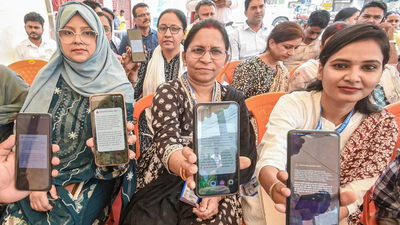
People show off their mobile phones during a nationwide test of the new ‘Cell Broadcast Alert System’ in Patna on Saturday
The phone screamed. The screen flickers. A commuter rushes towards the emergency chain. The theater audience was stunned. The patient gripped the chair. Rescues began minutes later as tensions in West Asia reached the brink and many feared the worst as chaos swept the city.Hundreds of thousands of users across India received a piercing “extremely severe alert” at around 11:45 a.m. on Saturday, followed by a repeat alert minutes later – as part of a nationwide test of a new cell broadcast-based disaster warning system.The message is straightforward: no action is required. But the reaction was completely different. During a children’s show at Mumbai’s Prithvi Theatre, around 40 phones started ringing, surprising families lining up to watch the show. On a suburban train, a passenger tried to pull the emergency chain before others intervened.
Ringing phones are annoying to some, scary to others
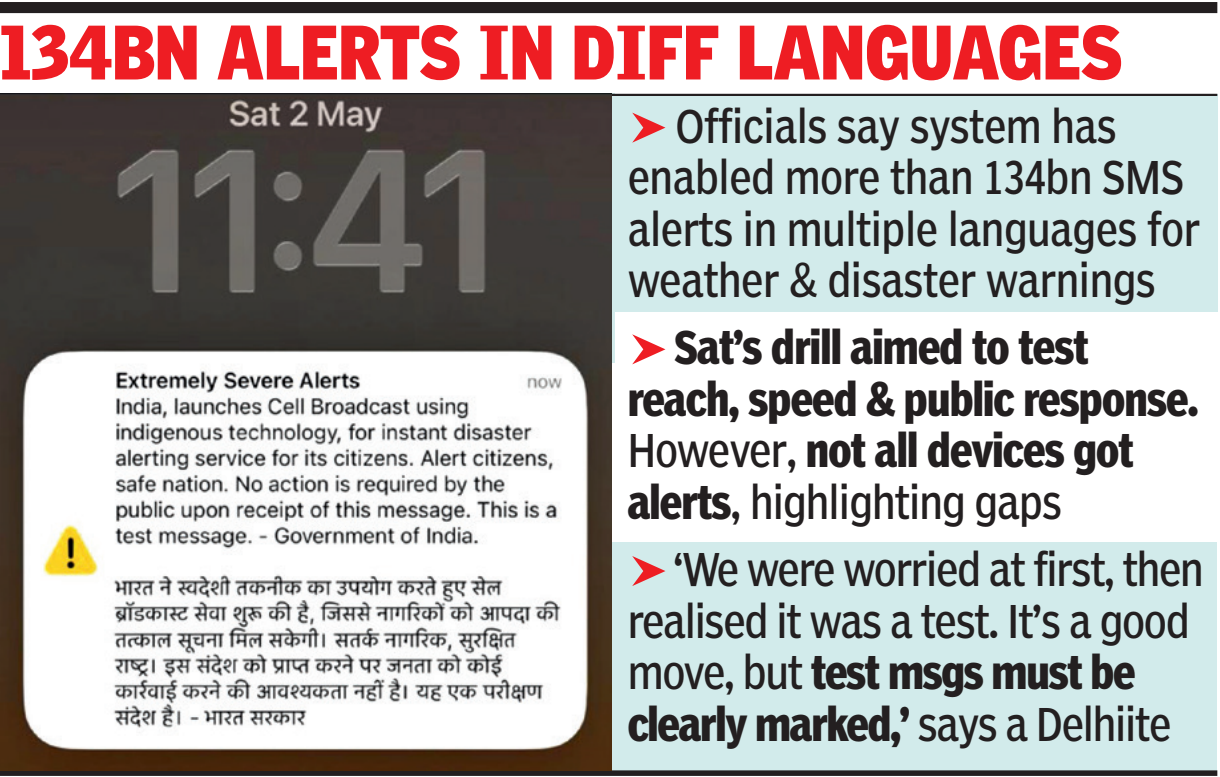
In hospitals and clinics, alarms interrupt consultations and leave patients in shock.“I immediately switched off my phone thinking it was a mistake,” said a resident of Bandra. One visitor to Borivali recalled that people were freezing. “It’s annoying to some people and scary to others.”Similar scenes are playing out in every state. In Bhubaneswar, many people are worried about being hacked or cyber-attacked before reading further.“I thought my phone was being attacked and then I was relieved,” one resident said. In Bengaluru, users mistook it for a heat wave or earthquake warning before clarifying it. In Lucknow, a pharmacist said several devices sounded alarms simultaneously, causing a brief panic.In New Delhi, Kanika Sharma, a 29-year-old private school teacher, said a sudden buzz during brunch initially raised concerns about global tensions before she realized it was a drill. “The first thing that comes to my mind is the tension in West Asia… This system is useful in emergencies,” she said. Others expressed confusion about repeated alerts. Abhishek Dogra, 33, an IT professional from Jasola in southeast Delhi, said his family’s phones immediately rang. “We were worried at first and then realized it was a test. It was a good move, but testing information should be clearly labeled,” he said.Authorities later confirmed it was a planned trial by the National Disaster Management Authority and the telecommunications department to mark the launch of a real-time public warning system.Unlike text messages, cell broadcast technology pushes alerts to all devices in a designated area simultaneously, overriding mute and do not disturb settings.It requires no internet, app or subscription.Alerts appear as full-screen pop-ups and sound loud, temporarily halting other phone functions.The system, built on an indigenous platform called SACHET and aligned with global alert protocols, is operational in all states and union territories. To date, it has enabled more than 134 billion text message alerts for weather and disaster warnings in multiple languages, officials said.Saturday’s exercise was designed to test coverage, speed and public response. Information is delivered in local languages as well as English and Hindi for wider understanding. Not all devices receive alerts, highlighting the gap. Some users reported that one of the phones was ringing while the other phone next to it was silent – a reminder that a calibration was taking place. Officials say the system will be used to respond to industrial disasters such as earthquakes, tornadoes, floods, lightning and gas leaks. Geolocation will allow alerts to be tailored to specific areas or communities.In Bihar, authorities are planning follow-up preparedness exercises, including power outages and civil defense drills later this month, to increase public familiarity. “It creates awareness,” said a senior official.(Inputs from New Delhi, Bangalore, Lucknow, Patna, Bhubaneswar, Hyderabad)