



In parts of Rome, whispers may have spread far beyond where they were spoken. Stand near a curved wall or under a massive dome, and even quiet sounds can pass through the space clearly. The effect feels uncanny, as if the building itself is listening. In fact, it is the result of geometry and materials working together. Ancient Roman architecture was built with smooth stone and carefully designed interiors that channeled sound so that it remained focused and audible at a distance, turning everyday speech into something that moved through space with surprising precision.
How the Roman Walls Listened
When sound is produced near a curved surface, it does not simply travel in all directions. Instead, it follows the contours of the wall, following a controlled path. This is called the whispering gallery effect. In a space with domed or rounded walls, sound waves are effectively reflected and remain concentrated rather than decaying quickly. As a result, a whisper can travel across a room and be heard with unexpected clarity from several meters away.One of the most obvious examples of this behavior in Rome is the Pantheon. Its massive dome and smooth inner surface allow sound to reverberate and travel with astonishing consistency. Even small noises can spread throughout a space, especially in quiet conditions.The Roman theater provides another insight into how sound was managed. Designed for large audiences, these open-air structures feature a semicircular layout and tiered seating to project the sound from the stage. In the absence of any modern loudspeakers, audience members sitting far away can still clearly hear the performers. This reflects a practical understanding of how shape and structure affect sound.
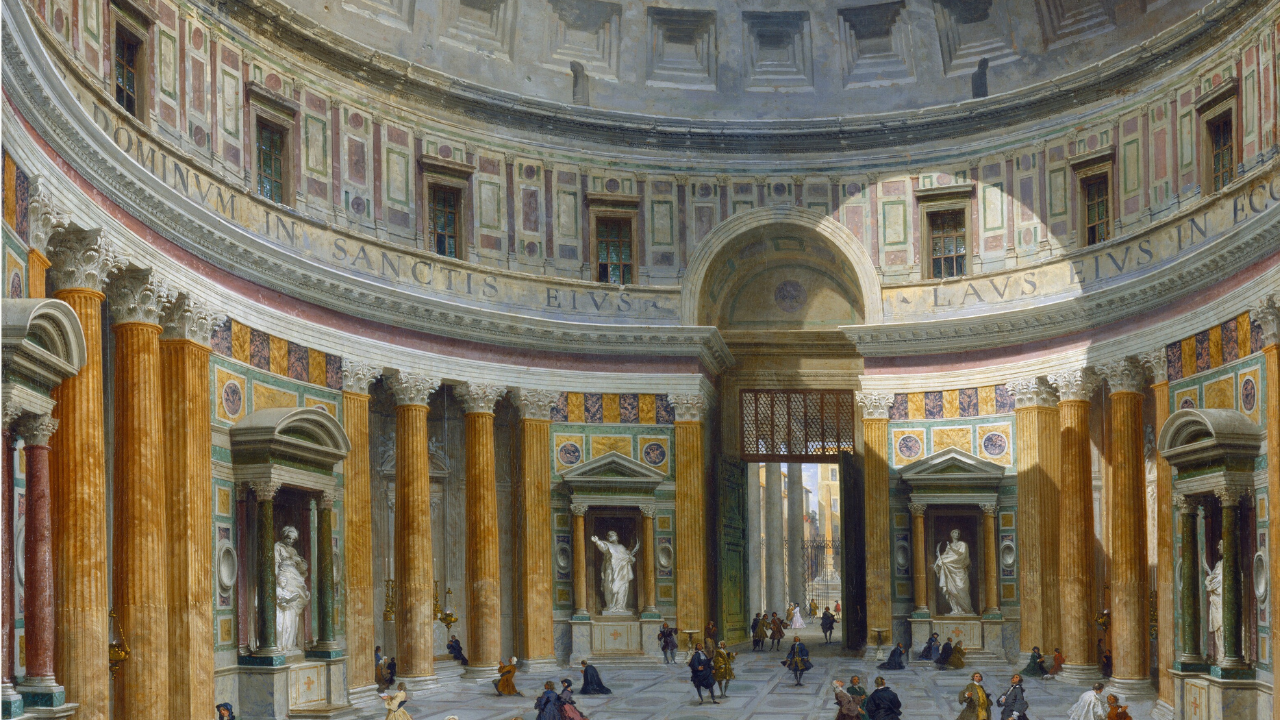
The clarity of sound in these environments comes from the combination of architectural features. Stone and marble surfaces reflect sound rather than absorb it, allowing the waves to maintain their intensity. The curved shape guides these waves along predictable paths, while the enclosed interior limits how quickly sound can dissipate. The smooth surface reduces distortion so sound travels clear. These elements combine to make even faint sounds clear and intelligible at long distances.
A legacy that’s still talking
Ancient Roman builders focused on durability, symmetry, and scale, but their designs still exhibited complex acoustic behavior. In these spaces, sound does not simply disappear. It reflects, travels and travels through the air, and is shaped by stones and structures. Whispers can travel across a room with ease, giving the impression that the walls are listening, when in fact they are directing the sound with quiet precision.