


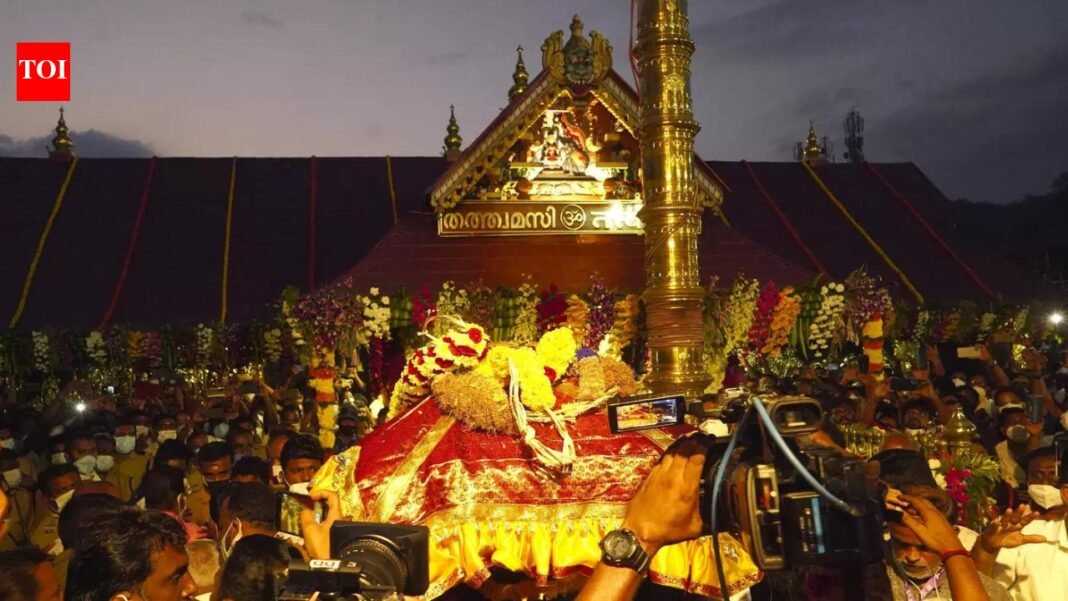
New Delhi: Justice BV Nagarathna, one of the nine-judge bench led by CJI Surya Kant Supreme Court On Tuesday, during the hearing on the core issue of “Fundamental Rights and Faith and Beliefs”, the bench noted that people who do not believe in a religion and its religious practices have no right to file a petition challenging its validity.As senior advocate V Giri, appeared in court sabarimala Ayyappa Thanthri believes that no devotee can detract from the practices associated with Lord Ayyappa’s attribute of ‘Naishtik Brahmachari’ (eternal celibacy), saying, “Non-devotees have no right to question the customs or beliefs associated with the temple and its deity.”
Judge Budge: Sacrosanct practice barring debate?
Justice BV Nagarathna said that once the court has distinguished religious activities from secular activities of regular institutions, why should it delve into whether the activity in question is an essential part of the religion or religious denomination and therefore disagreed with the 2018 Supreme Court judgment that had struck down the custom of barring women in the age group of 10 to 50 years from entering the Sabarimala temple, saying it was not an essential religious activity.
Senior advocate Gopal Subramanium agreed with Justice Nagarathna and said that while secular practices of religious institutions are open to judicial review, religious activities enjoy constitutional protection unless they are contrary to public order, morals or health.Justice Asanuddin Amanullah said whether a practice is secular or religious must be decided by the court on a case-by-case basis. Judge PB Varale asked: “Does this mean that as technology advances and education becomes more widespread, communities collectively cannot change or reform particular religious practices?”Justice Joymalia Bacchi added to the question, asking: “If a religious practice is unique to a certain sect and is considered sacrosanct, does it prohibit debate within the community to change that practice?”Giri said: “If a person has faith and belief in a deity, he goes to a temple to worship. If he goes to a temple to worship the deity, he cannot object or question the customs and beliefs attached to the deity worshiped by the community. Only in this way can changes in customs be brought about.”Justice R Mahadevan said: “Faith is faith. The practice is different but it is based on faith.”Senior advocate J Sai Deepak, appearing for the religious association, said the majority judgment in the Sabarimala case was wrong as barring menstruating women from entering temples due to the unique attributes of Ayyappam was equated with “untouchable” customs. He said when the Constitution abolished untouchability and criminalized it through Article 17, it had in mind only social or caste-based untouchability and not ritual purity.Deepak further submitted that different religious spaces dedicated to specific forms of deities, which would lead to restriction of entry to devotees of a certain class, section or group without regard to caste, cannot be considered to attract the prohibition of Article 17.