


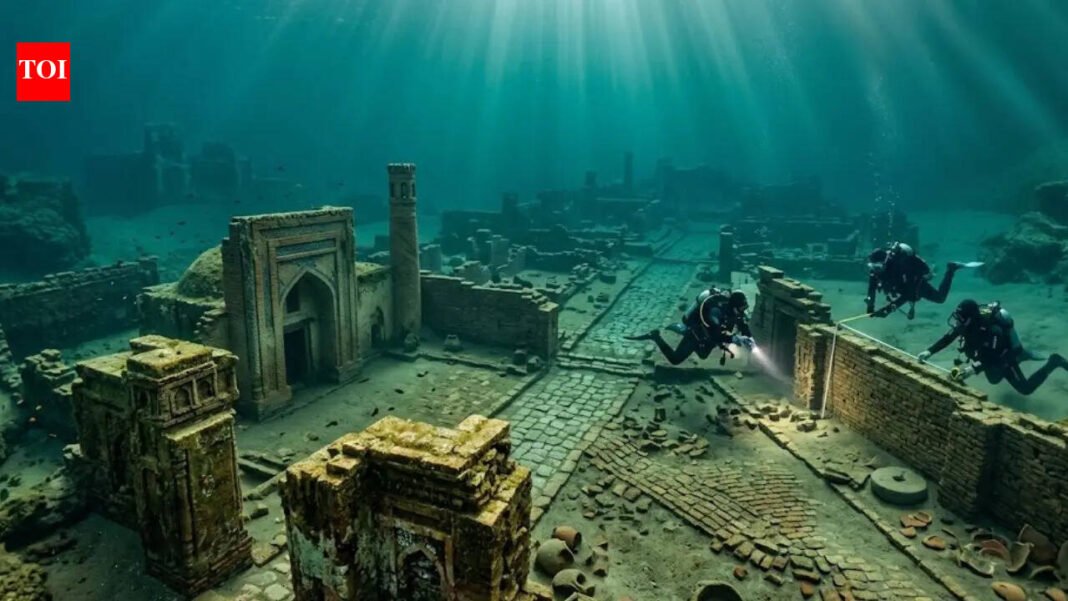

Archaeologists have discovered the remains of a large medieval settlement on the bed of Lake Issyk-Kul in Kyrgyzstan, rewriting our understanding of Central Asian trade routes. The settlement was reportedly found near the village of Tolu Aigir, once part of an important urban center along the Silk Road, and contains well-preserved architecture (burnt brick buildings and workshops) as well as a very large (13th-14th century) Muslim cemetery. russian geographical society. Researchers believe an earthquake devastated the city, causing it to submerge under the lake’s silt, burying its history. However, through modern underwater archaeological techniques, this lost site offers a unique look at the daily life, religious practices and economic activities that took place along a historic trade corridor until it was destroyed by natural forces.
Kyrgyzstan unveils a lost underwater city with ties to the Silk Road
According to the Russian Geographical Society, the findings of the underwater archaeological expedition have shed light on underwater settlements. The expedition discovered four distinct settlement areas approximately 1 – 4 meters below the surface. Among the industrial artifacts found were millstones used for grinding grain; remnants of decorative architectural features on the building’s exterior (suggesting the possible presence of public civil buildings such as mosques or religious schools); and mud-brick structures reflecting the city’s development and architectural evolution. The variety of structural types reflects the city’s highly developed economy before its abandonment.
Discovery sheds light on Islamic funerary traditions and community insights
The discovery of a large 13th- to 14th-century cemetery provides detailed insight into the community and the religious practices of its members. Excavations were carried out to identify burial sites with the remains of those buried facing the Qibla (the direction of Mecca). This confirms that during the Golden Horde period, Islamic practices were widely practiced in the region. Anthropological studies of the skeletons are currently being conducted to gain insight into the people who made up this community and what they ate.
How seismic activity is reshaping Silk Road infrastructure
According to archaeologist Valery Kolchenko and other experts, the city was a large commercial hub and intermediary point between East Asia and the Mediterranean. The city was destroyed by an earthquake in the 15th century. The earthquake caused much of the coastline and lake bed to sink, causing settlements to be quickly inundated. This event is critical to understanding the Silk Road’s seismic history and how geological and hydrological changes affected the Silk Road’s infrastructure in the region.