



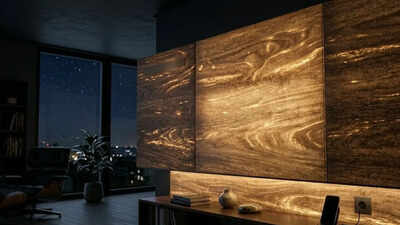
A major development in sustainable construction has enabled researchers to transform ordinary wood into advanced thermal storage. In this case, chemical modification is used to remove lignin from the wood and add phase-change materials, resulting in a new product called a “solar cell” that stores solar energy collected during the day by the building as latent heat. Traditional solar systems have variables such as intermittency. Still, due to the nature of the bio-based materials used, these solar cells are stable in thermal conditions and release their stored energy until long after the sun has set.This discovery, based on advanced materials science, will allow us to achieve zero carbon emissions when heating our homes or controlling indoor temperatures. By harnessing the natural porous structure of wood, this new technology will use the actual walls of our homes as insulated thermal batteries, bridging the gap between energy collection and long-term storage.
Wooden solar cells work even in complete darkness
The chemical delignification process is used to create new batteries. Researchers at KTH Royal Institute of Technology have successfully removed lignin from wood and filled the resulting pores in the wood with polyethylene glycol (PEG) to create a thermal battery. When sunlight hits the wood and heats it, the PEG melts and absorbs large amounts of heat energy and stores it. At night, when temperatures drop, polyethylene glycol crystallizes and releases stored heat into your home. The total amount of heat that can be stored is approximately 760 kilojoules per kilogram (kJ/kg), meaning this new building material can act as a climate control system without requiring any electricity.
How Wood’s layered structure traps photons
To maximize absorption of solar radiation, scientists advanced the concept by embedding plasmonic nanoparticles directly into microchannels in wood, according to a story published in Science Advances. These metal particles are engineered to resonate with the solar spectrum, effectively capturing photons and converting them into heat energy with an efficiency of nearly 99%. The natural layered structure of these wood fibers acts as a light trap, forcing sunlight to reflect repeatedly within the porous channels until it is completely absorbed as heat. This concentrated heat energy can raise the material’s temperature to over 82 degrees Celsius (180 degrees Fahrenheit) within minutes. This efficiency makes wood suitable not only for space heating, but also for intensive applications such as solar-powered steam generation and water purification.
Decarbonizing the grid with bio-based thermal storage
According to the USDA, residential energy consumption is one of the major sources of carbon emissions, and using engineered wood in modern construction can help solve this pressing problem. Engineered wood will help buildings reduce their reliance on the grid and HVAC systems through thermal mass as a source of passive thermal regulation. It also acts as a carbon sink, locking away carbon from the atmosphere for the life of the building. Unlike synthetic batteries and mechanical systems that store energy, thermal batteries made from wood are biodegradable. They are sourced from forests managed with sustainability in mind, providing an eco-conscious option in line with the construction industry’s global decarbonisation goals.


