Monday, June 29, 2026
Home Blog Page 796

‘Perpetrator still at large’: UK MP Bob Blackman flags Harrow Holi clashes after attack on Indian shop in Wembley

0

'Perpetrator still at large': UK MP Bob Blackman flags Harrow Holi clashes after attack on Indian shop in Wembley

Conservative MP Bob Blackman said those behind disrupting Holi celebrations in north-west London earlier this month are “mostly still at large”, even as he pointed to fresh violence against Hindu and Sikh communities in nearby areas.Blackman posted on X that despite the March 3 incident in Harrow being raised in the UK Parliament, tensions there had not eased.“The violence has not stopped since I raised the issue in Parliament… the perpetrators of the original Holi attacks remain largely at large,” he said, referring to recent attacks on businesses and individuals in Wembley.The MP earlier told parliament that a group of around 20 people disrupted Holi celebrations and only one arrest had been made so far, and called on the Metropolitan Police to be held accountable.

What happened at Holi event in Harrow

The incident Blackman referred to took place on March 3 during the Holika Dahan celebrations in Harrow Civic Center car park, attended by nearly 1,000 people.The event became tense after a small group of youths allegedly disrupted the event by unplugging wires from the sound system and damaging equipment, according to organizers. They reportedly returned a short time later with a larger group of 15-20 people, some wearing face masks, and caused further chaos by throwing objects and clashing with security guards before escaping.Police attended the scene and a 14-year-old boy was arrested on suspicion of affray.

questions raised by british parliament

Blackman earlier raised the matter in the House of Commons, describing the attackers as “thugs” from a nearby mosque who were trying to disrupt peaceful religious celebrations.He asked the British government to step in and reassure communities, warning that rising global tensions were starting to be reflected locally.“As politicians, we have a responsibility to calm things down,” he said, calling for measures to ensure people can celebrate the holiday in “peace and harmony.”In response to the concerns, British government minister Alan Campbell condemned religious hatred but did not comment directly on the case, citing an ongoing police investigation.

New violence breaks out at Wembley

In his latest address, Blackman also referred to a series of alleged attacks at Wembley, where Hindu and Sikh-owned businesses were reportedly targeted in recent days.Local reports described a number of incidents, including vandalism, assaults and stabbings at the Ealing Road restaurant. In one such incident, a group reportedly stormed a restaurant, damaging property and assaulting those present. In another case, a store owner said masked youths vandalized the store and fled before police arrived.Community members have expressed concerns that the same group behind the Harrow disruption may be linked to the incidents, but this has not been confirmed.

India buys LPG from Russia? MEA says it will ensure “fuel needs of people are met”

0

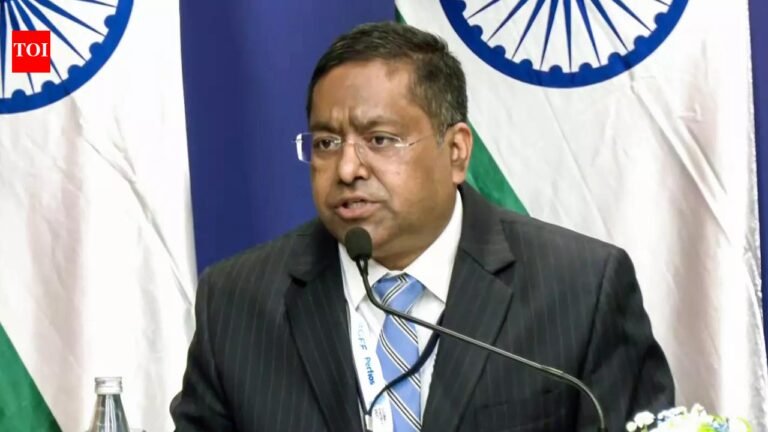
NEW DELHI: New Delhi is trying to purchase LPG from various places to expand its energy supply options amid the ongoing conflict in the Middle East, the Ministry of External Affairs said on Thursday.MEA spokesperson Randhir Jaiswal told a weekly press conference that the government is also willing to purchase LGP from Russia to meet consumer demand.“We are trying to buy LPG from wherever it is available. So if it is available in Russia, we will go there too. Because the situation is such that we have to ensure that the fuel needs of our people are met,” Jaiswal said.“I can say we want to have a broad choice,” he added.The ministry also reiterated that India has received energy requests from Bangladesh, Sri Lanka, Maldives and other neighboring countries.He mentioned that India has been supplying diesel to Bangladesh through various modes of transportation since 2007 and continues to provide assistance to the South Asian country as well as other neighboring countries.“Regarding energy, we have received requests from several neighboring countries and I have talked about this earlier. We have received requests from Bangladesh, Sri Lanka, Maldives and some other neighboring countries. As I pointed out earlier, India has been supplying diesel to Bangladesh through various modes of transport since 2007,” he said.“Even now, we continue to assist Bangladesh and our other neighbours. This is done keeping in mind our own needs, refining capacity and diesel supply situation,” Jaiswal said.Meanwhile, the government also urges consumers to use LPG with caution and explore alternative cooking options where possible.The move comes amid rising tensions in the Middle East, including between Iran, the United States and Israel, disrupting global energy supply chains. Ship navigation in the Strait of Hormuz, an important shipping route that transports about one-fifth of the world’s oil and a large portion of liquefied petroleum gas traffic, has been affected.To curb shortages and prevent malpractices, the state government has stepped up enforcement measures, including raids on hoarding and black marketing of LPG cylinders. Meanwhile, industries such as hotels and restaurants are using alternative fuels such as kerosene and coal to ease pressure on LPG supplies.

Dubai Eid giveaways 2026: Dubai announces mega Eid giveaways 2026: Workers get free cars, gold and flights – key details explained | World News

0

Dubai announces big Eid al-Fitr 2026 giveaway: Workers get free cars, gold and flights - key details explained
Dubai’s big Eid al-Fitr 2026 giveaways, workers get free cars, gold bars and plane tickets / Photo: File

Eid al-Fitr in Dubai is no longer just about prayers and celebrations, it has become a real moment of opportunity for thousands of workers. This year, the massive event organized by the General Directorate of Residency and Foreigners Affairs offers cars, gold bars, smartphones and plane tickets, turning ordinary celebrations into potentially life-changing experiences.For many workers, simply attending an Eid event can mean receiving a reward that changes their financial future.

Inside GDRFA Eid celebrations in Dubai

The Eid celebrations are part of a wider initiative led by the Dubai General Development Authority, on the directives of Dubai’s leadership, to recognize the contribution of the workforce. Events are taking place in major worker centers such as Jebel Ali, Al Quoz and Muhaysna, where thousands of people have gathered to celebrate over several days.What stands out about these celebrations is the size of the rewards. Workers who participate in the event have a chance to win:

  • Brand new car
  • gold bars and coins
  • Free international air tickets
  • Smartphones and electronic devices
  • Discount cards and coupons

At previous similar large events, hundreds of winners have received prizes, including multiple cars and dozens of gold bars, underscoring the importance of these giveaways.

How does the celebration go?

These are not just prize giveaways, they are full cultural festivals designed around the Eid holiday.During the day, workers compete in sporting events, visit market-style food and shopping stalls, and enjoy live performances including music and dance performances. As the night wore on, the focus shifted to the most anticipated part of the event: the raffle.Names were chosen live in front of a large crowd, creating moments of excitement and surprise. In some places, thousands of participants gather, and a single announcement can instantly make a participant the winner of a car or gold.Celebrations often span multiple days during Eid to ensure that workers in different areas and shifts have the opportunity to participate.

Who is eligible for Eid Rewards?

The program is specifically designed for Dubai’s workforce, specifically blue-collar and labor community workers living in designated accommodation areas.To participate, workers typically need to travel to an official event location where admission is organized and monitored. Participation is easy and inclusive: staff register at the venue or through the organizer, often verified using their Emirates ID.After registering, they will automatically be eligible to participate in a draw held during the event. This opportunity is available to all attendees at no separate purchase or fee.According to official event details, the Eid celebrations are planned to last for multiple days during the 2026 Eid holiday. Events are taking place in key worker centers across Dubai, including:

  • Jebel Ali Labor Accommodation Area
  • Alquz Industrial Zone
  • Muhaisnah worker housing complex

The locations have been strategically chosen to ensure maximum participation from the labor community, with thousands of people expected to attend each day.Winners are announced on-site and official organizers distribute prizes to ensure transparency and fairness.

Why does Dubai do this?

Senior officials such as Mohammed Ahmed Al Marri said the events were rooted in a deeper purpose, recognition and appreciation of workers who have contributed to Dubai’s development.The authorities stressed that valuing workers was not just symbolic; It directly affects productivity, well-being and the overall development of society. The initiative is in line with the UAE’s long-term focus on worker welfare, human dignity and inclusive growth.These celebrations also reinforce Dubai’s global image as a city that not only attracts talent but also rewards and respects its workforce.

The bigger picture

The GDRFA-led event is part of a larger Eid atmosphere across Dubai, with celebrations now blending community initiatives, retail offers and public events.From shopping festivals and dining offers to employee-focused incentives, Eid has evolved into a multi-layered experience. But among all the celebrations, these worker events stand out because they transform gratitude into tangible, life-changing rewards.

‘Happy Navratri’: Oxford’s Chaitra Navratri wish wins hearts online

0

'Happy Navratri': Oxford's Chaitra Navratri wish wins hearts online

Oxford University’s warm wishes to those observing Chaitra Navratri have been widely appreciated on social media, with users from across the world praising the gesture as a meaningful expression of cultural inclusiveness.The post carried the message “Happy Navratri to all” and was accompanied by a picture of the university’s iconic Gothic minaret with the sunset in the background. It quickly gained traction online, attracting hundreds of positive responses from viewers around the world.Chaitra Navratri is one of the most important Hindu festivals, a nine-day period of fasting, prayer and devotion dedicated to the nine forms of goddess Durga, collectively known as Navadurga. The festival takes place in the Hindu month of Chaitra, usually held in March or April, and is celebrated on Ram Navami, marking the birth of Lord Rama. For millions of Hindus in India and abroad, it represents the triumph of good over evil and the renewal of spiritual energy.The move particularly resonates with students and alumni of Indian origin, who are an important part of Oxford’s diverse academic community. The university attracts students from more than 160 countries and has made a conscious effort in recent years to recognize a wider range of cultural and religious traditions.Founded around 1096, the University of Oxford is widely considered the oldest university in the English-speaking world and has historically been rooted in Western academic traditions. Observers note that gestures such as these reflect a gradual but intentional shift toward a more globally inclusive identity.Reactions online have been mostly positive, with many describing the post as “heartwarming” and “respectful”. Some users noted that this acknowledgment promotes a real sense of belonging among the international community, reminding people that heritage is not only housed abroad but actively celebrated.

Florida man loses U.S. citizenship in $3.8M Covid-19 relief fraud scheme; could face deportation

0

Florida man loses U.S. citizenship in $3.8M Covid-19 relief fraud scheme; could face deportation

A man living in Florida has been stripped of his U.S. citizenship after being convicted in a multimillion-dollar Covid-19 fraud case, according to a federal court ruling.The decision was made by a U.S. judge who found that the man, Joff Stenn Wroy Philossaint, 25, obtained citizenship illegally and later participated in a large fraud scheme related to pandemic relief funds. The case involves approximately $3.8 million in fraudulent claims related to government aid programs introduced during the Covid-19 pandemic.Prosecutors said the man provided false details to obtain loans and aid intended to help struggling businesses. These schemes were set up to help companies and workers during the lockdown. Instead, he spent the money on himself.The fraud involved multiple applications submitted using false or misleading information. The man lied about business operations and financial losses to qualify for assistance. The scheme continued until discovered by investigators.The U.S. Department of Justice (DOJ) filed the case as part of a crackdown on pandemic-related fraud. Since 2020, federal agencies have investigated thousands of cases involving misuse of relief funds, including false loan applications and identity fraud.In addition to the fraud conviction, the court also examined how the man became a U.S. citizen in the first place. The judge found that he had not been completely truthful during the naturalization process. Under U.S. law, citizenship may be revoked if it was obtained through misrepresentation or concealment of material facts.Based on these findings, the court ordered that his citizenship be revoked. This process, called decitizenization, removes the legal status of citizenship and can lead to further immigration action, including possible deportation.

Did Iran pose an ‘imminent threat’? How Tulsi Gabbard struggled to defend Trump war during Senate Hearing | World News

0

Did Iran pose an 'imminent threat'? How Tulsi Gabbard struggled to defend Trump war during Senate Hearing
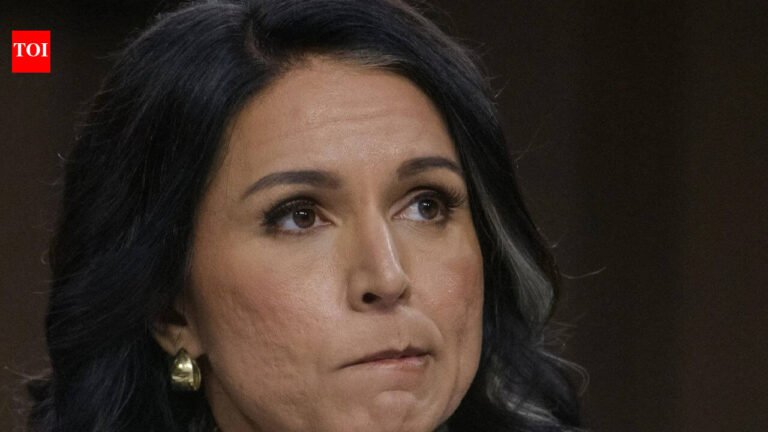
Director of National Intelligence Tulsi Gabbard testifies during a Senate Committee on Intelligence hearing to examine worldwide threats on Capitol Hill, Wednesday, March 18, 2026, in Washington. (AP Photo/Rod Lamkey, Jr.)

There’s a joke about Tulsi Gabbard that’s popular even among Washington aides: DNI stands for Do Not Invite. The insinuation masquerading as a joke refers to the initials of the post she holds Director of National Intelligence (DNI) and the fact that the Trump administration is doing many things that Gabbard was vocally against before becoming part of his establishment.

What happened

The Senate Intelligence Committee hearing this week was meant to follow a familiar script, one that Washington has perfected over decades. Senior officials appear before lawmakers, questions are asked with varying degrees of aggression, answers are offered with varying degrees of clarity, and the entire exercise reinforces the idea that democratic oversight, however imperfect, is still functioning.Yet, as the hearing unfolded, it became increasingly clear that something more consequential was taking place beneath the surface of this routine performance. What should have been a discussion about Iran’s capabilities and intentions gradually turned into a far more revealing examination of how the American state now defines truth, authority, and accountability.At the centre of the exchange was a question that sounded straightforward but carried immense weight: did Iran pose an “imminent” nuclear threat to the United States?The phrase itself is not incidental. In the lexicon of American foreign policy, “imminent threat” is not merely descriptive but justificatory. It is the threshold that allows a state to move from caution to action, from deterrence to pre-emption. It is the language that transforms suspicion into necessity.When Tulsi Gabbard was pressed on whether the intelligence community had assessed Iran’s threat in those terms, her response did not clarify the issue. Instead, it shifted the ground entirely. Determining what constitutes an imminent threat, she said, was not the responsibility of the intelligence community. That authority, she suggested, rests with the president.In that moment, the question was not answered so much as reassigned.

The contradiction at the heart of the hearing

What might have remained an abstract institutional debate became far more concrete when the discrepancies in Gabbard’s own testimony began to emerge. The written assessment she submitted to lawmakers indicated that Iran’s nuclear enrichment programme had been severely degraded and that there had been no effort to rebuild it. Yet her oral remarks before the committee introduced a different emphasis, suggesting that Iran had been attempting to recover from the damage inflicted on its nuclear infrastructure.

Watch

MUST-SEE: Tulsi Gabbard makes BOMBSHELL CONFESSION at Senate hearing

This divergence was not merely a matter of tone. It pointed to a deeper tension between what the intelligence community appeared to assess and what the administration needed to assert.If Iran’s capabilities had indeed been neutralised to the extent described in the written testimony, the argument for urgency becomes significantly harder to sustain. Conversely, if Iran was actively rebuilding, the case for pre-emptive action gains plausibility. The distinction, therefore, is not semantic but strategic.When confronted with this inconsistency, Gabbard offered a procedural explanation, stating that she had shortened her remarks due to time constraints. Yet the exchange revealed something more telling than any explicit contradiction could have. It illustrated how, in contemporary Washington, inconvenient details are often not denied outright but simply de-emphasised, allowing competing narratives to coexist without ever being fully reconciled.

The Joe Kent rupture

The fragility of this balancing act was exposed further by the resignation of Joe Kent, the head of the National Counterterrorism Center and a close ally of Gabbard. Kent’s departure was not a quiet bureaucratic reshuffle but a pointed act of dissent, rooted in his belief that the administration’s justification for the war did not align with the intelligence available to it.His assertion that Iran did not pose an imminent threat to the United States carried particular weight precisely because it came from within the system rather than from its critics. It is one thing for opposition politicians to question the rationale for war; it is quite another for a senior intelligence official to do so in the act of resigning.For Gabbard, this created a dilemma that was as much political as it was personal. To align with Kent would have meant directly challenging the president’s narrative. To repudiate him would have required disowning a figure from her own ideological orbit. Her response, instead, was to step outside the dispute altogether by reframing the terms on which it was being conducted.By asserting that the determination of imminence lies with the president, she effectively removed both herself and the intelligence community from the responsibility of adjudicating the claim.

What is an “imminent threat”?

This reframing has implications that extend far beyond the specifics of the Iran conflict. Traditionally, the intelligence community serves as a critical intermediary between raw information and political decision-making. Its role is to evaluate evidence, assess probabilities, and provide policymakers with a grounded understanding of risks and timelines.In this framework, the concept of an “imminent threat” is not a political judgment but an analytical one, derived from observable indicators and assessed through established methodologies.Gabbard’s formulation alters this relationship in a fundamental way. If the president determines what qualifies as imminent, then the analytical process becomes subordinate to executive interpretation. Intelligence does not disappear, but its authority is redefined. It informs, but it does not determine. It supports, but it does not constrain.Such a shift may not be immediately visible in policy outcomes, but it changes the underlying logic of decision-making. Instead of evidence shaping conclusions, conclusions begin to shape the interpretation of evidence.

Ratcliffe’s contrast

The contrast with CIA Director John Ratcliffe’s testimony underscores the significance of this shift. Ratcliffe adopted a more conventional approach, describing Iran as a persistent and evolving threat without committing fully to the language of imminence that had been central to the administration’s justification.This allowed him to align broadly with the administration’s stance while preserving a degree of analytical caution. It is a familiar technique within Washington’s national security establishment, where precision of language often serves as a form of institutional self-preservation.Gabbard, however, did not merely calibrate her language. She redefined the locus of authority, suggesting that the ultimate determination of threat lies not with analysis but with leadership.

The missing alignment

What emerged over the course of the hearing was not a clear endorsement of the administration’s claims, but an absence of alignment between those claims and the intelligence presented.Officials spoke of Iran’s capabilities, its regional influence, and its long-standing role as an adversary. Yet the specific characterisation of Iran as posing an imminent nuclear threat remained largely unarticulated by the intelligence community in its own voice.This gap between assertion and assessment is where the significance of the hearing resides. It is not that intelligence contradicted the administration outright, but that it did not fully substantiate the urgency that had been invoked to justify military action.

The erosion of checks and balances

To understand why this matters, it is necessary to return to the broader architecture of the American system. Checks and balances are not merely formal mechanisms embedded in constitutional design; they are also practices sustained by institutional norms and expectations.The intelligence community occupies a unique position within this structure. It does not legislate or adjudicate, but it shapes the informational environment in which both legislators and executives operate. Its independence is therefore essential, not because it prevents all errors, but because it provides a counterweight to the concentration of power.What the hearing suggested was not a dramatic breakdown of this system, but a gradual erosion of its underlying logic. When intelligence defers to the executive on the definition of threat, it relinquishes one of its most critical functions. The check remains in form, but weakens in substance.Oversight, in such a context, risks becoming performative. Hearings continue, reports are produced, and questions are asked, but the capacity to challenge the premises of policy diminishes.

Tulsi Gabbard’s transformation

This institutional shift is rendered more striking by Gabbard’s own political trajectory. She emerged on the national stage as a critic of interventionist foreign policy, frequently warning against the misuse of intelligence to justify military engagements. Her rhetoric emphasised caution, scepticism, and a commitment to questioning official narratives.In her current role, however, she finds herself articulating a position that effectively places the determination of threat within the domain of executive discretion. The transformation is not merely rhetorical but functional. She has moved from challenging the relationship between intelligence and power to redefining it.

Watch

TULSI GABBARD: The United States Needs to Stay Out of Venezuela

This does not necessarily imply a change in personal conviction, but it does reflect the constraints and incentives of the office she now holds. In Washington, roles often reshape the individuals who occupy them, aligning personal positions with institutional demands.

The bigger picture

What this episode ultimately reveals is not a singular failure, but a broader recalibration of how power operates within the national security apparatus. The boundary between intelligence and policy, once understood as a necessary distinction, appears increasingly permeable.In theory, intelligence serves to narrow the gap between perception and reality, ensuring that decisions are informed by evidence rather than assumption. In practice, the hearing suggested a more fluid relationship, in which evidence and interpretation are negotiated rather than strictly delineated.This does not mean that intelligence has ceased to function, nor that it has become entirely subordinate to political imperatives. Rather, it indicates that the balance between independence and alignment has shifted, with consequences that may only become fully apparent over time.When institutions begin to adjust their roles in anticipation of political expectations, the system does not collapse outright. Instead, it adapts, often in ways that preserve its outward form while altering its internal dynamics.

The final takeaway

The joke about “Do Not Invite” captures something of Gabbard’s earlier position on the margins of power. Yet what the hearing demonstrated was not exclusion, but incorporation. She was no longer outside the system, critiquing it with scepticism, but firmly inside it, adjusting herself to its demands.In doing so, she revealed something far more consequential than any single answer about Iran. The real shift was not in the assessment of threat, but in the chain of authority behind it.In theory, the American system is designed so that no single individual determines the course of war unilaterally. Intelligence assesses, lawmakers question, institutions check. In practice, what the hearing suggested was a system increasingly organised around a single centre of gravity.By stating that the president alone determines what constitutes an imminent threat, Gabbard did more than avoid a difficult question. She acknowledged, perhaps unintentionally, that one of the key guardrails on executive power had already been loosened.The question, then, is no longer just whether Iran posed an imminent threat. It is whether anyone within the system still has both the authority and the willingness to challenge the president’s definition of one.Because once that ability fades, the issue is not intelligence failure or political disagreement. It is something more fundamental.Who, if anyone, is left to say no?


The FBI is investigating former U.S. counterterrorism chief Joe Kent for allegedly leaking classified information after resigning over the Iran war

0

The FBI is investigating former U.S. counterterrorism chief Joe Kent for allegedly leaking classified information after resigning over the Iran war

The FBI is investigating former top U.S. intelligence official Joe Kent for allegedly leaking classified information.Kent resigned as director of the National Counterterrorism Center earlier this week. He resigned after he spoke out against the United States and President Trump’s decision to go to war with Iran.The FBI investigation began before Kent stepped down, according to officials familiar with the matter. However, it is unclear what information may have been leaked. Kent announced his resignation on March 17, becoming the first senior official in Donald Trump’s administration to resign over the conflict with Iran.When Kent resigned, he said he could not support the war. He said Iran did not pose a direct threat to the United States. He also questioned the reasons behind the military action and said the decision was influenced by external pressure.Kent has served as head of the National Counterterrorism Center since 2025. He is a former U.S. Army officer who also served in intelligence roles earlier in his career.After leaving office, Kent gave an interview in which he reiterated his concerns about the war. He said there was no clear intelligence indicating an imminent threat from Iran. His comments intensified the ongoing debate within the U.S. government over the conflict.The White House defended the decision to take military action against Iran. Trump criticized Kent after he resigned and said he disagreed with his views.Other senior officials also distanced themselves from Kent’s comments. At the same time, his resignation revealed divisions within the administration over foreign policy and national security decisions.

Indian-born Sital Singh was sentenced to 4 years in prison in the United States for defrauding $9.3 million; court ordered him to pay $6.6 million in restitution

0

Indian-born Sital Singh was sentenced to 4 years in prison in the United States for defrauding $9.3 million; court ordered him to pay $6.6 million in restitution

A US court has sentenced Indian-born Sital Singh to four years in prison for her role in a multi-million dollar fraud scheme that targeted elderly victims across the country. Singer, 43, was also ordered on Thursday to pay $6.6 million in restitution. According to prosecutors, the scheme worked with overseas fraudsters to defraud victims of nearly $9.3 million. U.S. Attorney’s Office.Singh, Dariona Lambert, 24, Zhamoniq Stevens, 24, Chintankumar Parekh, 52, and Mehulkumar Darji, 42, all pleaded guilty to one count of conspiracy to commit wire fraud.He acted as a “handler,” coordinating the collection of gold bars and coins that victims were defrauded into purchasing. The scam involved callers posing as officials and falsely claiming victims’ financial accounts had been compromised, forcing them to convert their savings into gold to ensure “safety.”Two co-accused, identified as couriers, personally collected the gold from the victims, while Singh and other handlers managed logistics and payments. Authorities say the network operates in at least ten states and targets vulnerable seniors.For example, law enforcement became involved after an 82-year-old St. Louis woman was persuaded to buy $250,000 worth of gold during a gold-picking drive.Federal investigators say the scam had devastating consequences. “These crimes took away the life savings of elderly victims,” ​​FBI officials said, citing cases in which families lost funds for long-term care.All five defendants have now been sentenced, with Singh and two others sentenced to four years in prison. Authorities said some of the co-conspirators faced deportation after serving their sentences.

West Bengal elections 2026: How to vote in the state in 2021—BJP surges in the year

0

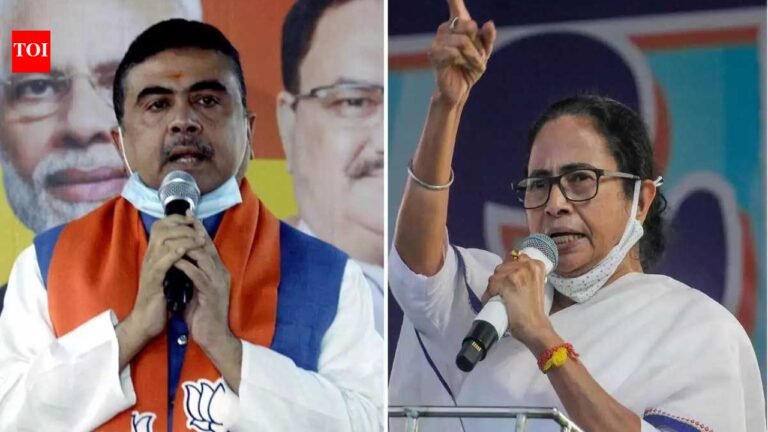
Suvendu Adhikari and Mamata Banerjee (file photo)

New Delhi: Trinamool Congress The battle for Bengal has virtually begun as (TMC) and the BJP announce their candidate lists. While the TMC has announced candidates for all 294 seats, the saffron party has so far nominated 144 seats, about half of the Assembly. The game is largely seen as a head-to-head showdown between the two sides Mamata BanerjeeThe TMC and the PM-led Bharatiya Janata Party Narendra Modi.The BJP now aims to challenge Mamata Banerjee’s more than decade-long rule. Its rise in the Bengali-speaking country has been remarkable, from almost zero presence to becoming the main opposition and a serious contender for power.

watch

From Nandigram to Bhabanipur: BJP’s Adhikari takes on Mamata Banerjee in high-stakes showdown

The Modi-led campaign has placed Mamata at the center of political attacks on an elusive target – West Bengal, the country’s second-largest parliament.

2021: A turning point for the BJP

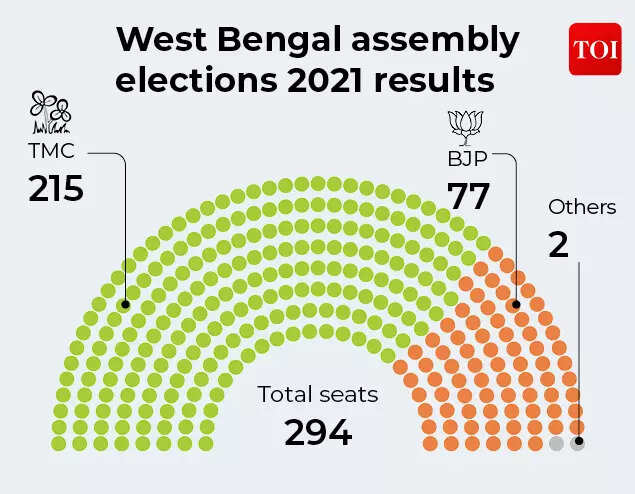
The 2021 parliamentary elections mark a turning point. Although the Bharatiya Janata Party was expected to win a landslide victory, it still won 77 seats – although not strong enough, it was a significant increase from the previous three seats and firmly established itself as a powerful opposition.In many ways, the 2021 election tells a bigger story than Mamata Banerjee’s victory, marking the rise of the BJP in Bengal politics.

How to vote in Bangladesh 2021

Amit Shah, often called the ‘Chanakya’ of the BJP, confidently claimed during the campaign that the party would cross the 200-mark in the 294-member Parliament and coined the slogan ‘abki baar, 200 paar’. However, the results tell a very different story.

West Bengal Assembly Election Result 2021

Not only is the BJP well below 200 seats, it is even well below half of the 147 seats it has.The outcome also brought personal setbacks to several prominent figures in the party. Union Minister Babul Supriyo, former Rajya Sabha member Swapan Dasgupta and Lok Sabha member Locket Chatterjee all lost their seats.

Voting patterns and missed calculations

Much of the BJP’s strategy relies on consolidating the Hindu vote and gaining support from the scheduled caste (SC) community, while keeping a close eye on whether Muslim voters will support the TMC. Ultimately, the results showed that Muslim voters largely supported Mamata Banerjee, and the Supreme Court vote did not consolidate support for the BJP as expected.

BJP from 2019 highs to 2021 setbacks

The parliamentary results were a setback compared to the strong performance in the 2019 Lok Sabha elections. At that time, the BJP won 18 of 42 seats and led in 121 parliamentary seats with 40.2% of the vote. In 2021, it gained 77 seats, 44 fewer than the previous leader, and its vote share fell slightly to 38.13%.

Bharatiya Janata Party: Ten years of rapid rise

Yet beneath the disappointment lies a remarkable coming-of-age story. Just a decade ago, in the 2011 assembly elections, the BJP failed to win a single seat, garnering only 4% of the vote. In 2014, it won two Lok Sabha seats with 18% of the vote. In 2016, it won three parliamentary seats with around 10% of the vote. In 2021, this will increase to 77 seats and over 38% of the vote, marking a significant increase.In the process, the BJP emerged as the main opposition force, replacing the Left and Congress parties that had dominated Bangladeshi politics for decades. While the Left parties and the Congress both drew blanks in the unprecedented results, smaller parties like the Secular Parliamentary Party of India and an independent candidate won one seat each.The BJP not only gained seats; It established the organizational foundation, cadre team and leadership system in the country. The machinery is now firmly in place and is likely to shape its strategy for future battles, whether in the Lok Sabha elections or the next parliamentary elections.

Battle of Nandigram

Another key gain for the BJP was the victory of its ‘giant killer’ Suvendu Adhikari, who defeated Chief Minister and TMC supremo Mamata Banerjee by a margin of 1,956 votes in Nandigram after a tight contest.The match turned into a battle of prestige after Mamata herself chose to challenge Adhikari on his home turf. He went a step further and announced that he would retire from politics if he could not defeat her by 50,000 votes. Although he failed to realize this ambitious claim, his eventual victory, even by a narrow margin, proved its political significance.The defeat, a symbolic blow to the TMC’s larger victory, means Mamata Banerjee must seek re-election to Parliament within six months to remain as chief minister.

Pakistan’s Shehzad compares IPL with PSL, calls it retired cricketers’ league

0

Pakistan's Ahmed Shehzad compares IPL with PSL, calls it retired cricketers' league

New Delhi: Veteran Pakistan batter Ahmed Shehzad Public criticism of the Pakistan Cricket Board (PCB) following the team’s recent poor performance. He also made a stark comparison between the quality of players in IPL and PSL.“If you look at the IPL, they have a lot of superstars in their league and they make the league competitive. The teams there have invested over the years and strengthened themselves,” Shehzad said on his YouTube channel.“The PSL, on the other hand, has hired retired players and commentators and made them superstars over the past 3-4 years; even retired players have become your brand ambassadors. They got the money, but what did they actually build? I think that sums up the story of how the PSL has evolved.”

watch

Cricket stars gather for Kuldeep Yadav’s grand wedding reception | Star-studded night

At the T20 World Cup, Pakistan failed to reach the semi-finals and subsequently suffered a humiliating defeat to Bangladesh in the ODI series, triggering a strong reaction from cricketers. He described the current phase as one of the weakest he has seen and blamed players and management for the decline.

Strong criticism from players and PCB

Shehzad questioned the quality and impact of the current group of players, especially those who have been backed by the board. “The standard of your players is not up to the level of the brand that Pakistan Cricket Board has built for Pakistan Cricket Board,” he said. pakistan super league (PSL) Five or seven years ago. These boys, ages 6-8… they are also the faces of the PSL. They are also the face of our Pakistan team. Will they change Pakistan’s destiny? “He further accused the PCB of investing heavily in a small group of players without yielding results. “You gave these boys all the sponsorship, supported them and invested in them. You gave them the PSL captaincy, right? You made them the thumbs up of the Pakistan team. You gave the whole team to them.” pakistan cricket team To those six boys and their agents. What do they do now? The fires they lit in the jungles, the joys and parties they held, the pockets they filled, the enjoyment they enjoyed… they did not bring any victory to Pakistan,” he added.

“PCB looks weak, players are irresponsible”

Shehzad also criticized the players for not taking responsibility and said the board appeared powerless in front of them. “(The players) are so brazen that even today, they are not ready to admit that we are responsible. Not one of these players. Even today, they are playing the blame game. Even today, their ego is not broken. The Pakistan Cricket Board is too weak now,” he said.He concluded by coming down heavily on the functioning of the PCB and added, “Whenever you talk about any player, they start making up stories. I have never seen Pakistan Cricket Board so weak in my life, as weak as the PCB. They have the power, right? But in the decision-making process, they seem to kneel in front of the players. PCB Nothing can be done about it. What they should have done – bring in new faces – what they have done is, after every game, they have tried to play new tricks, but the public now understands their pattern.

Banner insert