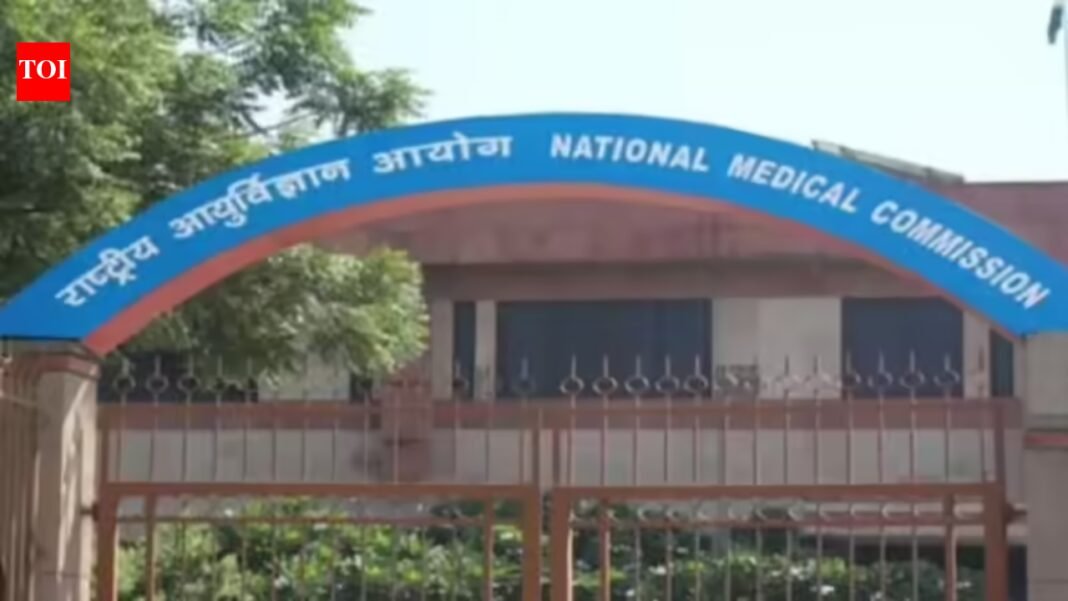

NEW DELHI: While the National Medical Council has issued yet another warning to medical colleges – this time about charging excessive MBBS fees – doubts have been raised over the effectiveness of such directives, while similar warnings in the past have had little impact.The regulator said in a notification on April 7, 2026 that universities are not allowed to charge fees for more than the stipulated 4.5 years of academic study, noting that some institutions charge fees even during internships without formal teaching.The NMC clarified that the MBBS course includes 4.5 years of classroom training and one year of mandatory internship and the fees must be limited to the academic component only. It warned that breaches would result in regulatory action.However, similar warnings have had limited enforcement in the past.In 2023, the committee flagged widespread stipend irregularities after a survey of postgraduate students revealed instances of non-payment, underpayment and even clawbacks of stipends by management. However, no major punitive action has been publicly reported.RTI activist Dr Babu KV said the pattern reflected a wider enforcement gap. He cited an RTI reply of 2025 in which the NMC said that while it has framed regulations, implementation depends on state authorities.“The National Management Council issues warnings from time to time but no visible action. Even serious violations have no consequences,” he said.The recent RTI petition also sought details of action taken against the university over delays in disbursement of stipends and other irregularities, highlighting the ongoing concerns among medical trainees.The Maintenance of Standards in Medical Education Rules, 2023 empowers the NMC to impose penalties, including fines up to Rs 1 crore, reduction of seats, suspension of admissions and even withdrawal of recognition. However, stakeholders say these provisions are rarely invoked.Concerns about poor enforcement are not new. Minutes of a meeting of the Council of Postgraduate Medical Education held on September 24, 2015 (the then regulator was the Medical Council of India (MCI)) pointed out issues such as low stipends and poor standards of training, refusal to acknowledge warnings from non-compliant universities and suspension of admissions. The NMC replaced the MCI on September 25, 2020, under the NMC Act 2019, which aims to reform medical education and improve regulation.The latest notice also draws on the Supreme Court’s ruling that fee structures must be fair and non-exploitative, citing ongoing concerns over internship-related fees and unpaid stipends.The gap between regulation and enforcement continues to raise questions about the accountability of medical education as complaints continue and limited action is visible.
Previous article

Next article