

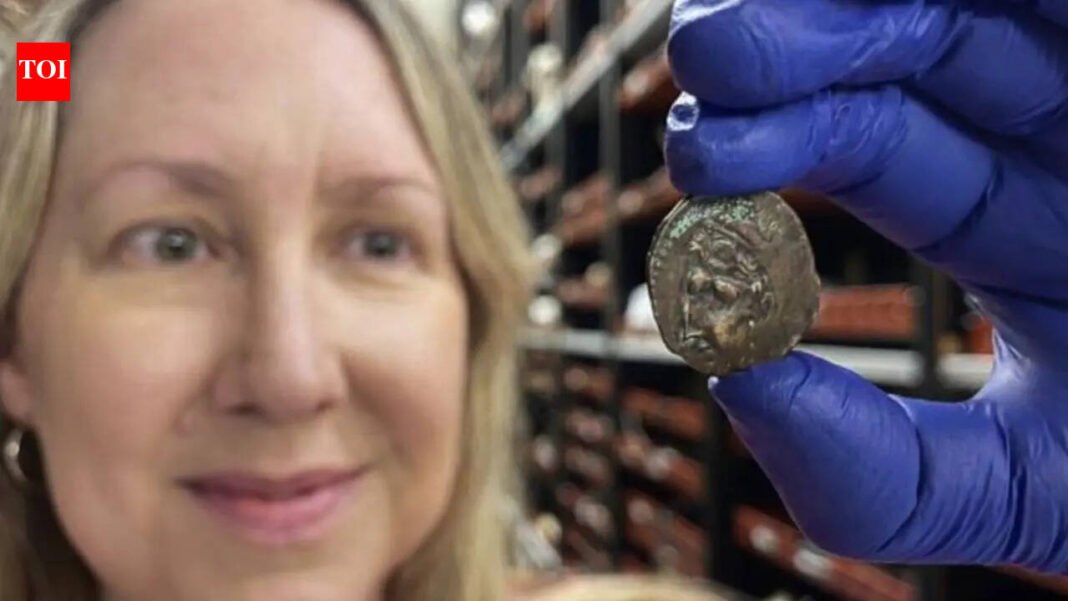
A tiny copper coin used to pay for bus fares in Leeds decades ago is now proving its history runs deeper than anyone thought. What was initially thought to be a rather exotic item on a store clerk’s checkout counter is actually a means of payment that belonged to an ancient civilization more than two thousand years ago. The coin remained unnoticed by its owner until it was discovered after it had been passed down through generations in the same family.
Unusual coins discovered at Leeds Transport bus toll booth
According to the BBC, as early as the 1950s, James Edwards served as the chief cashier of the Leeds Transport Company. His job was to collect fares from bus and tram drivers across the city. However, during these rounds, he reportedly encountered coins that did not belong to him. Instead of discarding them, he set them aside. Over time, the coins were passed on to his grandson Peter. For more than 70 years, the collection has remained within the family, quietly preserved without much formal research. Peter, now 77, eventually became curious about an eye-catching coin. The marks hinted at something older, stranger.His interest led him to investigate its origins. What he found was beyond his expectations. This coin is not modern foreign currency at all. It is related to the Carthaginians, an ancient civilization that originated in the Phoenician world, and was cast in Cadiz (a historic city in what is now Spain) around the 1st century BC.
Melqart images and coins cross cultural design
Perhaps the most impressive aspect of this coin is the design. The obverse of the coin shows the face of Melkat, the god depicted much like the Greek legend Hercules, wearing his characteristic lion skin.It appears this mix is no coincidence. Coins minted in the Phoenician region during that period occasionally used symbols associated with Hellenism to ensure greater appeal to merchants. The design will help determine the origin of the coin in question. After Peter realized the significance of the find, he got in touch with Leeds Museum and Gallery. The museum has included the find in its archives for future reference.According to the BBC, the coin will be stored at the Leeds Discovery Center where researchers and visitors can study.Peter reportedly believes it was the right decision. He mentioned that returning the coin to an institution that could properly study it would have a more meaningful future than leaving it in private hands.