

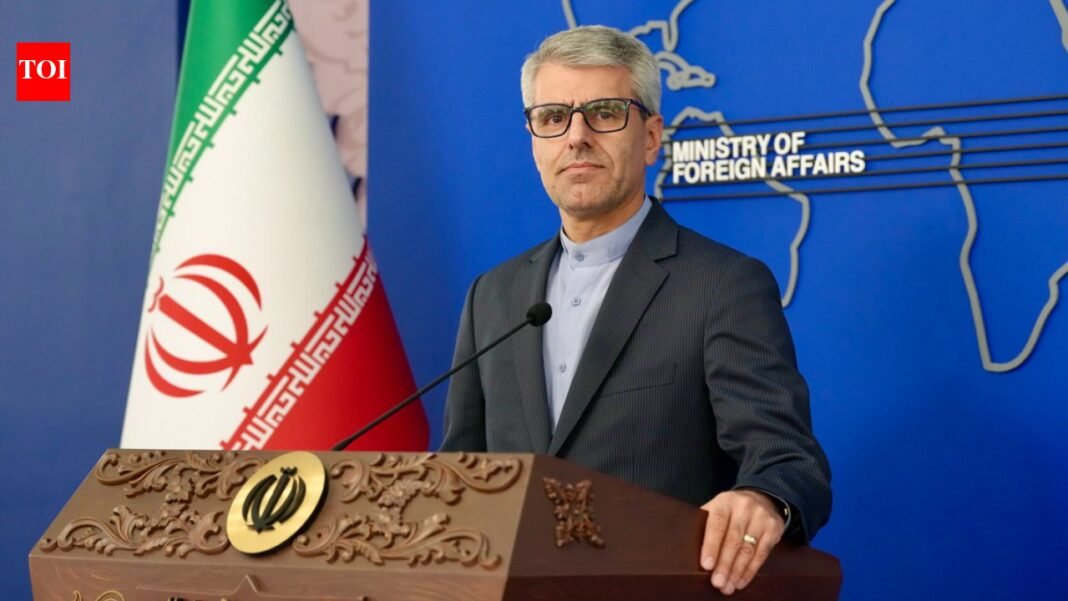
Iran said on Monday it had formulated its position and demands in response to recent ceasefire proposals conveyed through intermediaries, while rejecting a temporary truce with the United States and Israel.The comments came amid reports of a new round of diplomatic efforts aimed at stopping the fighting. Reuters reported on Monday that Iran and the United States have received a proposal to end hostilities that could take effect on Monday. Axios also reported that the United States, Iran and regional mediators are discussing a possible 45-day ceasefire as part of a two-phase deal aimed at permanently ending the war.Foreign Ministry spokesman Baghai said that Tehran has expressed its demands through intermediary channels and made it clear that it rejected the previous proposal of the United States.Baghaj told a press conference that the US’s earlier demands, including the 15-point plan conveyed through Pakistan, were unacceptable.Baghai said the proposal was “extremely excessive, unusual and illogical”, adding that Iran had “a very painful experience negotiating with the United States”.According to Iran’s Islamic News Agency, Iran’s response included 10 clauses, including an agreement to end conflicts in the region, safe passage through the Strait of Hormuz, lifting sanctions, and reconstruction. “Iran will not hesitate to make clear what it considers reasonable demands, and doing so should not be interpreted as a sign of compromise but rather as a demonstration of its confidence in defending its position,” Baghaei said.“We have formulated our own response” and will release details in due course, he added in response to an Iranian reporter’s question about ongoing efforts to cease fire between Iran and the United States.Baghaei said Iran was not opposed to ending the conflict but rejected the idea of a temporary ceasefire, saying such a ceasefire would allow its opponents to regroup and prepare for further fighting.“We call for an end to the war and to prevent its recurrence,” Iranian state news agency IRNA quoted Baghaei as saying.He also said that diplomacy cannot be carried out under military pressure.“Any diplomatic negotiations are ‘absolutely incompatible with ultimatums, crimes and threats of war crimes,'” he said, referring to Donald Trump’s threat to bomb Iran’s critical infrastructure if Tehran did not open the Strait of Hormuz.Separately, Iranian military officials said the country was prepared to continue the conflict as long as political leaders deemed it necessary.“We can continue the war as long as the political authorities see fit,” army spokesman Mohammad Akraminia told the ISNA news agency.“The enemy will definitely regret it because after this war we need to reach a safe point and not witness another war,” he added.In a separate warning, Iranian Armed Forces spokesman Ibrahim Zolfagari said Iran would step up its response if attacks on civilian targets continued.If such an attack happens again, Iran’s retaliation will be much larger and the damage will be “several times greater,” Zolfagari said, according to the semi-official Tasnim news agency.