
Confrontation between U.S. and Cuba intensifies after President takes office Donald Trump Take action to block oil shipments to the island, especially in the wake of U.S. action against the island Venezuela. Cuba has faced multiple nationwide blackouts as its aging grid struggles with fuel shortages, Al Jazeera reported.

The government says it has not received oil from foreign suppliers for months and can only produce about 40% of the fuel it needs. Al Jazeera and Reuters quoted experts as saying that the blockade has severely hit Cuba’s energy infrastructure, triggering blackouts that have left millions without power and forced the closure of hospitals and businesses.
Economic collapse and humanitarian pressure
This pressure has plunged the Cuban economy into crisis. As Politifact outlines, fuel shortages and long-standing structural problems have led to widespread shortages, power outages and disruptions to essential services.
Also read: ‘Cuba is next’: Rubio discusses island nation post-Trump with G7 counterparts
Hospitals have been forced to cancel surgeries, schools have closed and tourism, one of Cuba’s main economic sectors, has struggled to recover.
Experts say a rigid centralized economic system and slow reforms have made the crisis worse by limiting the country’s ability to adapt.
Trump’s pressure campaign
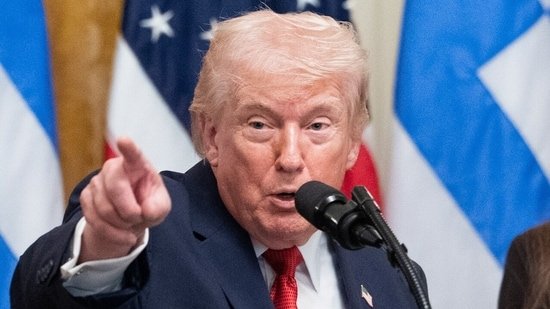
Trump has taken an aggressive stance, repeatedly hinting at possible intervention. “Whether I release it or I take it away, I think I can do whatever I want with it,” he said, indicating he was open to strong U.S. action, Politifact reported.
His government also warned other countries not to supply it with fuel cubathreatening tariffs as part of a pressure strategy. This further isolated the island economically.
Cuba responds: Prepare for escalation
In response, Cuban officials pushed back hard. Deputy Foreign Minister Carlos Fernandez de Cosio said Cuba was prepared to deal with “the possibility of military aggression” and stressed that Cuba’s political system is non-negotiable, Al Jazeera reported.
Cuba considers the situation a serious threat, but officials said they believe an attack is unlikely.
Cuban President Miguel Díaz-Canel acknowledged talks with the United States but said Cuba would not compromise on its political structure.
What’s really at stake?
Analysts say that beyond the immediate crisis, the situation illustrates decades of tension between the United States and Cuba since the 1959 revolution.
Politifact quoted experts as pointing out that Cuba’s economy was already fragile and the oil blockade accelerated its decline. At the same time, the United States would gain only limited economic benefit from any major political change in Cuba because Cuba lacks significant natural resources and the market remains small.
While the Trump administration views the issue as a combination of security, immigration and political concerns, critics and analysts warn that continued pressure could worsen humanitarian conditions and potentially trigger instability or mass migration.
At present, as the situation develops, the two countries are still in a tense confrontation.