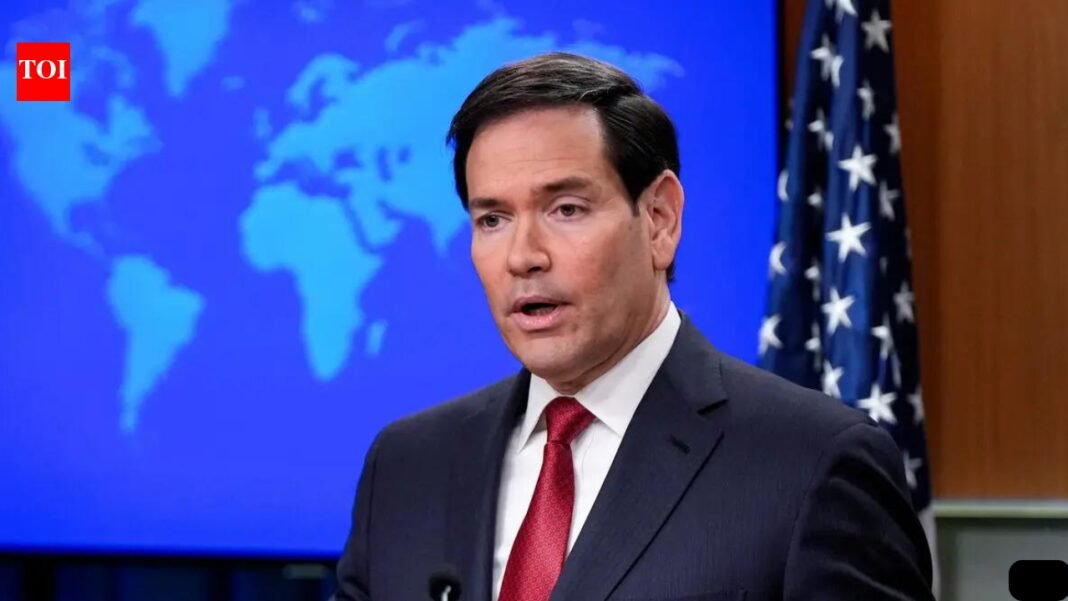
US secretary of state expects military campaign against Iran to end in “weeks, not months” and can achieve its objectives without deploying ground troops Marco Rubio said Friday. Rubio said after meeting with his G7 counterparts in France that Washington “is on track to complete this operation or ahead of schedule and expects to complete this operation at the appropriate time – in weeks, not months.”He added that while some troops were being sent to the region, “this is to give the president the greatest options and the greatest opportunity to adjust if emergencies arise.”
His comments come as conflicts in the Middle East continue to expand. Iranian missiles and drones struck Prince Sultan Air Base in Saudi Arabia, injuring 12 U.S. personnel, two seriously, and damaging military equipment, a U.S. official told Reuters. The conflict began on February 28 when the United States and Israel launched air strikes that disrupted global energy supplies, especially in the Strait of Hormuz, a key passage for nearly 20 million barrels of oil per day. Iran’s ability to threaten shipping has added to volatility in oil and commodities markets. Rubio said discussions with G-7 foreign ministers also covered the risk of Iran imposing tolls on shipping through the strait following a conflict. He suggested that European and Asian countries that benefit from the route should contribute to ensuring free passage.The United States has begun deploying more troops to the region, including thousands of Marines and airborne troops, raising concerns that it could escalate into a protracted ground conflict. However, President Donald Trump has said he is seeking an end to the war and a diplomatic solution.Trump said Iran was negotiating with the United States and “begging” for a deal, but Tehran officials denied any direct talks were taking place. He also set a deadline for Iran to reopen the Strait of Hormuz or face further attacks on its civilian energy infrastructure.U.S. envoy Steve Witkoff said Washington expected to respond soon to a 15-point proposal aimed at ending the conflict, including demands related to Iran’s nuclear and missile programs. Meanwhile, new attacks were reported across Iran, including on nuclear-related facilities and industrial sites. Iranian authorities said there was no radiation leak after the attack on the Yellowcake uranium facility, a claim noted by the International Atomic Energy Agency.The conflict resulted in heavy casualties and economic disruption. Iran has killed more than 1,900 people and oil prices have soared, with Brent crude exceeding $112 a barrel. In the United States, fuel prices have also risen sharply, adding to inflation concerns. Despite the damage, U.S. intelligence agencies estimate that only about a third of Iran’s missile arsenal has been destroyed, suggesting the country retains significant strike capabilities.As the war continues, Gulf states have called for any final deal to include long-term limits on Iran’s missile and drone capabilities as well as safeguards to prevent future disruptions to global energy supplies.