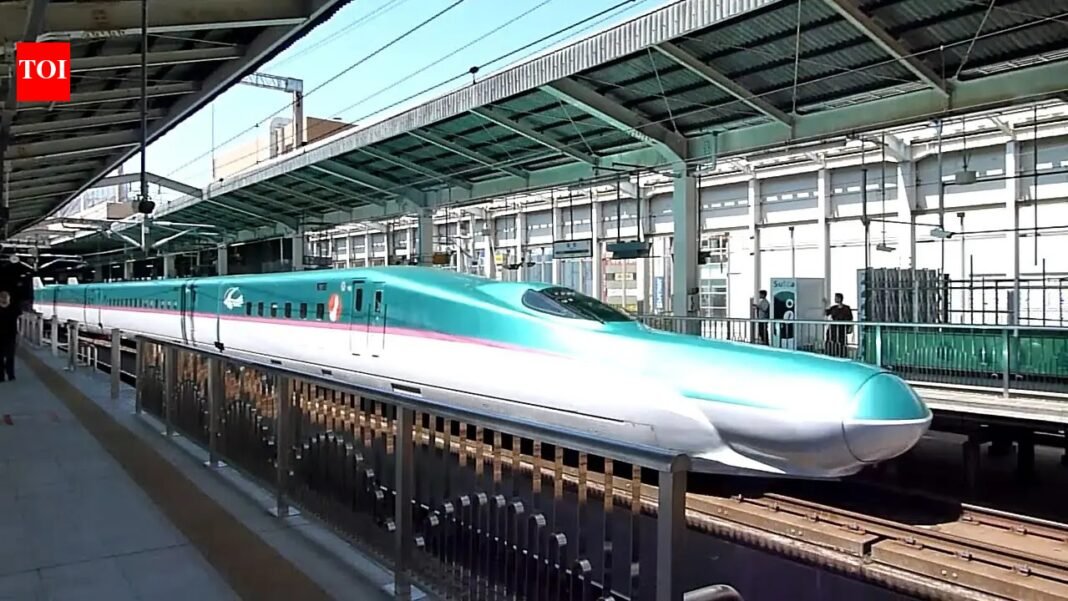
Japan is turning its iconic bullet trains into high-speed cargo airlines, a move that signals a shift in the way speed and logistics intersect. The move by East Japan Railway Company marks the launch of the world’s first freight-only Shinkansen line, converting former passenger trains to transport freight at speeds of up to 275 km/h. At a time when supply chains are under pressure and demand for faster, more reliable deliveries is rising, the project highlights that even the most established transportation systems are being reimagined to meet new economic and technological realities.
How Japan’s bullet trains became high-speed freight carriers
The revamp centers on the E3 series Shinkansen trains, which were originally designed to carry passengers on Japan’s high-speed rail network. In new form, the interior has been stripped of seats and redesigned to maximize cargo space. Laminated flooring, open layouts and fastening systems now allow trains to carry up to 1,000 boxes or approximately 17.4 tonnes of freight per trip.Unlike traditional freight trains that prioritize volume over speed, this redesigned bullet train focuses on fast delivery. By retaining its aerodynamic design and high-speed capabilities, it bridges the gap between air cargo and traditional rail freight.The service runs between Morioka and Tokyo along the Tohoku Shinkansen Line, taking just over three hours to reach. By integrating freight operations into existing high-speed rail infrastructure, East Japan Railway Co. avoids the need for entirely new logistics corridors.In some cases, freight carriages are combined with passenger services to ensure efficient use of track capacity while maintaining high speeds. This hybrid approach enables Japan to maximize utilization of its rail network without disrupting passenger operations.
What it carries and why speed matters
The first run demonstrated the cargo types best suited for the system. The transported goods include fresh scallops and precision equipment from Iwate Prefecture, highlighting the focus on high-value, time-sensitive goods. Over time, the category expanded to include a wider range of items, including fresh seafood, premium produce, dairy products and ready-to-eat meals that require fast delivery.Unlike bulk commodities, these products benefit from speed, stability and reduced handling. The smooth ride of the Shinkansen minimizes vibration, making it particularly suitable for precision and high-precision items such as semiconductors, electronic components, medical supplies, pharmaceuticals, laboratory samples, optical instruments and specialized industrial machinery. High-value parcels, luxury goods and e-commerce shipments that rely on tight delivery times are also increasingly seen as ideal cargo for such high-speed rail systems.
From pandemic experiment to full operation
The idea of using bullet trains for freight is not entirely new. Reduced passenger numbers during the COVID-19 pandemic have led to experiments in transporting cargo in passenger cabins. These early trials demonstrate the potential of high-speed rail logistics.Over time, growing demand, combined with labor shortages in the trucking industry and growing pressure to reduce carbon emissions, has prompted operators to develop fully dedicated freight configurations. The current freight-only Shinkansen is the result of this evolution.
Design a new freight system
Converting a passenger bullet train to a freight train requires careful engineering adjustments. Removing the seats created open space but also required strengthening the structure to handle concentrated loads. The cargo securing system was introduced to ensure stability at high speeds while maintaining the train’s balance and aerodynamics.Despite these changes, trains have maintained their ability to operate at speeds close to passenger service. This is crucial as the whole concept relies on delivering goods faster than traditional rail while being more energy efficient than air transport.Japan’s freight Shinkansen is more than just a technological experiment. It marks a broader shift in the future logistics methods of various countries. By combining speed, efficiency and sustainability, high-speed rail could become a viable alternative for certain categories of freight.