

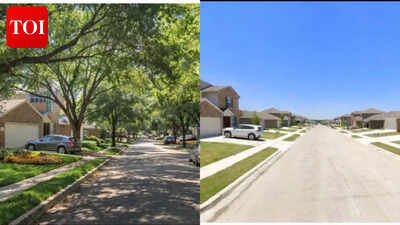
For decades, the American Dream followed a specific blueprint: a two-story home, a basketball hoop in the driveway, and most importantly, a lush, shady backyard. Driving through a mature community with a green expanse, it feels like an instant escape from the heat of the road.Today, this dream is being replaced by so-called aesthetic “liminal spaces.” Modern subdivisions are often characterized by rows of identical beige houses, sprawling gray asphalt and a complete lack of greenery. A viral post by Indian-origin content creator Aakash Gupta onAccording to Gupta’s analysis, the reason every new subdivision in America looks a certain way is because it allows for a massive transfer of wealth from buyers to builders. He said a mature tree can increase a home’s value by 7-19%. “For a $400,000 house, that’s $28,000 to $76,000 just keeping what you have.” For a homeowner, one shade tree produces the same cooling capacity as ten room-sized air conditioners running nearly 20 hours a day. Gupta cited data from the Urban Forestry Research Center, which found that a tree on the west side of a home can reduce energy bills by 12 percent over 15 years. According to research USDA Forest Servicea 25-foot-tall tree can reduce the annual heating and cooling costs of a typical home by 8 to 12 percent. Therefore, for families who live in homes surrounded by greenery, living costs are lower and resales are faster and more profitable. However, for the builder, cutting down all those trees would save about $5,000 per block. A single bulldozer can grade 200 acres of land in a day, speeding up the construction process by reducing the movement of large machinery such as concrete trucks and utility trenches. “So the developer saves $5,000 over the next two decades, while the buyer suffers a $50,000 loss in value. The people who make the decisions and the people who pay for them are never in the same room,” Gupta wrote.
Woodlands vs Katie
Gupta cited an example from the Texas community of The Woodlands, where George Mitchell purchased 28,000 acres of Houston Woodlands in 1974 and retained 28 percent as permanent green space. When McDonald’s wanted to build a store, he followed a “forest first” philosophy, forcing them to build the store behind a canopy of trees. He claimed that McDonald’s became one of the highest-grossing stores in Texas and that the office building, which was built to reflect the surrounding forest, was fully leased. The suburb was even named the number one neighborhood to live in America two years in a row. “The median home price today in Woodland is $615,000. Katy, a similar suburb in Houston, is specifically: $375,000,” he wrote, revealing that there is a whopping $240,000 price gap between the two. “The trees are worth more than the money saved by cutting them down. Developers are cutting them down anyway because they sell the house once and leave. You live in it for 30 years,” he concluded. Until zoning laws or homeowner awareness force changes, developers will continue to pocket the $5,000 while leaving American homeowners with a $50,000 loss in value and bills.