
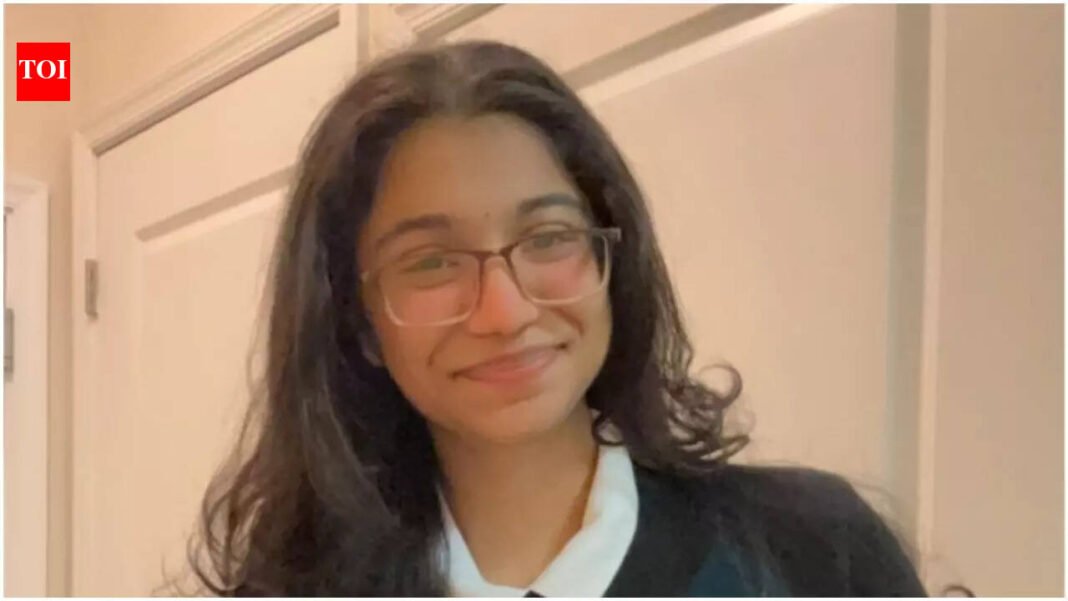

Artificial intelligence-driven recruitment makes job hunting feel impersonal and harsh, said Bhuvana Chilukuri, a 20-year-old Indian-born third-year business student who applied for more than 100 jobs but was rejected for every one before graduating from Queen Mary University of London this summer.“It’s very mechanical, it’s cruel,” Bhuvana Chilukuri told the BBC. “Sometimes I apply and it’s rejected within two minutes, which is really scary.”She said that as companies increasingly use artificial intelligence to hire new employees, she believes there is little, if any, chance that her application will be seen.“The first step is AI screening your resume. At this stage you may get rejected quickly. Then the next process may be AI video interview,” Bwana said.Despite several work experiences and internships, she said she was unable to find a job after graduation. She said many of her peers shared the same frustration, for whom the first rung of the career ladder seemed out of reach.Job vacancies have almost halved since the post-pandemic peak, while rising costs for employers and tightened rights for new employees have made businesses more reluctant to hire. When companies are recruiting, they are increasingly turning to artificial intelligence to help sift through large numbers of applications. New data from Linked In shows that around 89% of UK recruiters say they plan to use more artificial intelligence in their recruitment processes this year.Bwana said this meant logging onto a job portal, asking questions and then video recording her answers while looking at her reflection.“I definitely felt like a robot because you can only see yourself on the screen and answer questions for almost 20 minutes. You get a bit monotonous. You don’t talk to anyone, which takes away your personality. It’s really sad,” she said.Adecco Group CEO Denis Machuel said the AI interview process can be demoralizing. Adecco Group uses artificial intelligence in candidate pre-screening.“On average, people need to send 200 applications to get a job offer,” said Denis Machuel, CEO of Adecco Group, which uses artificial intelligence for candidate pre-screening.“What AI brings is scale. Before, you would reach out to 50 people and you would pick one, so you would have 49 people frustrated. Now, if you contact 500 candidates, you’re going to upset 499 people,” he said.Bwawana said she understands why companies are using AI in recruiting and why some candidates are using AI themselves to fight back.“They get a ton of applications. So I don’t blame them. But students have become lazy. They’re going to say, ‘If you’re going to use AI to screen, I’m going to use AI to apply.’ They’re using AI to write resumes. I don’t blame them either. Everyone is trying to figure it out,” she said.Law firm Mishcon de Reya said it turned to artificial intelligence after receiving 5,000 applications for 35 positions in its last recruitment round.Tom Wickstead, early careers manager at the firm, said: “We have more law graduates, we have fewer graduate roles and we have more candidates using AI to write more applications.”“So for us as employers, we’ve had an explosion in the number of applications we’ve received, and it’s been difficult to tell the difference between those applications,” he said.Wickstead said the company trialled an AI chatbot developed by graduate careers adviser Bright Network, which screened candidates at an early stage and asked a series of questions in real time. The tool highlights parts of the application that may have been written by artificial intelligence, he said.Wickstead said feedback from candidates so far has been positive and AI recruiting tools could make the entire process fairer.“I just don’t think there’s any bias in any hiring process,” he said. “So what AI has the potential to do is be more consistent and fairer than the old process.”Recruiters are still interviewing candidates late in the process and making final hiring decisions, he said.“What we are exploring is whether AI can make the same decisions as humans, or even better and more consistent decisions,” he said.Bwana said that machines are no match for humans.“I don’t believe in artificial intelligence, and I think I will always trust a person. But it’s rare to get the chance to meet the person,” she said.Machur said AI and humans need to work together to get the best results for future employees and recruiting companies.“The intelligence of AI needs to be injected at the right moments in the process so that you can complement the efficiency of AI with people’s judgment and humanity,” he said. “That will break this arms race.”